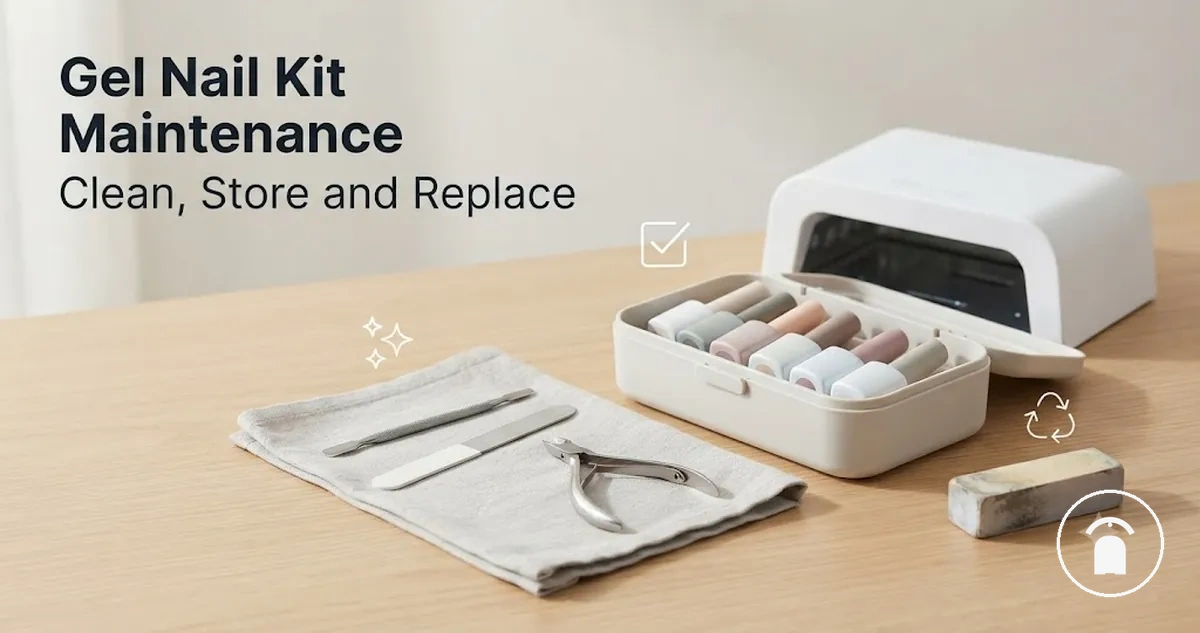
Gel Nail Kit Maintenance: Cleaning, Storage, and Replacement Care
Gel nail kit maintenance is the process of keeping nail tools, gel polish, accessories, and equipment in suitable condition through cleaning, storage, inspection, and replacement decisions. The main maintenance attributes are tool condition after cleaning, gel polish condition during storage, and component condition when replacement decisions are required. Gel nail kit maintenance focuses on evaluating the condition of kit components rather than applying fixed schedules or guaranteeing a specific service life.
Gel nail kit maintenance focuses on evaluating the condition of kit components rather than applying fixed schedules or guaranteeing a specific service life.
Cleaning, storage, and replacement affect gel nail kit condition because each component has different maintenance requirements based on its material, use, and wear state. Cleaning removes product residue from reusable nail tools and accessories, storage protects gel polish and equipment from unsuitable environmental conditions, and replacement decisions address components that show wear or reduced suitability for continued use. According to the U.S. Food and Drug Administration (FDA), cosmetic products should be used according to manufacturer instructions and consumers should pay attention to changes in product condition, including changes in appearance or other signs that a product may no longer be suitable for use.
The following sections examine cleaning, storage, and replacement care without turning maintenance into a complete application or removal guide.
Gel nail kit maintenance covers tools, gel polish, accessories, and electrical components as separate maintenance categories because each component has different condition factors. The following sections examine cleaning, storage, and replacement care without turning maintenance into a complete application or removal guide.
Table of Contents
Gel Nail Kit Components That Need Regular Maintenance
Gel nail kit components that need regular maintenance include tools, accessories, gel polish, and equipment because each component has different care requirements based on its condition and use. Nail tools require cleaning to manage residue and maintain their condition, gel polish requires suitable storage to preserve its usable state, accessories require condition checks, and equipment requires inspection of its physical and functional condition.
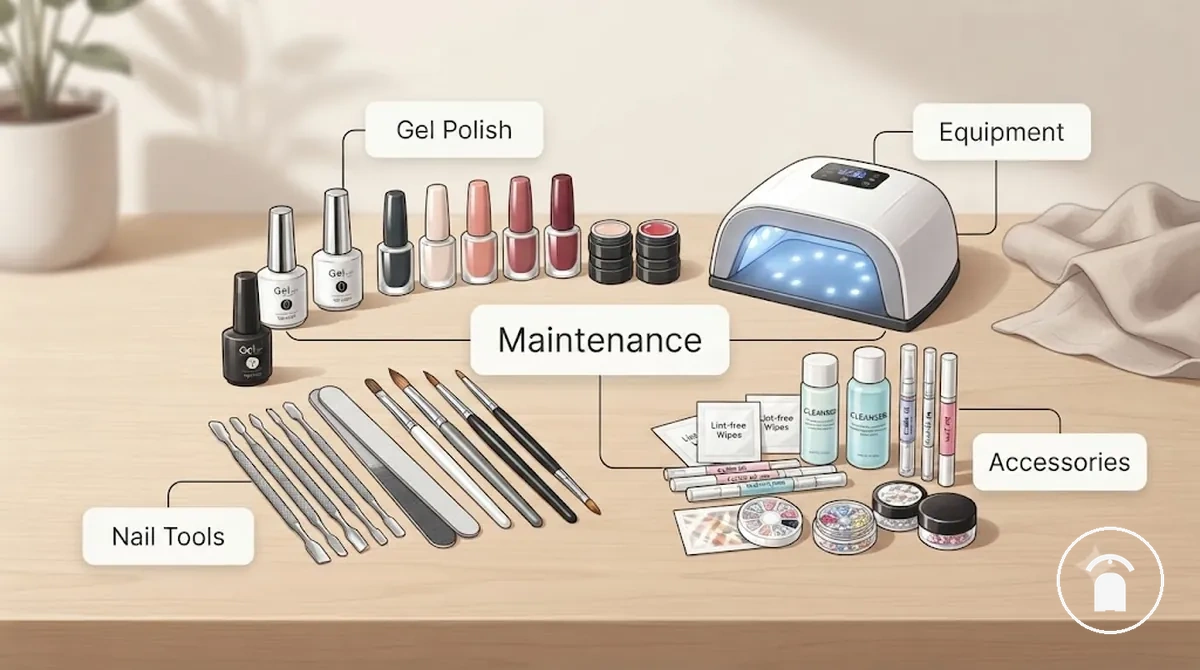
Different gel nail kit components have different maintenance needs because their materials, functions, and exposure conditions affect how they should be cared for. Reusable tools and accessories are affected by residue accumulation and wear from repeated handling, while gel polish is affected by storage conditions such as container closure and placement. Equipment such as curing lamps requires inspection of components such as surfaces, cables, and accessories to identify condition changes before continued use.
For a complete overview of the items included in a gel nail kit, see kit tools and parts .
The maintenance scope covers component groups and their care requirements without expanding into full kit contents, application methods, or removal procedures. For a complete overview of the items included in a gel nail kit, see kit tools and parts.
Cleaning Gel Nail Tools After Use
Cleaning gel nail tools after use helps maintain tool condition by removing residue, supporting suitable tool care, and allowing users to check whether reusable tools remain suitable for continued use. The main cleaning factors are the tool type, the residue present on the tool, the cleaning method applied, and the material sensitivity of the tool.
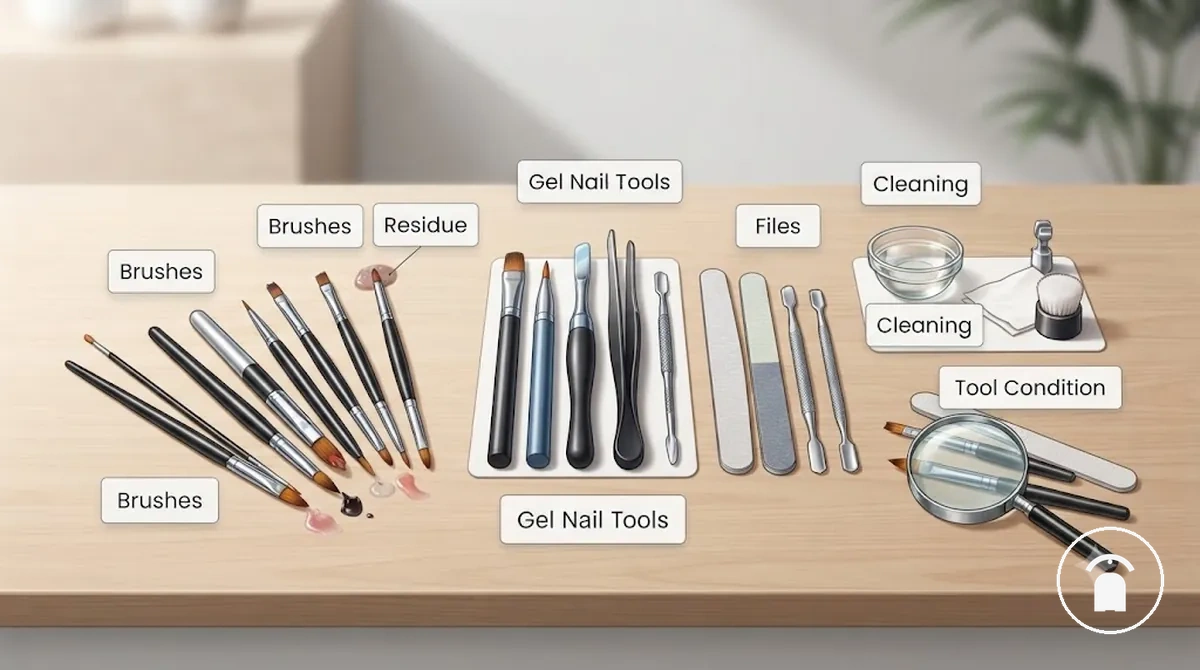
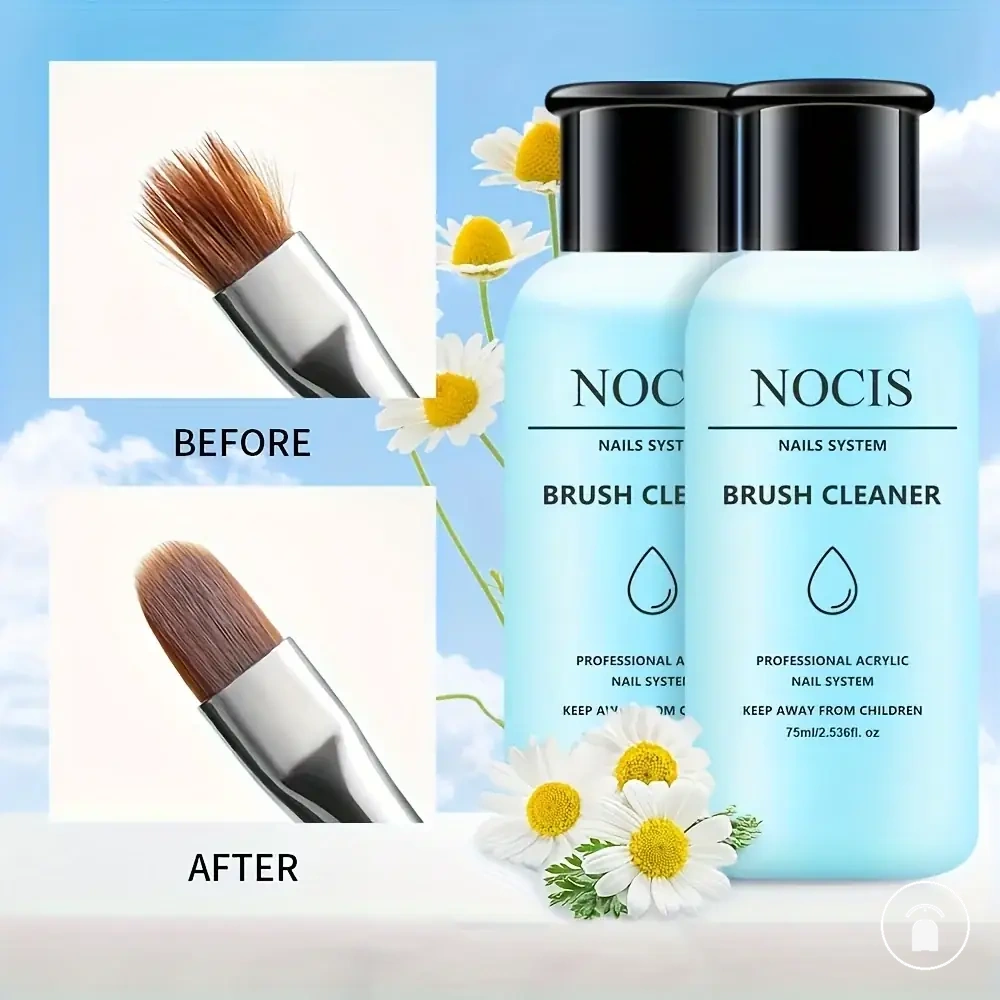
For example, brushes and files require different cleaning considerations because brushes can retain gel product residue between bristles, while files require attention to surface condition after repeated use. A cleaning method should match the tool material and residue type rather than applying one universal rule to all gel nail tools. The condition of brushes, files, and accessories should be checked after cleaning to identify visible residue, wear, or changes that affect continued use.
These factors connect the cleaning method to the resulting tool condition and usability.
Cleaning gel nail tools involves three connected factors: residue removal, material sensitivity, and condition assessment. Residue refers to remaining gel product or debris on a tool surface, while material sensitivity describes how the tool construction affects suitable care methods. These factors connect the cleaning method to the resulting tool condition and usability.
For related care after gel removal activities, see removal tool care .
Regular condition checks complete the cleaning process by showing whether brushes, files, and accessories remain suitable after care. A tool that still shows visible residue or unsuitable wear requires further evaluation before continued use. For related care after gel removal activities, see removal tool care.
Cleaning Brushes, Files, and Manicure Accessories
Nail brushes, files, and manicure accessories require cleaning methods that match their material, usage, and condition after use. Brushes require attention to residue remaining between bristles, files require checks of their surface condition, and smaller manicure accessories require care based on their material and exposure to gel products.
Checking the condition of each item after cleaning helps identify remaining residue, visible wear, or changes in usability.
Nail brushes, files, and manicure accessories have different care requirements because each item interacts with residue and handling conditions differently. A brush with gel residue in its bristles needs a cleaning approach suitable for its construction, while a file requires attention to wear on its working surface. The material of each accessory influences the suitable cleaning method because different materials can have different care limitations. Checking the condition of each item after cleaning helps identify remaining residue, visible wear, or changes in usability.
Storing Gel Polish and Nail Kit Equipment
Gel polish storage is a maintenance practice that helps manage the condition of gel polish and nail kit equipment by controlling storage conditions, organization, and container care. Storage conditions affect how gel polish containers, accessories, and equipment are arranged, inspected, and accessed during use. A suitable storage method focuses on maintaining component condition rather than promising a fixed preservation period.
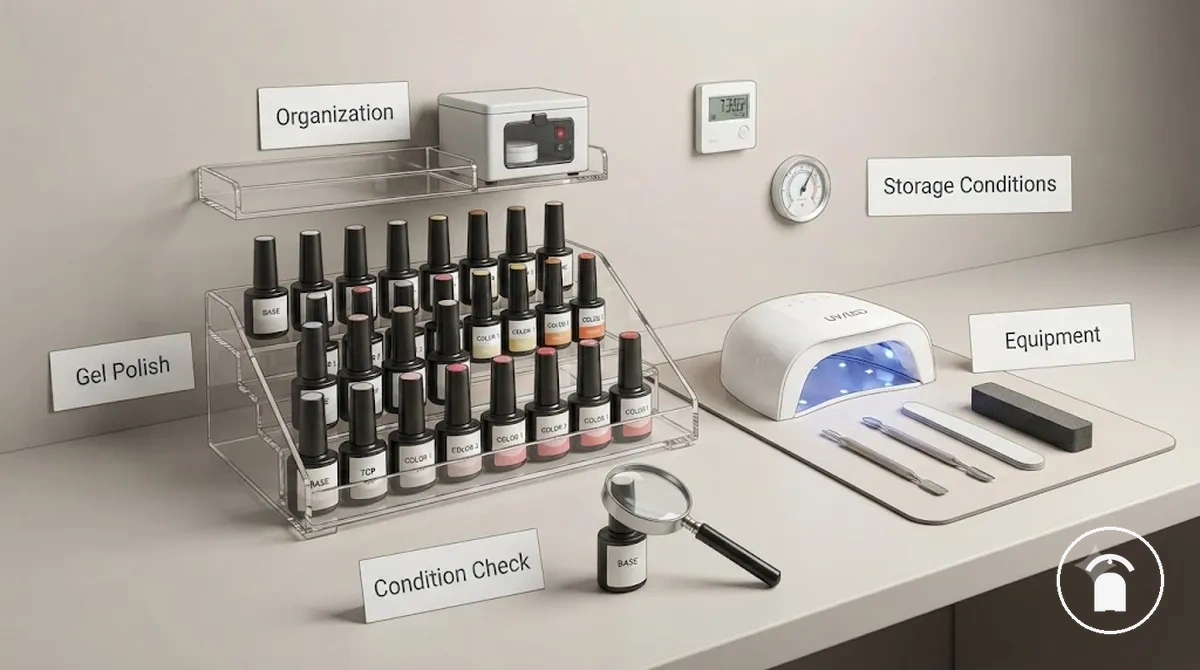
For example, gel polish containers placed in an organized storage area are easier to identify and inspect than containers stored without separation. Equipment organization also affects handling because tools and accessories that have designated locations can be accessed with less unnecessary movement. Storage conditions such as container closure, placement, and surrounding environment influence how users monitor the condition of gel polish and nail kit equipment.
For example, gel polish containers placed in an organized storage area are easier to identify and inspect than containers stored without separation.
Storage considerations can be grouped into the following factors:
- Containers: Gel polish containers should be kept properly closed and checked for visible condition changes around the container and product.
- Organization: Nail kit equipment and accessories should be arranged so individual items can be identified and inspected when needed.
- Environment: Storage conditions such as surrounding temperature, light exposure, and placement can influence the condition of stored components.
Practical gel polish storage and nail kit equipment organization involve monitoring containers, accessories, and equipment placement over time. Checking storage conditions helps identify changes in component condition without relying on exact shelf-life promises or guaranteed preservation outcomes.
Gel Polish Storage Conditions and Organization
Gel polish storage conditions influence container organization, placement, and accessibility by affecting how users handle and monitor gel polish items. Gel polish storage focuses on arranging containers and related equipment so condition checks and access can be managed according to the product and surrounding environment.
Gel polish storage conditions influence container organization, placement, and accessibility by affecting how users handle and monitor gel polish items.
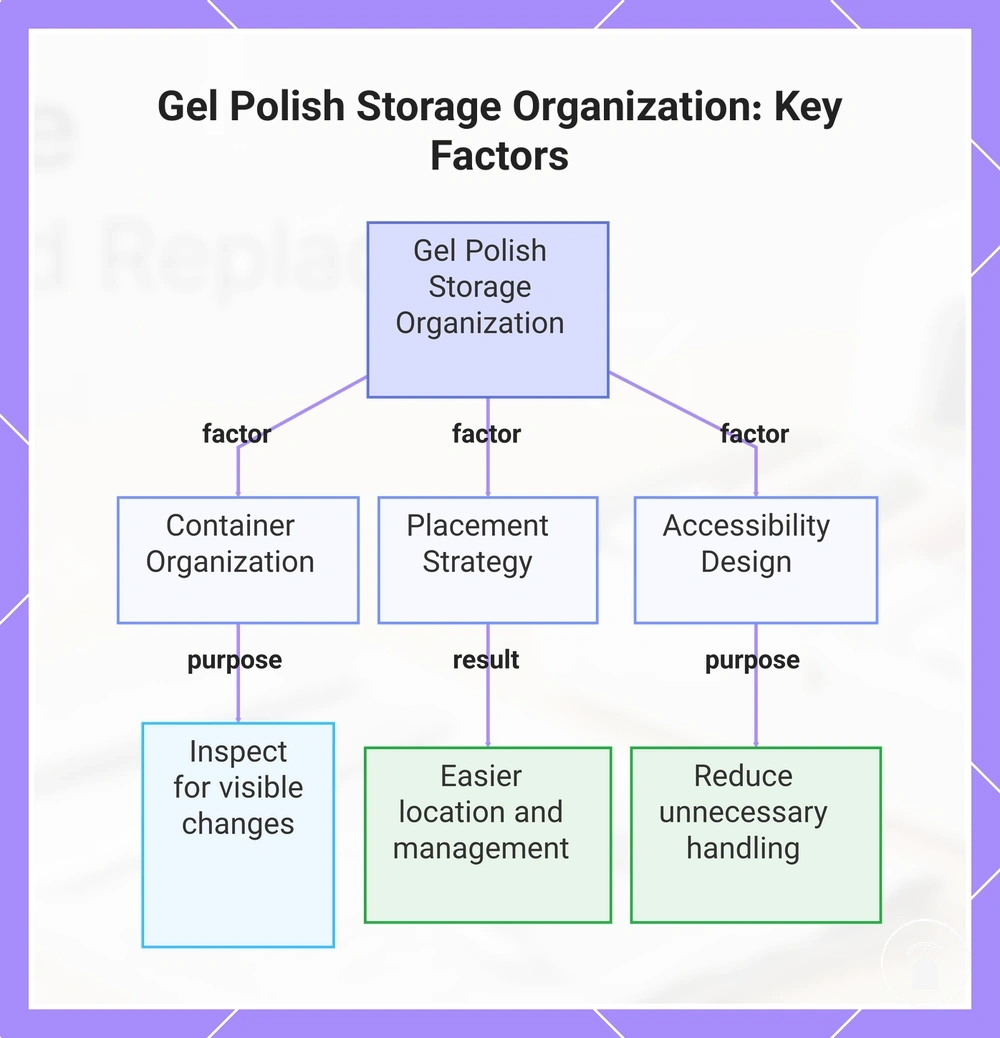
Storage organization can be separated into three factors:
- Containers: Gel polish containers should be organized in a way that allows users to identify and inspect them for visible condition changes.
- Placement: Gel polish placement affects handling because arranged storage areas can make containers easier to locate and manage.
- Accessibility: Organization affects accessibility by reducing unnecessary handling when checking or using stored gel polish items.
Gel polish storage conditions should be considered alongside container type, placement, and surrounding environment because these factors can influence the observed condition of stored items. Storage organization supports maintenance monitoring without creating fixed preservation outcomes that apply to every product.
Storage organization supports maintenance monitoring without creating fixed preservation outcomes that apply to every product.
This chart shows the three main factors of gel polish storage organization — containers, placement, and accessibility — and their purposes.
Replacing Gel Nail Kit Parts and Accessories
Replacing gel nail kit parts and accessories becomes a maintenance consideration when component condition, wear, or changes in usability affect how a tool or accessory can be used. The replacement decision depends on the relationship between the part, its wear condition, usage context, and the observed condition of the component rather than a fixed replacement schedule.
Wear and condition signals help determine when to replace gel nail kit parts.
Wear and condition signals help determine when to replace gel nail kit parts. Worn tools may show changes such as visible wear, damage, or reduced suitability for their intended use, while accessories should be assessed according to their material and usage conditions. A replacement decision connects the worn item, the observed condition, and the appropriate maintenance choice without assuming identical replacement timing for every component.
Different replacement situations depend on the type of component and how it is used.
Different replacement situations depend on the type of component and how it is used. For example, a tool exposed to frequent use may require evaluation when wear affects handling, while another accessory may remain suitable when its condition has not changed. The replacement decision should consider the component condition, usage context, and whether continued use remains appropriate.
The replacement decision should consider the component condition, usage context, and whether continued use remains appropriate.
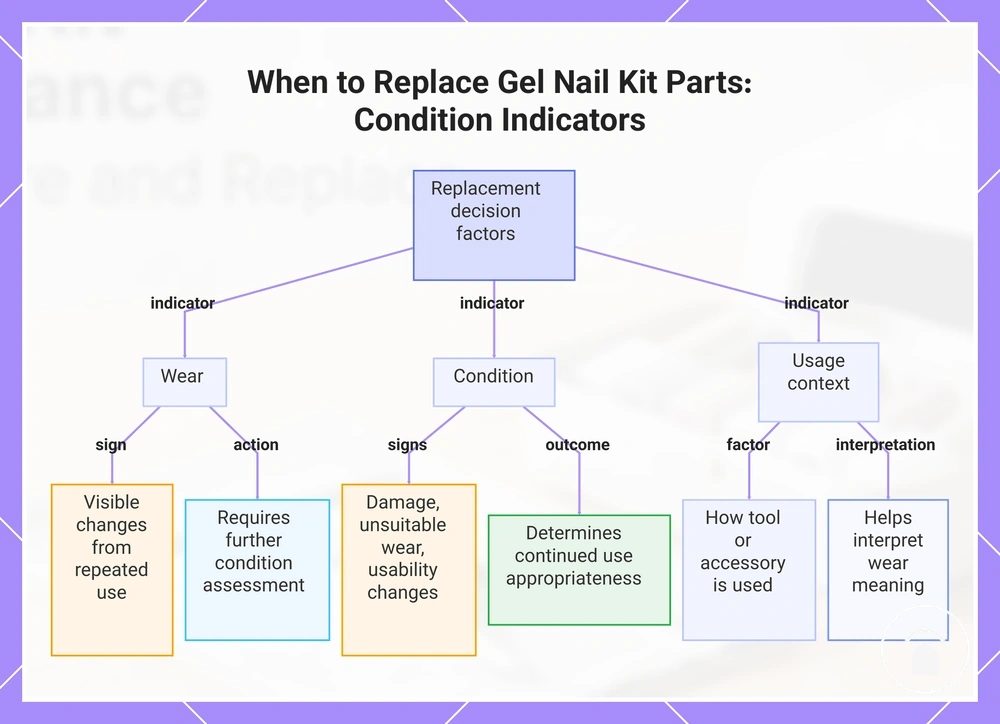
Replacement considerations can be organized around these condition indicators:
- Wear: Visible changes caused by repeated use can indicate that a component requires further condition assessment.
- Condition: Damage, unsuitable wear, or changes in usability can influence whether a part remains appropriate for continued use.
- Usage context: The way a tool or accessory is used helps determine how wear should be interpreted during a replacement decision.
Evaluating worn items through condition checks supports a replacement decision based on observed need rather than fixed intervals. Replacement choices can also include cost considerations, which can be compared through replacement costs when assessing maintenance options.
This chart shows the three main condition indicators that guide replacement decisions for gel nail kit parts and accessories.
This chart shows the three main condition indicators that guide replacement decisions for gel nail kit parts and accessories.
When to Replace Nail Files and Disposable Tools
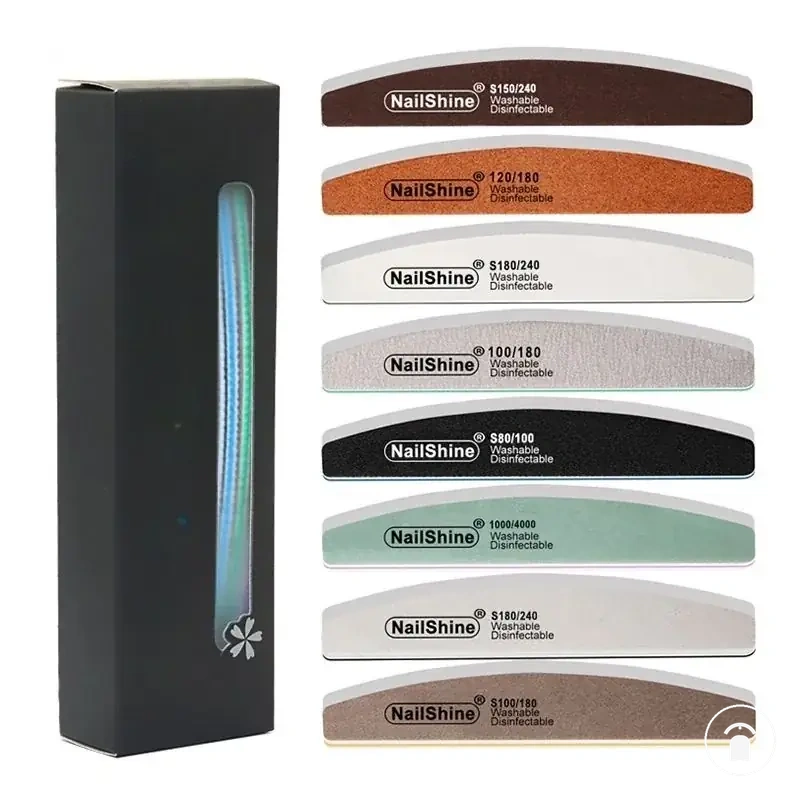
Nail files and disposable tools should be considered for replacement when wear, condition changes, or reduced suitability affect their intended use. Replacement depends on observable signals from the tool condition, usage context, and level of wear rather than a fixed replacement interval.
A file with a worn surface or a disposable tool with damage may require assessment because its current condition can affect suitability.
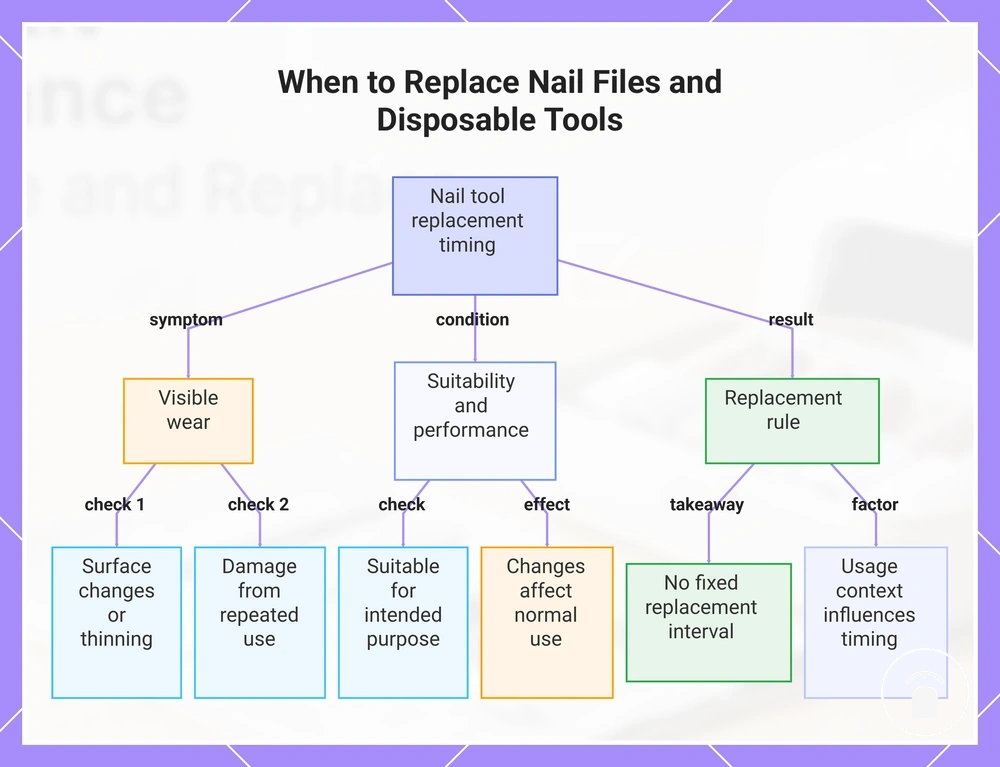
The main replacement signals for nail files and disposable tools are visible wear, changes in condition, and differences in use performance. A file with a worn surface or a disposable tool with damage may require assessment because its current condition can affect suitability. The following checklist helps verify common wear indicators before making a replacement decision:
- Wear: Check nail files and disposable tools for visible surface changes, thinning, damage, or other signs of repeated use.
- Condition: Assess whether the tool remains in a suitable state for its intended purpose after handling and use.
- Usage effect: Consider whether changes in the tool affect how it performs during normal use.
Replacement decisions for nail files and disposable tools should be based on condition indicators rather than universal timing rules. Usage frequency, material characteristics, and handling conditions can influence when a worn tool requires replacement evaluation.
This chart shows how to decide tool replacement by checking wear signals, condition, and usage context.
This chart shows how to decide tool replacement by checking wear signals, condition, and usage context.
Maintaining Gel Nail Lamps and Electrical Components
Gel nail lamp maintenance involves cleaning, inspection, and condition monitoring of electrical components within a gel nail kit. Electrical components such as lamp surfaces, cables, and related accessories require regular condition checks to identify changes that may affect usability. This maintenance approach focuses on equipment care rather than lamp selection, curing requirements, or guaranteed performance outcomes.
Inspection helps identify condition factors that influence gel nail lamp and electrical component care during use.
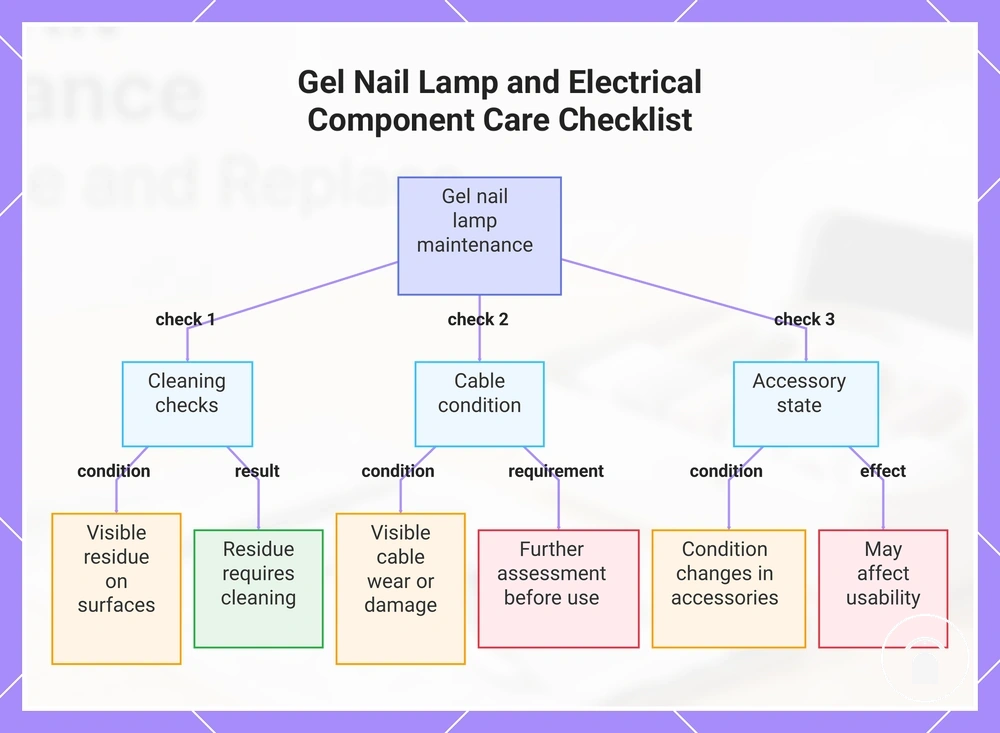
Inspection helps identify condition factors that influence gel nail lamp and electrical component care during use. For example, a lamp surface with visible residue can require cleaning, while a cable with visible wear can require further condition assessment before continued use. The following checklist organizes common inspection factors:
- Cleaning: Check lamp surfaces and accessible areas for visible residue that may affect condition monitoring.
- Cables: Inspect cables for visible wear, damage, or changes in physical condition.
- Accessories: Review related electrical accessories for condition changes that may affect usability.
Maintaining gel nail lamps and electrical components requires evaluating cleaning needs, cable condition, and accessory state through practical inspection. These equipment care checks support maintenance decisions and connect with longer kit performance considerations.
These equipment care checks support maintenance decisions and connect with longer kit performance considerations.
This chart shows the main inspection checkpoints for gel nail lamp maintenance: cleaning, cable condition, and accessory state.
Here are product examples that may make comparison easier. Before buying, always review the compatibility criteria, essential features, and product details.