Gel Nail Kit Longevity: Wear Time and Factors That Affect Results
Gel nails used in a home gel manicure typically have a wear time of about 2 to 3 weeks when preparation, gel polish application, curing, and aftercare conditions support adhesion. According to the American Academy of Dermatology, gel manicures typically last about 2 to 3 weeks, although the final wear time depends on factors such as nail condition, application quality, and care practices.
A home gel manicure should therefore be evaluated by its preparation, curing, and usage conditions rather than by a guaranteed duration.
Gel nail longevity is the result of multiple connected conditions: nail preparation affects the surface available for adhesion, gel polish layers affect the applied coating, curing affects how the gel sets, and aftercare affects how the manicure is maintained during wear. A home gel manicure should therefore be evaluated by its preparation, curing, and usage conditions rather than by a guaranteed duration.
This means gel nails with the same type of gel polish can have different longevity when the preparation or care conditions differ.
For example, a home gel manicure applied with suitable preparation and correct curing may remain within the 2-to-3-week wear range described by the American Academy of Dermatology, while exposure to activities that affect the nail surface can reduce the time before visible changes such as lifting or chipping appear. This means gel nails with the same type of gel polish can have different longevity when the preparation or care conditions differ.
Table of Contents
How Long Home Gel Nails Typically Last
Home gel nails typically last about 2 to 3 weeks when preparation, gel polish application, curing, and aftercare conditions support adhesion. The American Academy of Dermatology states that gel manicures usually last about 2 to 3 weeks, with wear duration affected by factors such as nail condition, application technique, and maintenance practices.
Home gel nails typically last about 2 to 3 weeks when preparation, gel polish application, curing, and aftercare conditions support adhesion.
Home gel nails achieve lasting results through the combined effects of nail preparation, gel polish layers, curing conditions, and daily wear. For example, a home gel manicure that follows proper preparation and curing conditions can remain within the 2-to-3-week wear duration described by the American Academy of Dermatology, while changes in nail condition or care routine can affect how long the result remains intact.
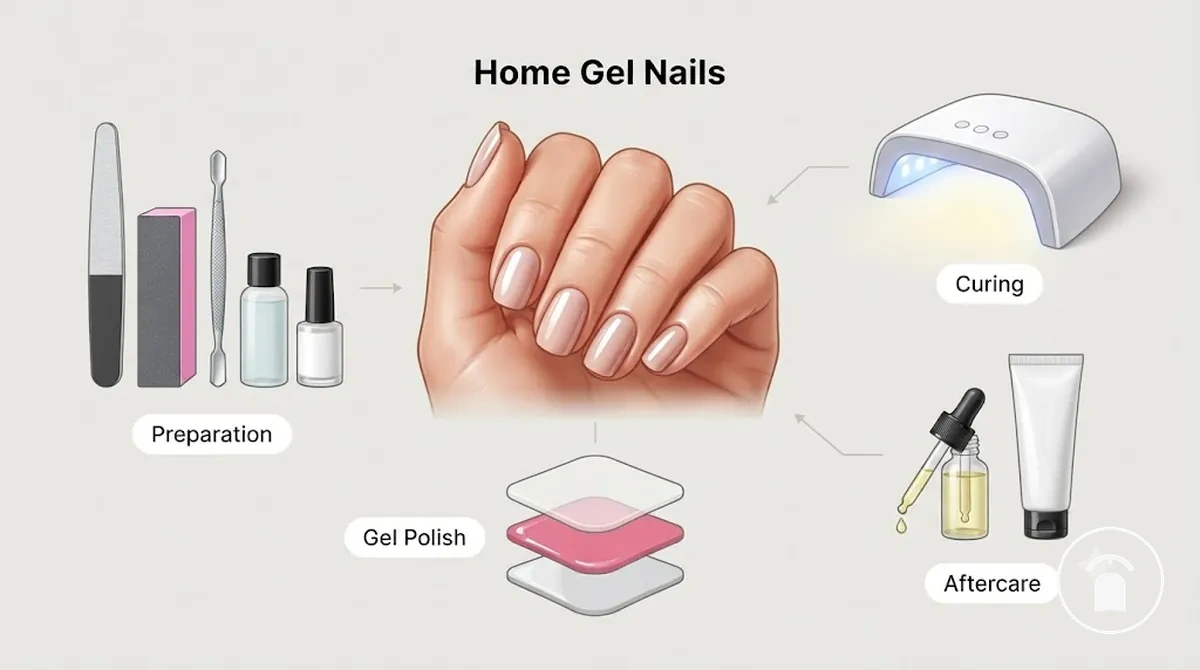
The wear duration of home gel nails can differ from salon applications because the application environment, preparation process, products used, and aftercare routine may differ. A comparison of these application contexts is available in home versus salon results.
A comparison of these application contexts is available in home versus salon results .
The main conditions influencing home gel nail longevity are preparation quality, gel polish adhesion, curing conditions, and aftercare habits. These factors explain why two home gel manicures can have different lasting results even when they use similar gel nail products.
Factors That Determine Gel Nail Longevity
Gel nail longevity is determined by preparation, gel polish application, curing conditions, and aftercare practices that influence adhesion and wear quality. Gel nails achieve more consistent wear when the nail surface, gel layers, curing process, and maintenance routine work together under suitable conditions.
Gel nails achieve more consistent wear when the nail surface, gel layers, curing process, and maintenance routine work together under suitable conditions.
The main factors affecting gel nail wear quality can be grouped into four categories:
- Preparation: Nail preparation affects the surface condition available for adhesion. Cleaning and preparing the nail surface before applying gel products helps create the conditions needed for the gel system to attach properly.
- Gel polish system: The base coat, gel polish, and top coat form the applied layers of a gel manicure. Their compatibility, application condition, and layer quality influence how the finished gel nails perform during wear.
- Curing: Curing conditions affect how gel polish sets after application. The curing lamp, curing time, and gel product requirements must align with the applied gel system for the layers to form correctly.
- Aftercare: Aftercare habits influence wear quality by affecting how the finished gel manicure is exposed to daily activities, moisture, and physical contact.
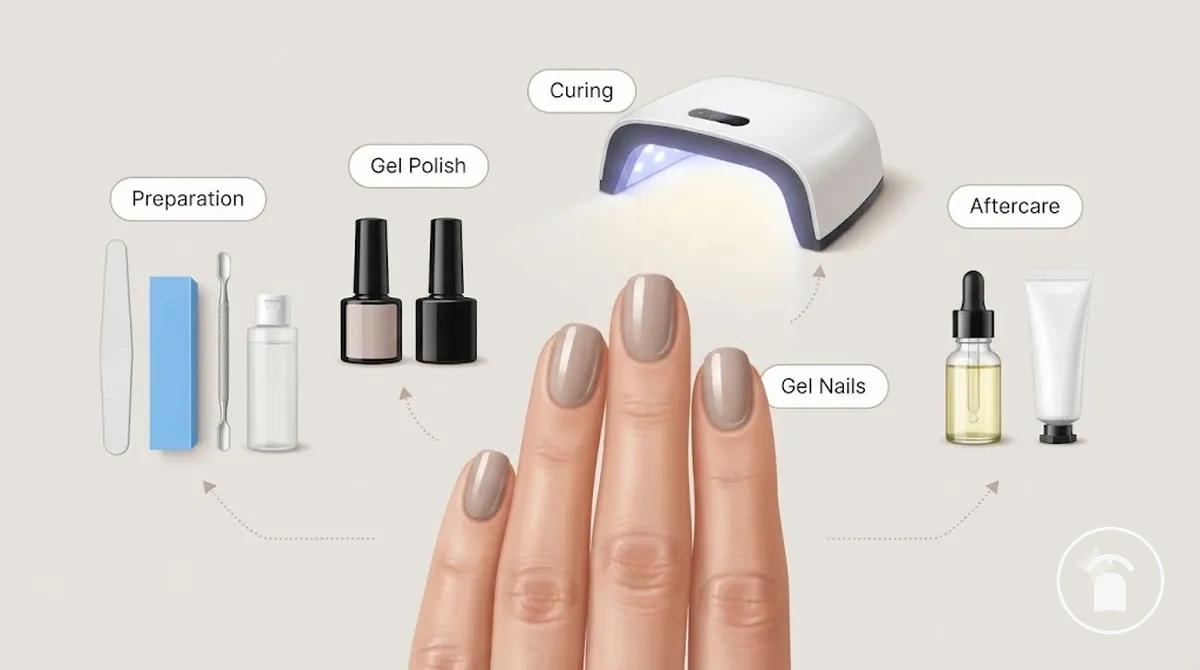
Preparation conditions are closely connected with gel nail adhesion and wear outcomes. A detailed explanation of preparation factors is available through nail preparation, while the relationship between application conditions and longevity is covered through application steps.
Preparation conditions are closely connected with gel nail adhesion and wear outcomes.
For example, two home gel manicures using the same gel polish can produce different wear results when their preparation, curing, or aftercare conditions differ. This shows that gel nail longevity is influenced by the complete application and maintenance context rather than by an individual product feature alone.
Nail Preparation Factors That Affect Gel Wear
Nail preparation affects gel nail wear by influencing the nail surface condition available for gel adhesion. The prepared nail surface, including its cleanliness and condition before application, affects how well gel polish layers can attach and how lifting risk may develop during wear.
Nail preparation affects gel nail wear by influencing the nail surface condition available for gel adhesion.
The main preparation factors connected with gel adhesion and wear performance include:
- Nail surface condition: A clean and properly prepared nail surface provides the starting condition for gel polish adhesion. Surface contaminants or unsuitable preparation conditions can interfere with how the gel layers attach.
- Preparation actions: Preparation steps before gel application influence the surface state of the nail. Detailed preparation methods are covered in nail preparation, while this section focuses on their relationship with longevity.
- Adhesion and lifting: Gel adhesion is affected by the interaction between the prepared nail surface and the applied gel system. Lifting can occur for different reasons, so preparation is one contributing factor rather than a single explanation for every wear issue.
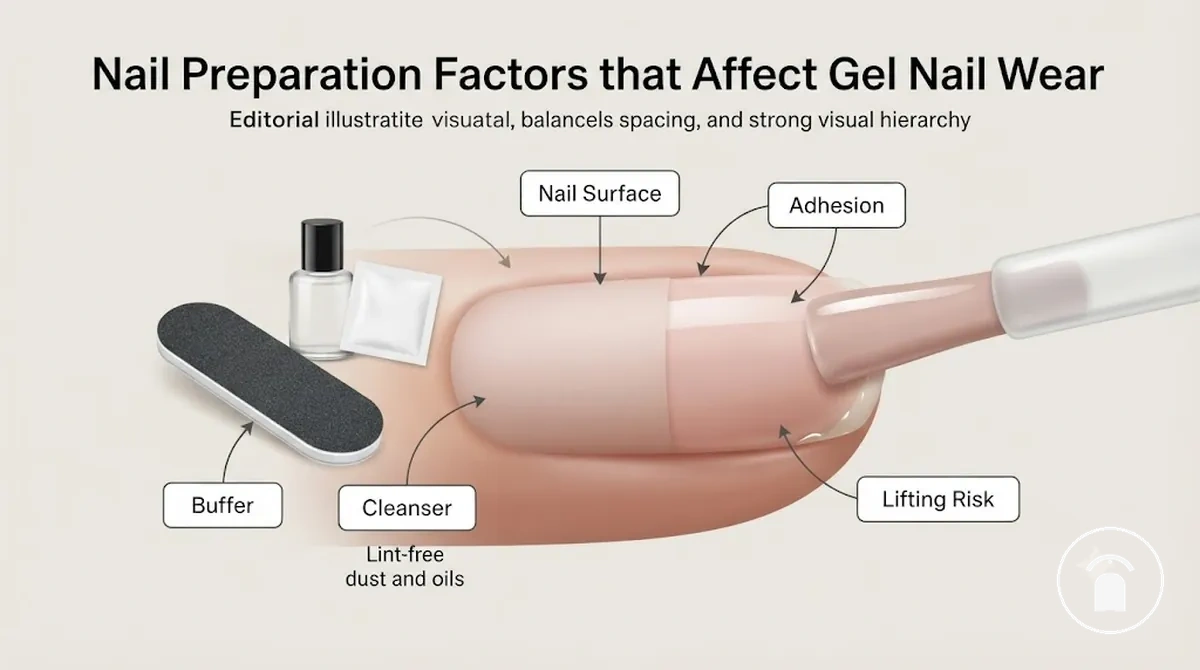
For example, two home gel manicures using the same gel polish may have different wear outcomes when their nail surface conditions and preparation quality differ. This shows that preparation contributes to gel longevity alongside curing conditions, product factors, and aftercare practices.
Gel Products and Curing Factors That Affect Wear Time
Gel products and curing conditions affect gel nail wear time by influencing gel adhesion and wear stability. Gel polish layers, including the base coat and top coat, work together with curing conditions to determine how the applied gel system forms and maintains its connection with the nail surface during wear.
Gel products and curing conditions affect gel nail wear time by influencing gel adhesion and wear stability.
The main conditions that influence gel product performance and curing-related wear stability include:
- Gel polish system: The base coat, gel polish, and top coat create the layered gel system applied to the nail. Their compatibility and application conditions influence how the layers support adhesion during wear.
- Curing conditions: The curing lamp and curing time affect how gel polish sets after application. Curing requirements depend on the gel product system, the lamp conditions, and the instructions associated with the applied gel materials.
- Adhesion and wear stability: The relationship between gel products, curing conditions, and the prepared nail surface affects how stable the manicure remains during wear. Differences in these conditions can influence the final result without making one factor the only cause of wear changes.
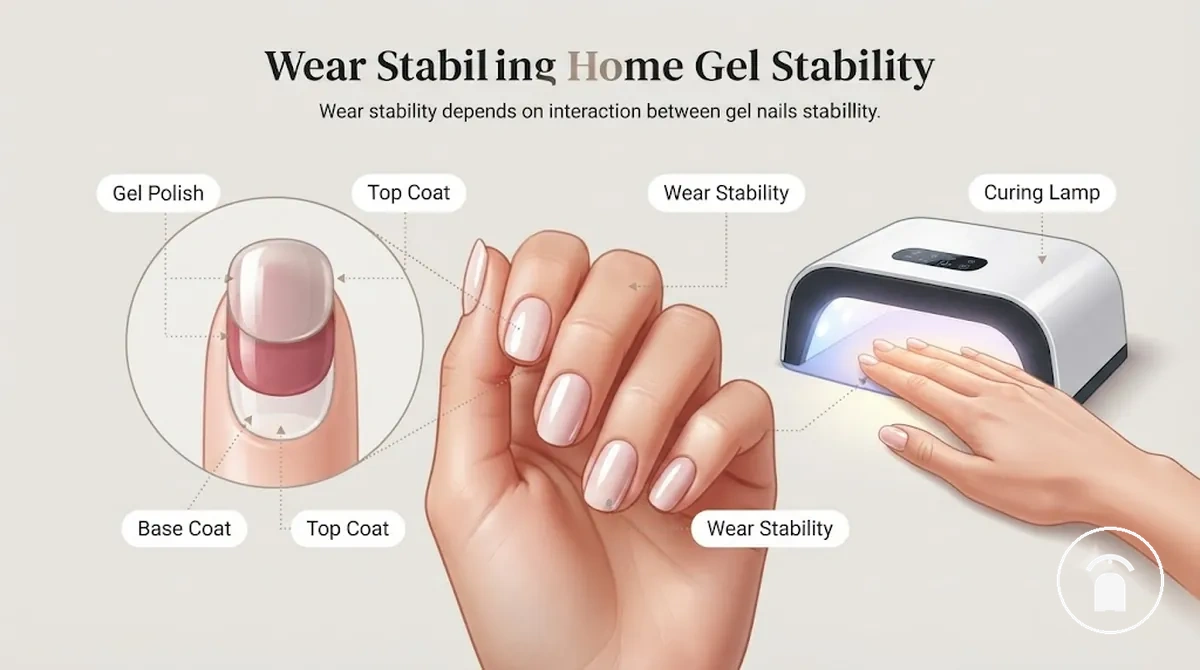
Curing requirements are one condition connecting gel product use with wear quality. The relationship between curing conditions and gel nail kit requirements is explained further through gel nail kit lamp and curing requirements.
Curing requirements are one condition connecting gel product use with wear quality.
For example, two gel manicures using the same gel polish can have different wear stability when their curing conditions or preparation conditions differ. This shows that gel wear time depends on the interaction between products, curing, adhesion, and care conditions rather than a single product characteristic alone.
How to Extend Gel Nail Wear With Proper Aftercare
Aftercare practices help maintain gel nail results by protecting gel nails from conditions that can affect wear quality. Cuticle care, protection habits, and regular maintenance actions support the condition of a gel manicure, but they do not guarantee a specific extension of wear time.
Aftercare practices help maintain gel nail results by protecting gel nails from conditions that can affect wear quality.
The main aftercare practices that support gel nail maintenance include:
- Cuticle care: Using cuticle oil as part of an aftercare routine helps maintain the condition of the skin around the nails and supports ongoing nail care after a gel manicure.
- Protection: Protecting gel nails during daily activities can help reduce exposure to conditions that may affect the manicure, such as unnecessary impact or harsh contact with the nail surface.
- Maintenance habits: Consistent aftercare routines help maintain the appearance and condition of gel nails by supporting the surrounding nail area and reducing avoidable stress on the manicure.
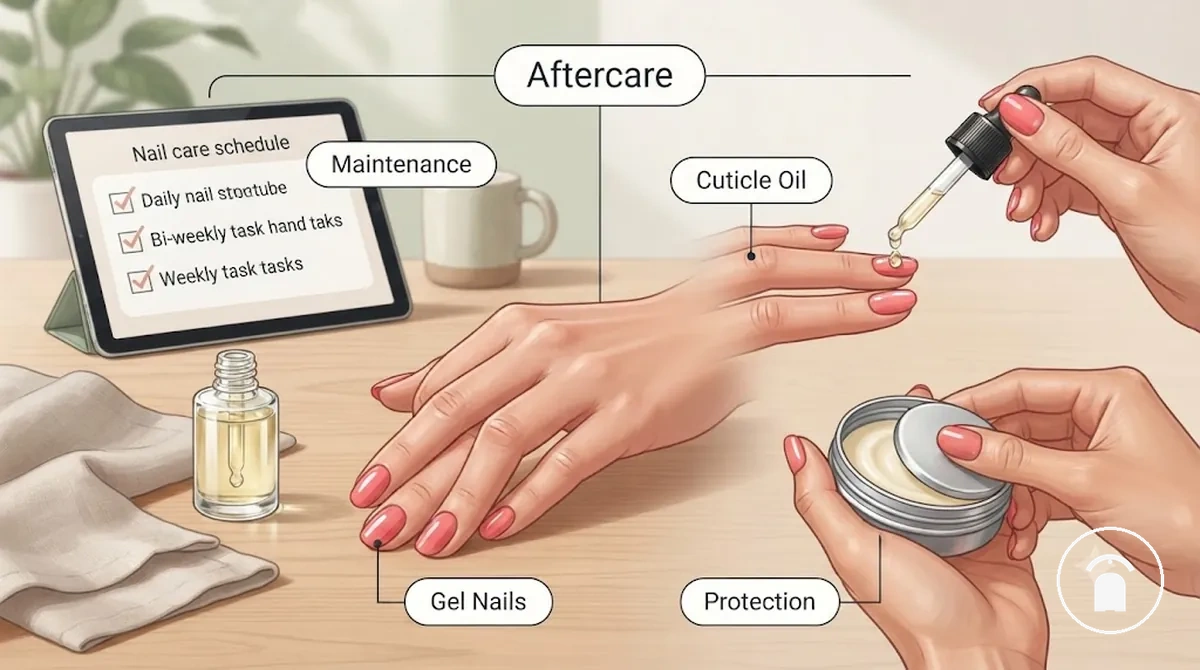
Aftercare focuses on caring for worn gel nails rather than maintaining the tools and equipment used for application. The broader care of the kit and equipment is covered through kit maintenance, while this section focuses on nail aftercare conditions that may influence wear quality.
Aftercare focuses on caring for worn gel nails rather than maintaining the tools and equipment used for application.
For example, applying cuticle oil regularly and protecting gel nails during activities that place stress on the manicure can help maintain the condition of the nail area. These habits support maintenance, but the final wear result can still vary depending on preparation, products, curing conditions, and daily use.
Why Gel Nails Chip or Lift Early
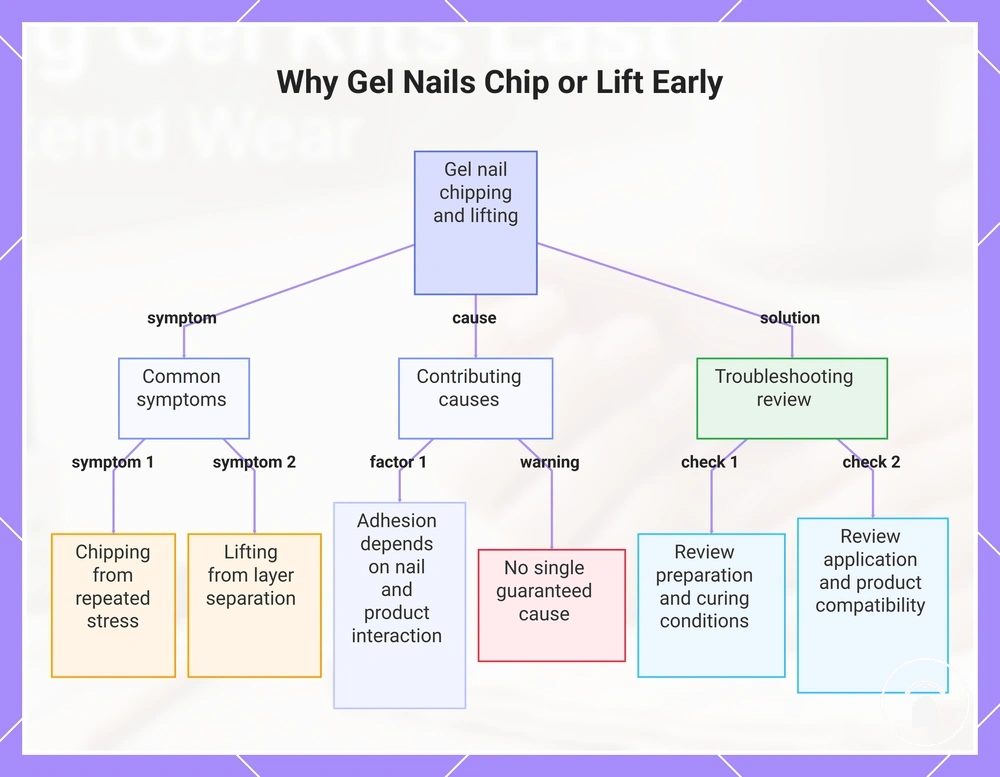
Gel nails can chip or lift early when factors affecting adhesion, curing, preparation, products, or application conditions prevent the gel system from maintaining a stable bond with the nail surface. Chipping and lifting are visible symptoms of reduced wear quality, but the contributing cause can differ between manicures depending on the conditions involved.
Chipping and lifting are visible symptoms of reduced wear quality, but the contributing cause can differ between manicures depending on the conditions involved.
Common symptoms and possible contributing conditions include:
- Chipping: Gel nails may chip when the applied gel layers experience repeated stress during wear. Possible contributing conditions include reduced adhesion, product compatibility issues, or daily activities that place pressure on the manicure.
- Lifting: Gel nails may lift when the gel layers separate from the nail surface. Possible contributing conditions include preparation conditions, curing issues, or application factors that affect how securely the gel system attaches.
- Adhesion changes: Gel adhesion depends on the interaction between the nail surface, gel products, curing conditions, and application process. A visible wear issue does not identify one guaranteed cause because multiple factors can influence the result.
Corrective considerations depend on the symptom and the conditions surrounding the manicure. Reviewing preparation, gel product compatibility, curing conditions, and application factors can help identify possible contributors without treating one factor as the universal cause.
Corrective considerations depend on the symptom and the conditions surrounding the manicure.
For deeper troubleshooting scenarios involving peeling, lifting, and related wear issues, see peeling and lifting fixes.
This chart maps the symptoms, contributing causes, and review steps for early gel nail chipping and lifting.
This chart maps the symptoms, contributing causes, and review steps for early gel nail chipping and lifting.
Gel Nail Longevity Questions
How long do gel nails usually last?
Gel nails usually last about 2 to 3 weeks when preparation, gel products, curing conditions, and aftercare support stable wear. The actual wear time can vary because gel longevity depends on application conditions, nail condition, and daily activities.
Can aftercare affect gel nail wear time?
Yes, aftercare can affect gel nail wear quality by helping maintain the condition of gel nails during use. Care habits such as cuticle care and protecting the manicure from unnecessary stress can support wear maintenance without guaranteeing a specific duration.
Why do gel nails lift or chip?
Gel nails may lift or chip when conditions affecting adhesion, preparation, curing, products, or application prevent the gel system from maintaining stable attachment to the nail surface. The visible symptom does not identify one single cause because different conditions can contribute to reduced wear.
Does curing affect gel nail longevity?
Yes, curing conditions can affect gel nail longevity because curing influences how gel polish layers set after application. The outcome depends on the gel system, curing lamp conditions, curing time, and other application factors rather than curing alone.
Can proper care prevent early lifting or chipping?
Proper care can help maintain gel nails by reducing avoidable stress on the manicure and supporting the surrounding nail area. However, aftercare works together with preparation, products, curing, and application conditions, so it cannot guarantee that lifting or chipping will not occur.
Proper care can help maintain gel nails by reducing avoidable stress on the manicure and supporting the surrounding nail area.
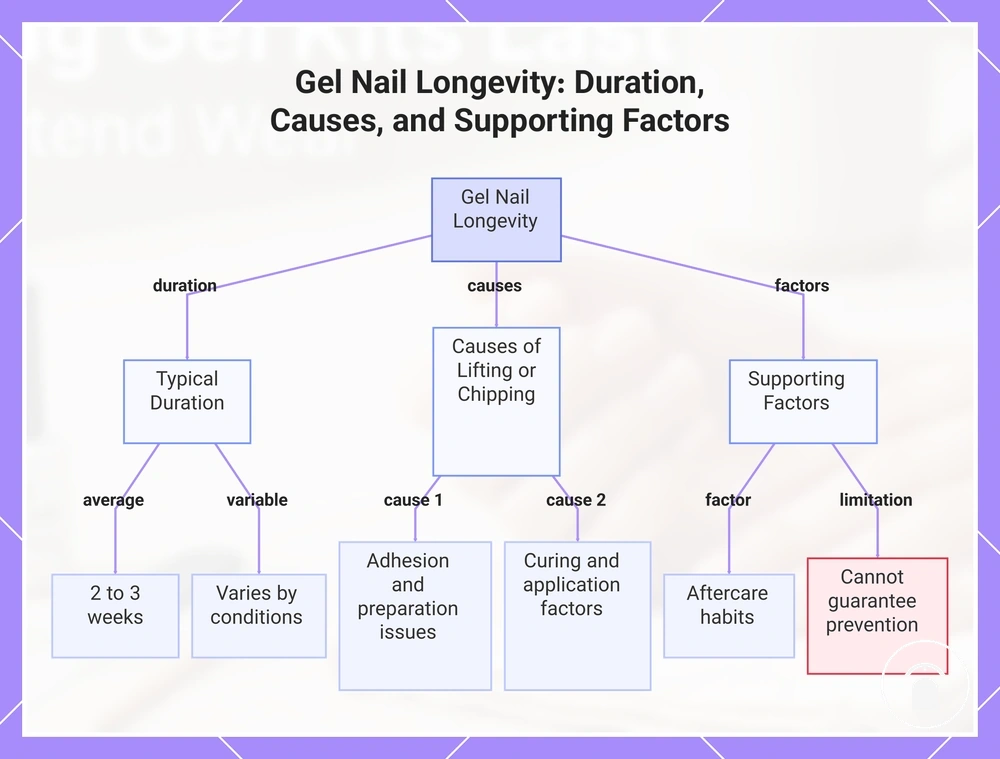
This chart shows the typical wear time of gel nails, common causes of lifting or chipping, and the supporting factors that influence longevity.