
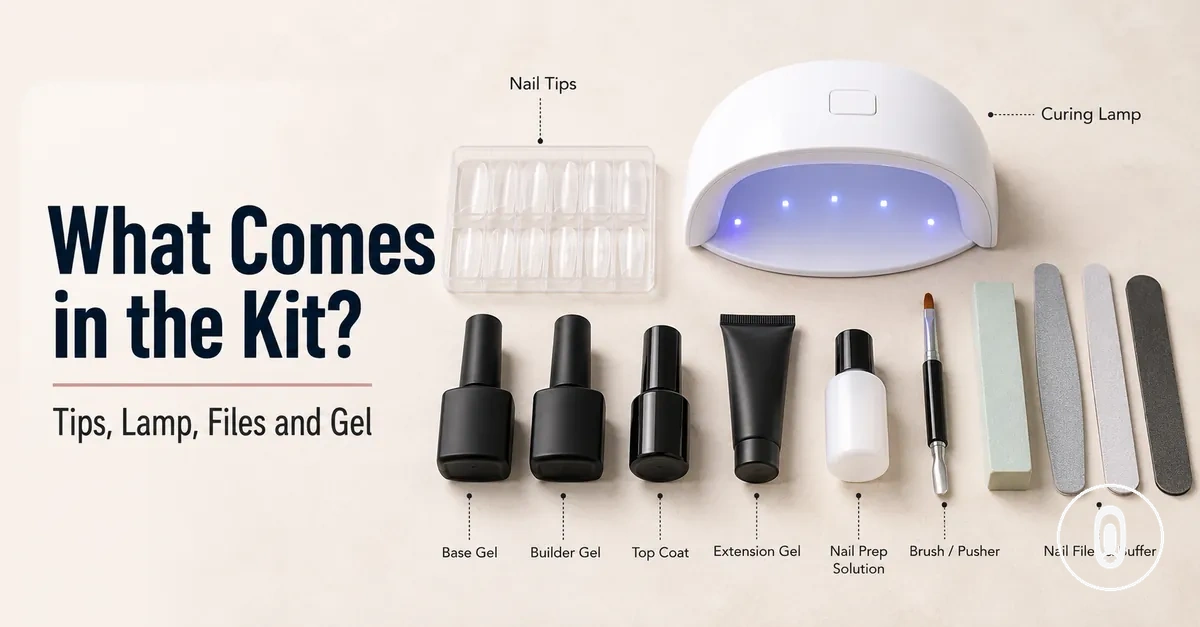
At-Home Gel Nail Extension Kit Components
An at-home gel nail extension kit contains extension tips, gel products, curing equipment, prep products, finishing products, and shaping tools that support different parts of the extension process. These kit components work together to create the extension structure, prepare the nail surface, cure compatible gels, and refine the final appearance. The exact contents vary by kit type, with starter, refill, and more complete kits including different combinations of extension supplies.
Kit components can be grouped into core extension components, prep components, finishing products, and support tools. Core components such as full-cover nail tips, glue gel, builder gel, and a UV LED lamp relate to forming and securing the extension structure. Prep products such as nail dehydrator, primer, and base coat support the nail surface before gel use, while top coat, files, and buffers help complete the finished extension. For a wider category overview, see gel nail extension kit hub. This page focuses on understanding components and their roles rather than providing a full application tutorial or product ranking.
The contents of an at-home gel nail extension kit can change depending on whether the kit is intended for first use, replenishment, or a more complete setup. A starter kit may focus on core items, while a refill-style kit may assume the user already has certain tools or prep products. Comparing component groups, fit, adhesion, curing needs, and finish helps create a clearer decision-support process when evaluating kit options.
What Belongs Inside a Gel Nail Extension Kit
A gel nail extension kit contains the main component groups needed to attach, cure, finish, and shape artificial nail extensions at home. These kit contents are usually organised around nail tips, gel products, a curing lamp, prep products, finishing products, and tools that support different parts of the process. The items included can vary by kit type, so a starter kit, refill kit, or more complete kit may contain different combinations of components.

Core components support the main extension structure, while optional extras may provide additional support based on the user's existing supplies or intended use. Nail tips and adhesive gel relate to attaching the extension, while curing equipment, prep products, finishing products, and support tools contribute to preparation, shaping, and completing the surface. Understanding these groups helps separate component functions from full application instructions.
The main component groups can be reviewed by the role each item plays:
- Nail tips: Provide the extension shape and visible structure of the artificial nail.
- Gel products: Include adhesive gel or related gel products that support attachment or extension building.
- Curing lamp: Supports curing compatible gel products after they are applied.
- Prep products: Support preparation of the nail surface before gel use.
- Finishing products: Help complete and refine the extension surface.
- Tools: Support tasks such as shaping, placement, and cleanup during kit use.
Core Extension Components
Core extension components are the parts of a gel nail extension kit that form and secure the extension structure. These main components work together through the fit of full-cover tips, the bonding role of glue gel or builder gel, and the curing function of a UV LED lamp. The central connection between tips, gel, and lamp determines how each component contributes to the extension process.

These components work together under normal use by matching each part's function with its intended role. Full-cover tips provide the extension body, gel products support adhesion or added structure, and the UV LED lamp supports curing of compatible gel formulas. The table below separates each core component by its attributes, conditions, and effects while keeping prep products and finishing products outside this core group.
| Component | Key Attribute | Usable Condition | Effect |
|---|---|---|---|
| Full-cover tips | Fit, coverage, shape, and extension body | Tip size and curve should match the intended nail surface | Creates the visible extension structure |
| Glue gel | Bonding, viscosity, and placement control | Used with compatible tips and curing requirements | Supports adhesion between the tip and natural nail |
| Builder gel | Thickness, control, and structure support | Depends on the gel formula and intended use | Can support additional extension structure |
| UV LED lamp | Gel compatibility and curing function | Used according to the gel formula and lamp instructions | Supports curing and hardening of compatible gels |
Full-Cover Nail Tips
Full-cover nail tips form the visible extension body of an at-home gel nail extension kit. These extension tips are shaped to cover the natural nail and depend on nail size, curve, and fit for suitable placement. A tip that matches the nail surface may support comfort and adhesion, while length and shape influence the final appearance.

A full-cover nail tip that does not align well with the natural nail curve may create placement challenges during use. For example, a mismatch between the tip curve and nail surface may require adjustment before attachment, while choosing a shape or length remains an appearance preference rather than a fit requirement.
Extension Glue Gel or Builder Gel
Glue gel and builder gel are bonding or building mediums that connect the nail tip to the natural nail before curing. Glue gel functions as an adhesive gel for attachment, while builder gel supports extension structure through its thickness and control characteristics. The gel type, viscosity, and application condition can influence placement control and the way the extension is formed.

Adhesive gel and decorative gel colour have different functions within a gel nail extension kit. Adhesive gel relates to bonding the extension components, while decorative gel colour relates to appearance rather than the bonding process. The role of each gel depends on the formula, compatibility, and curing requirements.
- Glue gel: A bonding medium used to support attachment between the tip and natural nail.
- Builder gel: A gel product used for thickness, control, and extension structure.
- Viscosity: A gel attribute that can influence placement control and handling during use.
UV or LED Curing Lamp
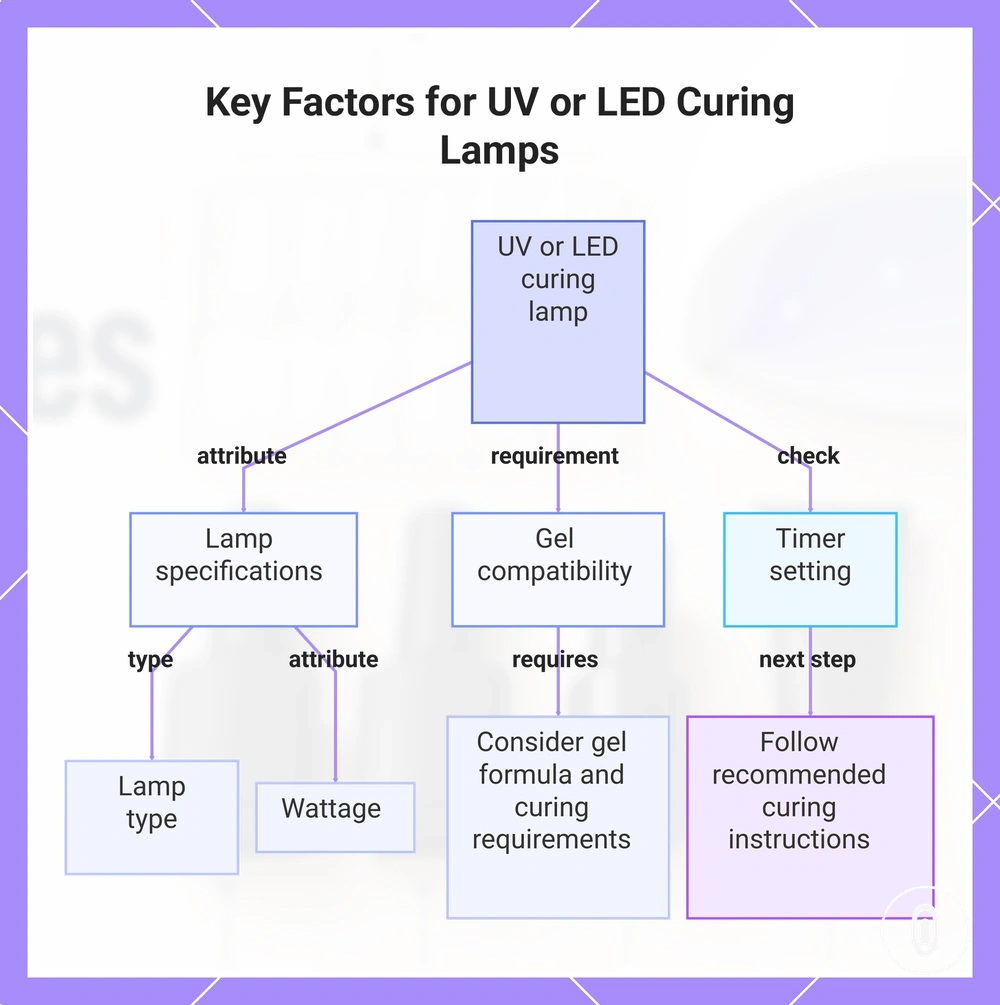
A UV or LED curing lamp is the curing component that hardens compatible gel products after placement. The lamp type, gel compatibility, timer setting, and wattage can influence how gel products are cured. Cure settings depend on the gel formula and lamp instructions rather than a single setting that applies to every gel product.
The main factors to check for a curing lamp as a kit component include:
- Lamp type: A UV lamp or LED lamp may suit different gel products depending on compatibility requirements.
- Gel compatibility: The curing lamp should be considered alongside the gel formula and curing requirements.
- Timer setting: Timer functions can help follow the recommended curing instructions for the gel product.
- Wattage: Wattage is a power attribute to consider together with lamp specifications and gel instructions.
This chart shows the main factors to check for a UV or LED curing lamp, including lamp specifications, gel compatibility, and timer setting.
Prep Components for Adhesion
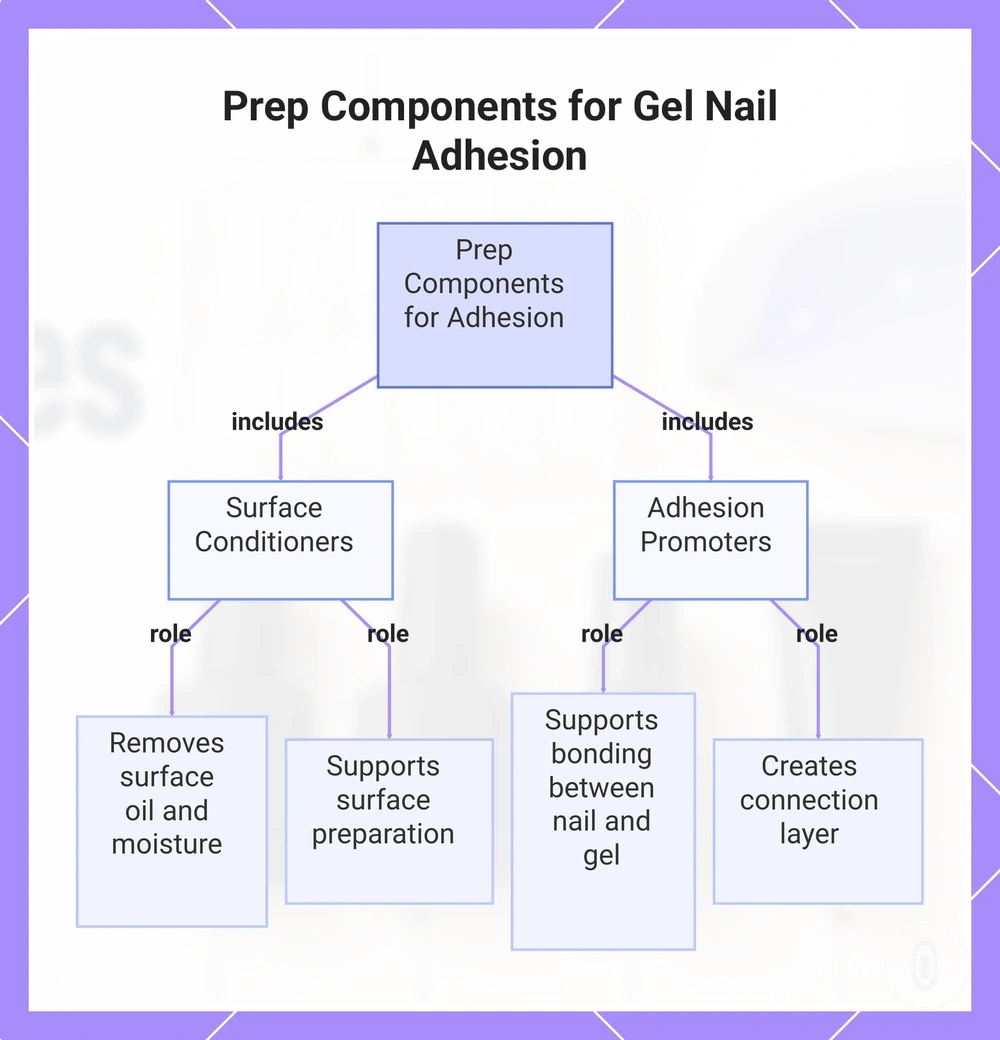
Adhesion depends on the nail surface being prepared for gel because prep components help create suitable conditions before any tip or gel product is placed. Surface factors such as surface oil and moisture can influence how bonding products interact with the nail surface. Common prep components include dehydrator, primer, and base coat.
The prep supplies included in a gel nail extension kit can vary depending on the kit contents and intended use. Some kits may include multiple prep products, while others may require certain nail prep supplies as a separate purchase. The main prep component groups can be reviewed by their role:
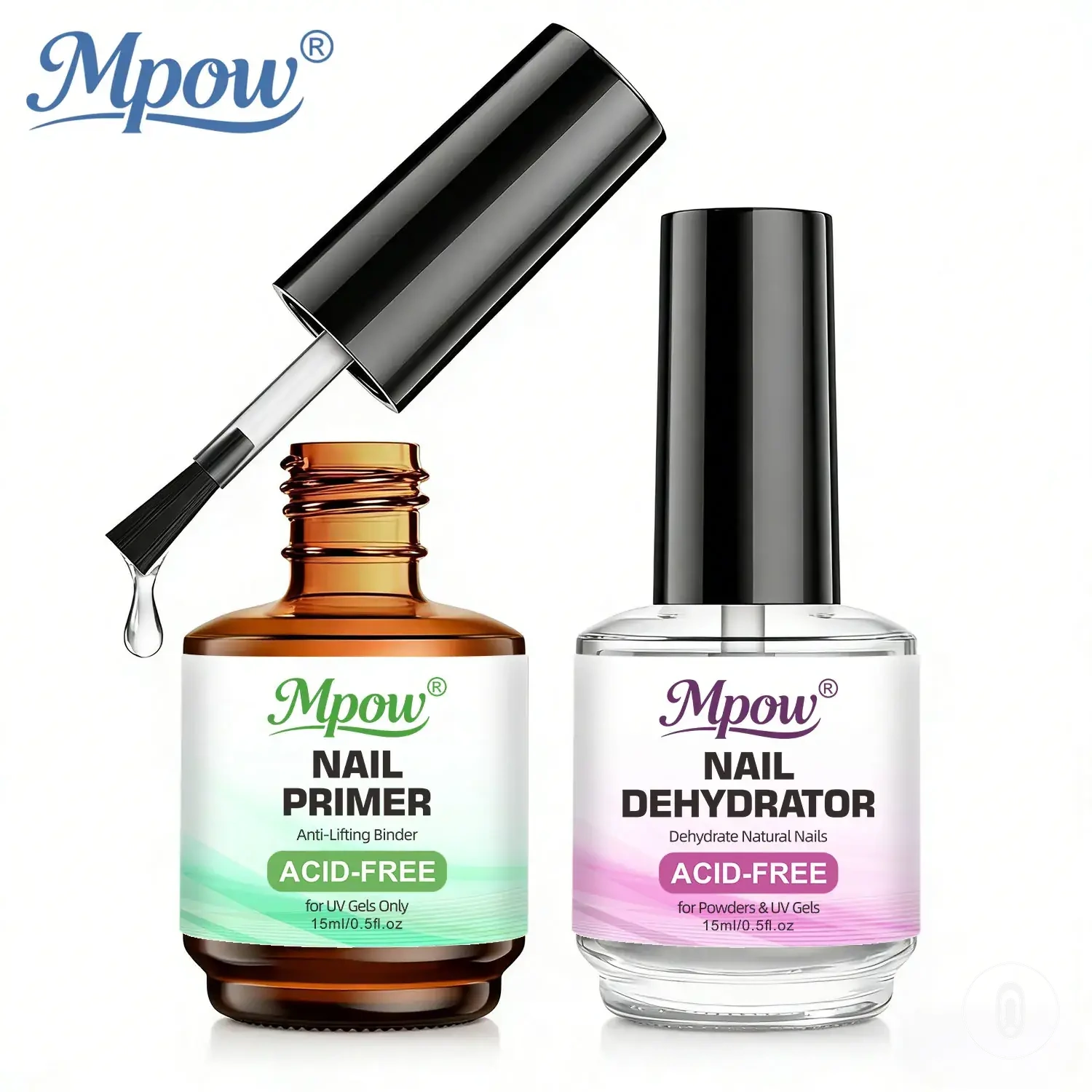
- Nail dehydrator: A prep product used to address surface oil and moisture conditions before gel products are applied.
- Primer: A bonding-related prep component that can support adhesion between the nail surface and gel products.
- Base coat: An adhesion layer that can help create a suitable connection between the prepared nail and gel products.
- Cleanser: A prep supply that can support surface preparation before extension products are used.
This chart shows the main prep components used for gel nail adhesion and their roles in surface preparation and bonding.
Nail Dehydrator and Primer
Nail dehydrator and primer are separate surface-prep products used before gel attachment. Nail dehydrator is associated with preparing the nail surface by addressing oil and moisture conditions, while primer is associated with the bonding role between the prepared surface and gel products. Their use order depends on the product instructions and kit variation.
| Product | Surface Prep and Bonding Role |
|---|---|
| Nail dehydrator | Helps prepare the nail surface by managing surface oil and moisture conditions before gel products are applied. |
| Primer | Supports bonding between the prepared nail surface and gel products when used according to instructions. |
Base Coat and Adhesion Layer
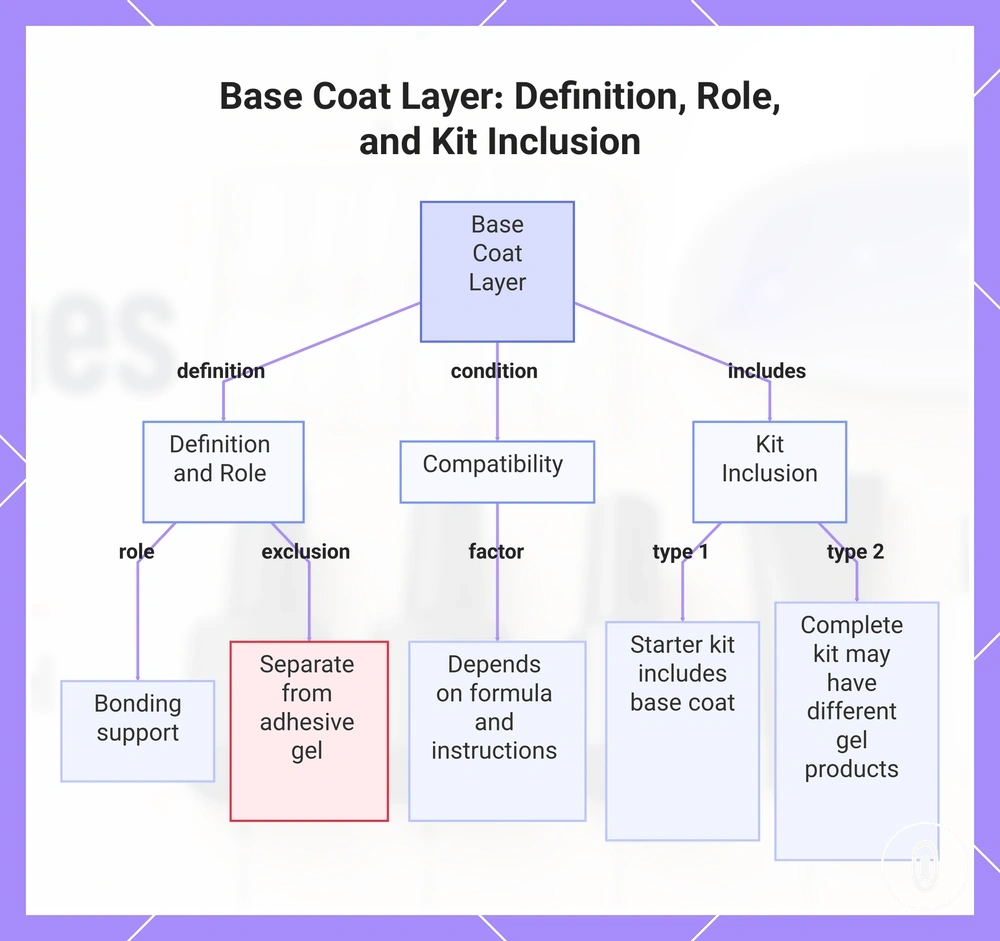
A base coat or adhesion layer is the interface between the prepared nail and later gel products. The base coat supports bonding between the prepared nail and gel products, while compatibility depends on the product formula and kit instructions. Its role is separate from adhesive gel, which focuses on attaching extension components.
The inclusion of a base coat can vary by kit type. A starter kit may include a base coat as part of its component group, while a more complete kit may contain different gel products or additional items depending on the intended use.
This chart explains the definition, role, compatibility, and kit inclusion of the base coat layer in nail products.
Finishing Products in Gel Extension Kits
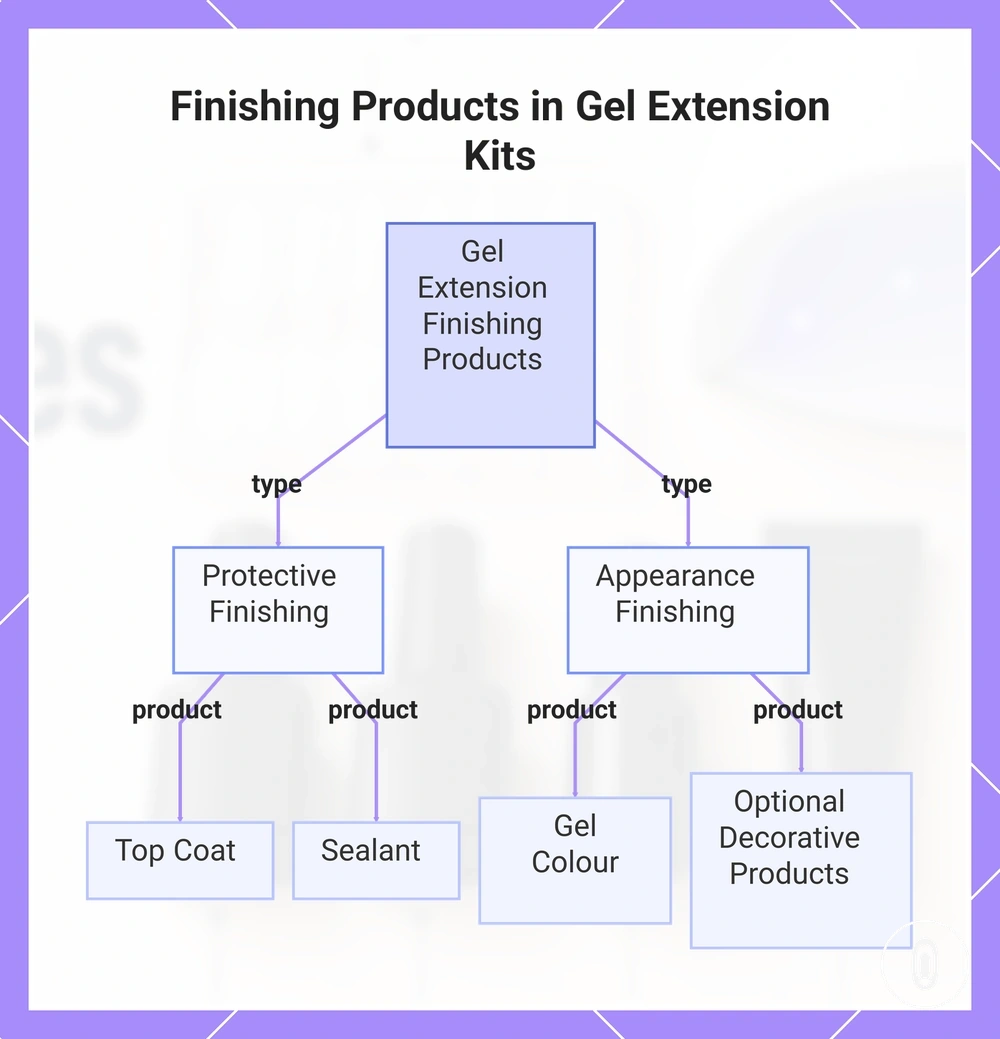
Finishing products are items used after the extension structure is in place to complete the cured surface. These products can support protective finishing or appearance-focused changes, with top coat, sealant, gel colour, and decorative products serving different functions. The final finish may involve qualities such as shine, surface appearance, or additional protection depending on the product type and instructions.
Protective finishing focuses on completing the cured surface, while optional styling products focus on appearance changes and decorative choices. Decorative products are not required components for every gel extension kit, and their inclusion can vary by kit contents and personal preferences. The main finishing product groups can be reviewed by their function:
- Top coat: A finishing layer used on the cured surface to support shine and surface protection according to product instructions.
- Sealant: A finishing product that can help complete the surface finish of the extension system.
- Gel colour: A colour-focused gel product that changes appearance and may require curing based on the gel formula.
- Decorative products: Optional styling additions that can vary between kits and may be used for appearance-focused finishes.
This chart shows the main finishing product types in gel extension kits, grouped by their function: protective finishing and appearance finishing.
Top Coat and Sealant Layers
Top coat and sealant layers are finishing products used to complete the cured surface after the extension structure is in place. A top coat or sealant acts as a finishing layer that can influence gloss, protection, and the final feel of the surface. The effect depends on the product formula, curing requirements, and wipe condition.
Top coat attributes can vary depending on the finishing product:
- Gloss: A top coat can add shine and affect the appearance of the cured surface.
- Protection: A sealant or finishing layer can support surface protection when used according to product instructions.
- Tack-free finish: Some formulas may require different wipe conditions after curing, depending on the product instructions.
For example, a kit without colour gel may still include a top coat because the finishing layer can complete the appearance of the cured surface. The level of protection or durability depends on the specific formula rather than applying the same outcome to every product.
Gel Colour and Decorative Products
Gel colour and decorative products affect the appearance of gel extensions rather than the core extension structure. These appearance products can include colour gel, glitter, stickers, and other optional items that change the final look of the extension surface. The decorative contents can vary depending on kit positioning, with some kits including more styling extras than others.
These optional items are separate from the structural components that create the extension itself. Common appearance-focused additions include:
- Gel colour: A colour-focused gel product that changes appearance and may require curing depending on the gel formula.
- Glitter: A decorative product used to add visual effects rather than create the extension structure.
- Stickers: Optional nail art items that add surface decoration to the finished extension.
- Nail art products: Styling items that vary by kit positioning and are not core extension components.
Tools Used to Prepare, Place, and Shape Extensions
Support tools are non-gel items used to prepare, place, clean, or shape extensions during kit use. These tools support tasks around component handling rather than creating the gel extension structure. The main task groups include shaping, placement, cleanup, and surface preparation.
The usefulness of each tool depends on the user's existing supplies, kit type, and the task being supported. Some kits may include selected accessories, while others may require separate tools based on the intended setup. The table below groups tools by their task, use condition, and practical effect.
| Tool | Task Attribute | Use Condition | Practical Effect |
|---|---|---|---|
| Files and buffers | Shaping and surface smoothing | Used when adjusting extension shape or surface areas | Supports shaping and surface refinement |
| Cuticle tools | Preparation support | Used when working around the nail area | Helps prepare the surrounding area for component use |
| Brushes and clips | Placement and control | Used when handling materials or supporting placement tasks | Supports controlled handling of components |
| Wipes and cleanser pads | Cleanup and residue management | Used according to product instructions | Supports cleanup during kit use |
Files, Buffers, and Cuticle Tools
Files, buffers, and cuticle tools are preparation and shaping aids used to support extension placement, surface readiness, and final shape. A nail file is associated with edge shaping, a buffer supports surface smoothing, and a cuticle tool supports preparation around the cuticle area. The natural nail condition should be considered so these tools can be used with a gentle-use approach.
The main tool differences relate to their surface effect and intended use:
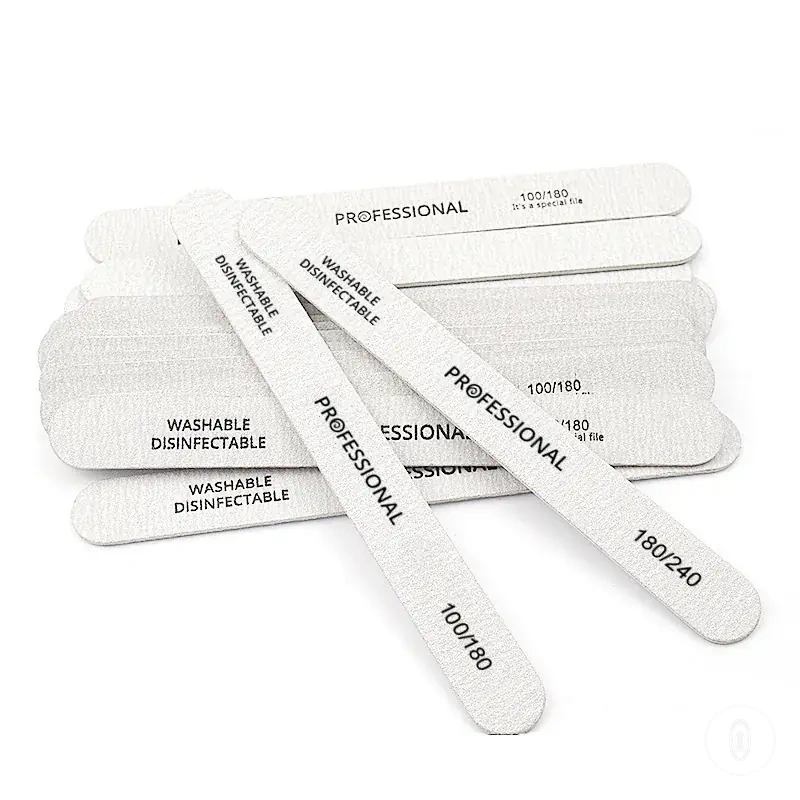
- Nail file: A shaping tool used for edge shaping, tip adjustment, and refining the final shape when appropriate.
- Buffer: A tool used for surface smoothing and supporting surface readiness with gentle use.
- Cuticle tool: A prep tool used around the cuticle area as part of local preparation support.
Brushes, Clips, Wipes, and Cleanser Pads
Brushes, clips, wipes, and cleanser pads are support tools used for control, cleanup, and positioning during gel extension kit use. These accessories help with handling materials and maintaining cleanliness, but their importance depends on the kit type, included components, and the user's existing supplies.
A kit may include gels and tips while offering fewer support accessories, so these tools often relate to ease of use rather than the extension structure itself. The main accessory groups can be separated by their handling and cleanup functions:
- Brushes: Support gel control, placement, and handling when working with extension materials.
- Clips: Support positioning and handling tasks where additional control may be useful.
- Wipes: Support cleanup by helping manage residue during kit use.
- Cleanser pads: Support cleanliness and surface cleanup according to product instructions.
Complete Kits Versus Optional Add-Ons
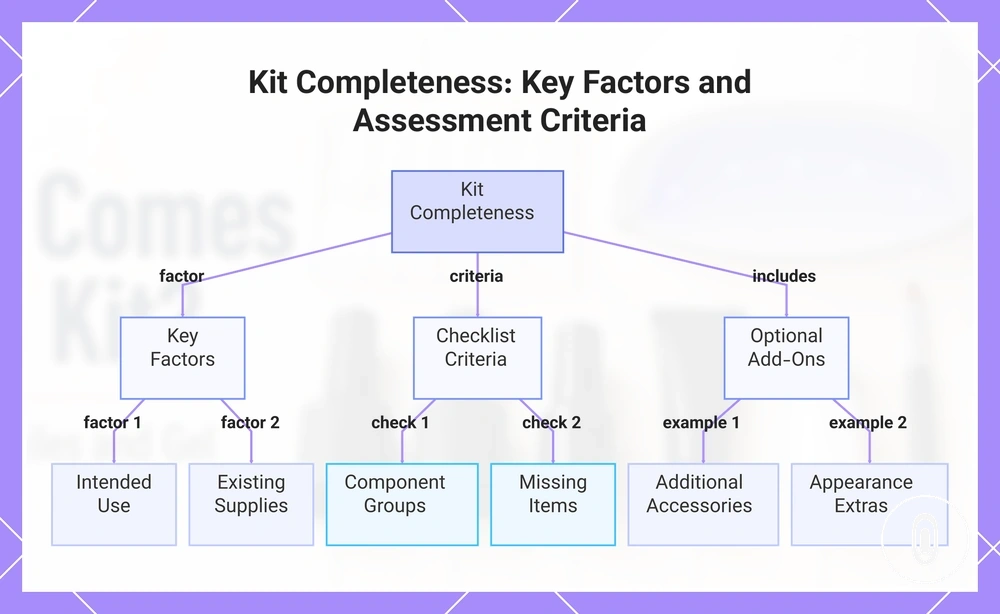
Kit completeness depends on intended use and existing supplies rather than the number of included items alone. A complete kit may include broader component groups for first use, while a starter kit or refill kit may suit different situations depending on what is already available. These differences help separate complete kit, starter kit, and refill kit options.
A beginner starting with gel extensions may need more component groups included because fewer supplies are already available. A user focused on replenishment may only need selected items to replace existing supplies. Understanding kit type differences can help clarify how kit contents vary between intended uses.
Optional add-ons are non-core extras that can support specific preferences but are not the main component groups needed for the extension system. These add-on items may include additional accessories or appearance-focused extras depending on kit positioning and existing supplies. The checklist below highlights the main criteria for assessing kit completeness.
Missing items can indicate that a kit may require separate purchases to match a user's intended setup. Reviewing component groups and comparing them with existing supplies can help identify whether a kit suits first use, beginner needs, or replenishment purposes.
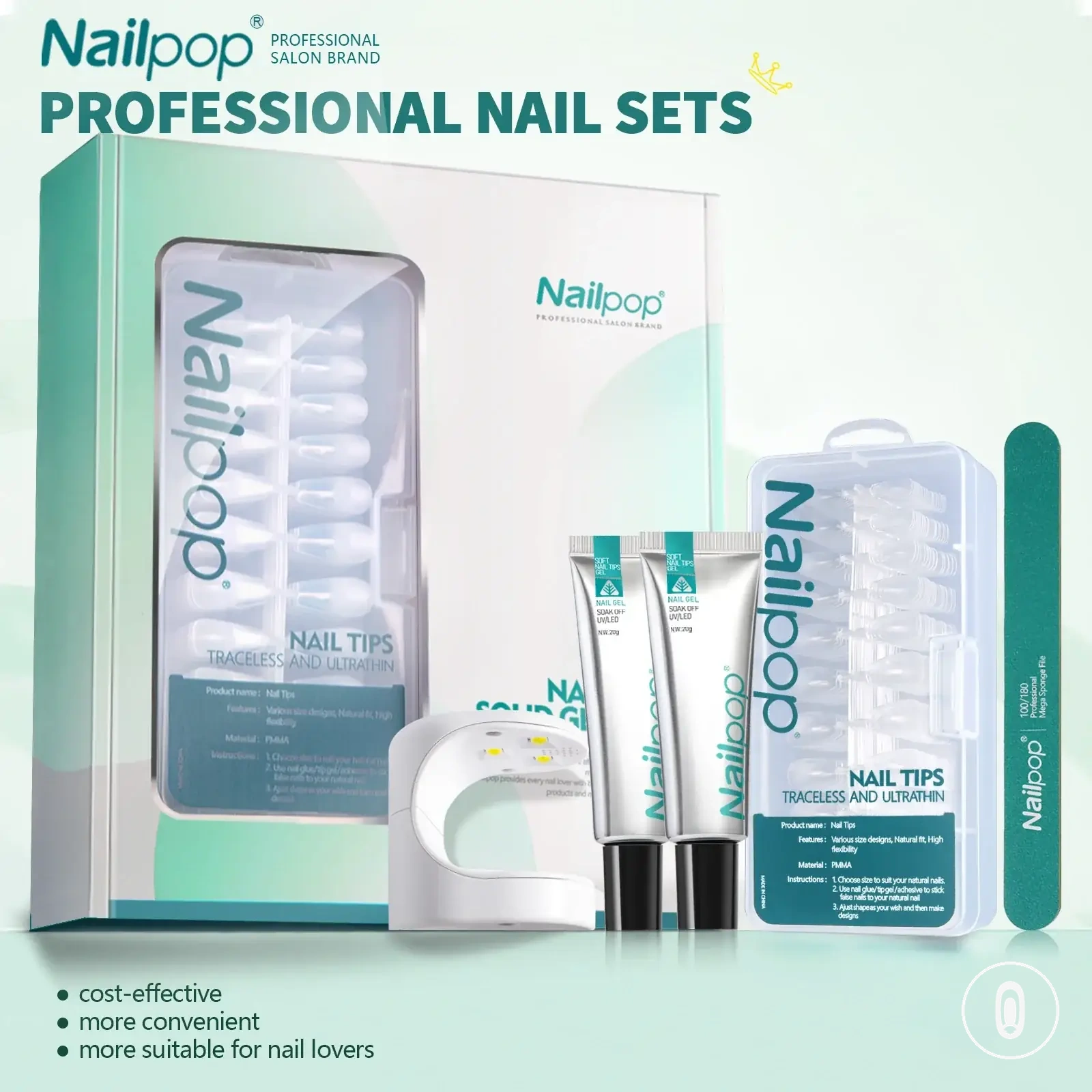
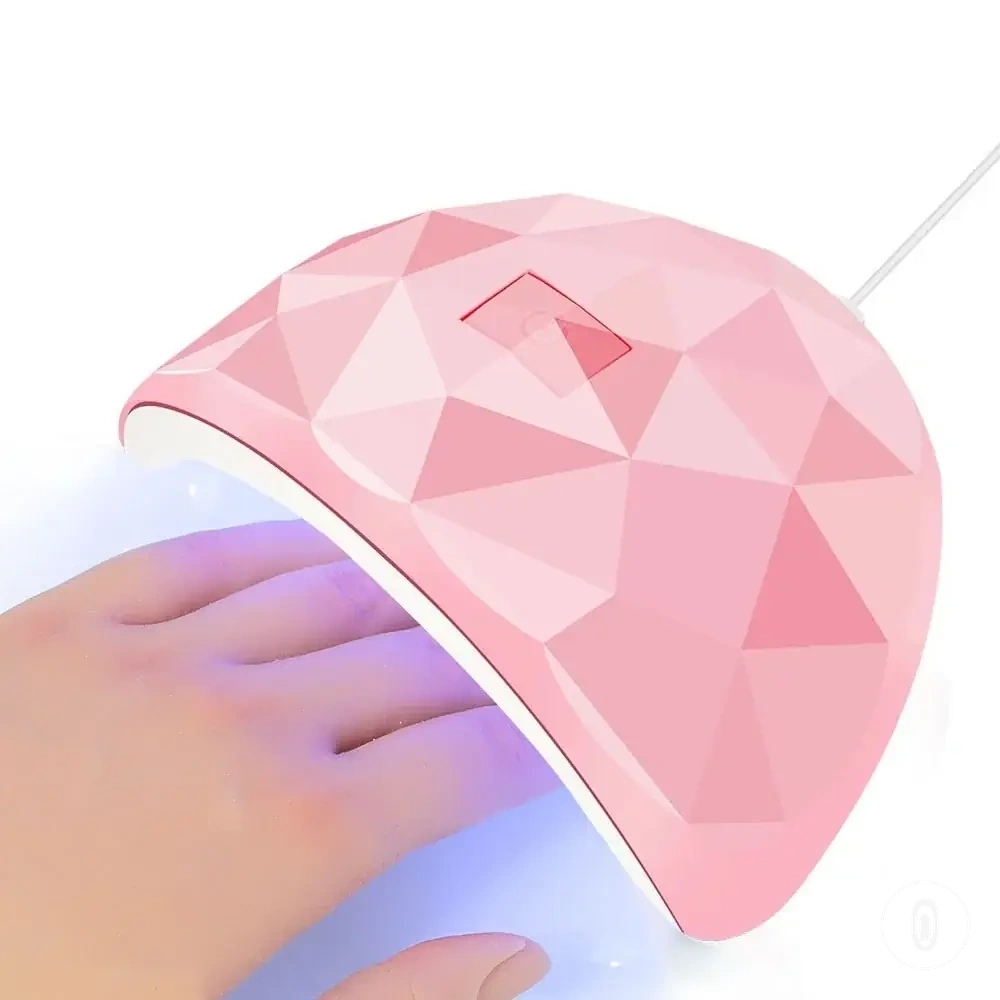
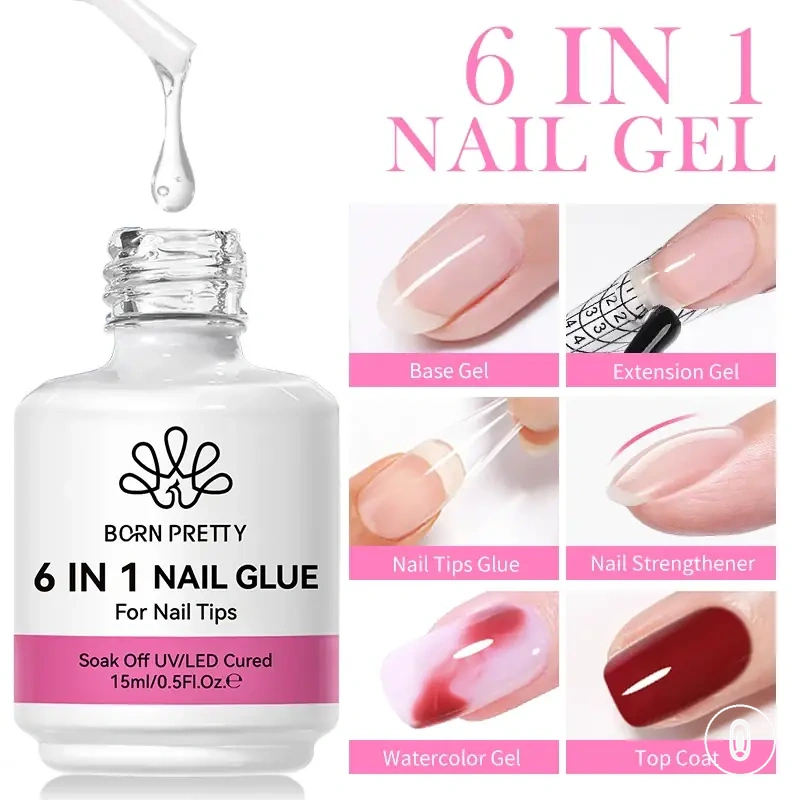
Here are product examples that may make comparison easier. Before buying, always review the compatibility criteria, essential features, and product details.
- Component groups: Check whether the kit includes the main categories needed for the intended use.
- Missing items: Identify any important supplies that may need to be added separately.
- Existing supplies: Consider which tools or products are already owned before selecting a kit.
- Beginner use: A starter kit may suit users who need a broader initial setup.
- Replenishment use: A refill kit may suit users replacing selected supplies they already have.
This chart shows the main factors that determine kit completeness and the checklist criteria to evaluate whether a kit suits your needs.
Components That Usually Signal a Complete Kit
A complete kit is signaled by functional component groups rather than item count alone. The included items should support the intended use, with groups such as nail tips, gel, and a lamp contributing to first-use readiness. The checklist below highlights common completeness signals without requiring every accessory or optional item.
- Nail tips: Included tips can indicate that the kit provides the extension foundation for the intended use.
- Gel: Gel products can signal that the kit includes materials needed for the extension system.
- Lamp: A lamp can support curing requirements when compatible with the included gel products.
- Prep products: Included prep products can support surface preparation before gel use.
- Finishing products: Finishing products can indicate support for completing the cured surface.
- Core tools: Core tools can support handling, shaping, or cleanup depending on the kit contents.
Users who already own a lamp or prep tools may prefer a kit with fewer included items because some supplies are already available. Existing supplies can influence whether a kit matches the user's intended setup.
Items Commonly Missing from Starter Kits
Starter kits often focus on first-use basics or a narrower bundle rather than including every possible component. Missing items depend on the kit purpose, with some designed for initial use and others focused on specific needs or existing supplies. Checking the included items can help assess first-use readiness and later maintenance requirements.
- Refill items: Some starter kits may not include replenishment items intended for users who already have core supplies.
- Prep products: Prep products may be separate add-ons depending on the kit contents and intended setup.
- Removal tools: Removal tools may be omitted when a kit focuses on extension creation rather than later maintenance.
- Finishing products: Finishing products can vary depending on the included component groups and kit purpose.
- Separate add-ons: Refill items or add-on bundles may include selected components rather than a full first-use setup.
How Component Quality Changes Kit Performance
Component quality changes ease of use and reliability through fit, compatibility, and finish conditions rather than a single performance outcome. Factors such as component quality, adhesion, curing reliability, and finish can influence kit performance depending on the components and conditions involved. Exact wear results or performance guarantees cannot be assumed across different products or setups.
Quality is evaluated by component function rather than brand claims or appearance alone. A component's value depends on attributes such as fit, compatibility, and usability within the intended system. The criteria table below outlines common quality signals and their likely effects.
| Component | Quality Attribute | Acceptable Condition | Likely Effect |
|---|---|---|---|
| Nail tips | Fit and shape compatibility | Tip size and shape suit the intended nail setup | Can support easier placement and usability |
| Gel | Formula compatibility and handling | Gel is used according to product instructions | Can influence adhesion and application control |
| Lamp | Compatibility and curing reliability | Lamp suitability matches the gel formula and instructions | Can support suitable curing conditions |
| Prep products | Surface preparation suitability | Products are used according to the intended preparation requirements | Can support adhesion conditions |
| Tools and finishing products | Control and finish support | Tools and finishes suit shaping, cleanup, and surface completion tasks | Can contribute to practical value and final finish |
Users can weigh necessary quality factors against optional extras by considering how each component supports the intended use. A person comparing kits may focus on criteria such as fit, compatibility, and component reliability before considering additional extras, while kit selection criteria can provide further decision support.
Here are product examples that may make comparison easier. Before buying, always review the compatibility criteria, essential features, and product details.