At-home gel nail extension maintenance and aftercare
At-home gel nail extension maintenance is the ongoing aftercare that helps preserve extension wear, appearance, and nail comfort through daily protection, moisture control, gentle cleaning, surface care, and condition-based decisions. It supports the condition of at-home gel nail extensions during normal wear rather than acting as a one-time fix.
Maintenance includes regular cleaning, thoughtful use of cuticle oil around the nail fold, checking the free edge, and watching for signs such as lifting or surface damage. These habits can help reduce avoidable wear and support comfort during extension wear. Maintenance cannot safely correct major lifting, painful extensions, cracks, or trapped moisture that may require safe removal. Results vary by application quality, fit, the product system, nail condition, and daily exposure.
Small changes in extension condition may be easier to manage when they are noticed before damage progresses. The following sections explain what maintenance covers, how to care for gel extensions during everyday wear, and how to recognise when routine aftercare is no longer enough.
What maintenance covers for at-home gel nail extensions
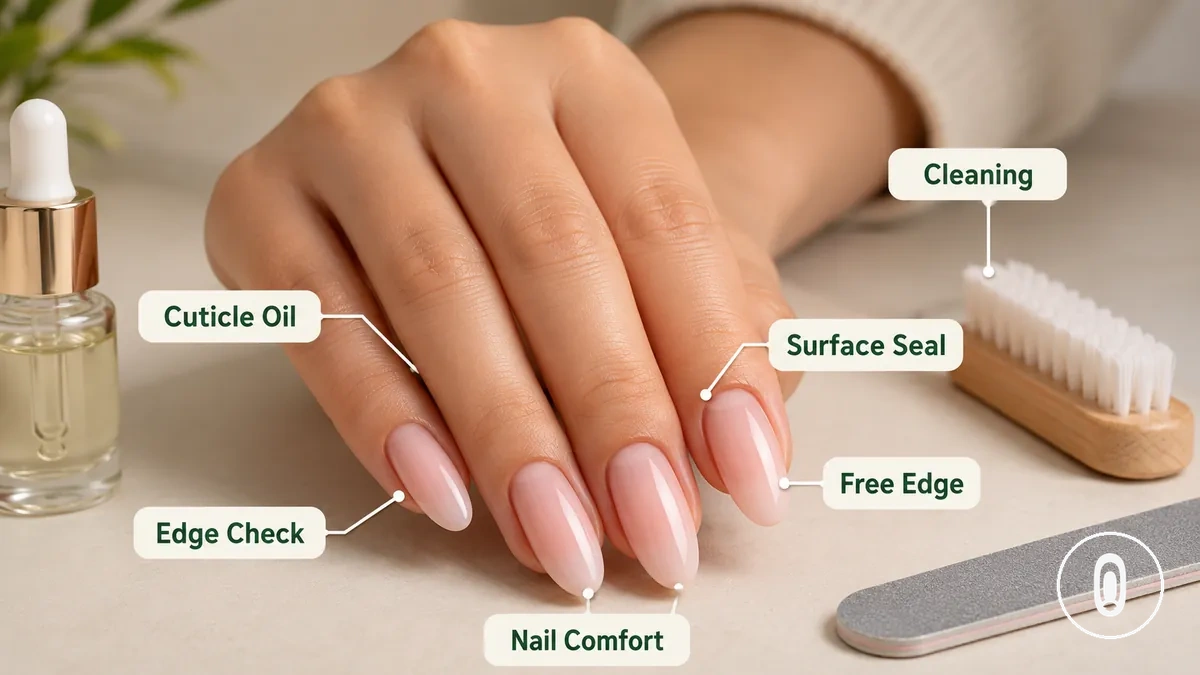
Maintenance for at-home gel nail extensions covers aftercare, cleaning, moisture support, surface protection, and recognising when a compromised extension should no longer be worn. Its scope is to support gel extension condition and nail comfort during normal wear while keeping maintenance separate from repair or removal.
What maintenance covers for at-home gel nail extensions includes monitoring edge integrity, checking the surface seal, and supporting nail comfort through consistent aftercare. These care areas apply to at-home gel nail extension kits without changing how the extensions were originally applied.
| Area | Maintenance covers | Not covered here |
|---|---|---|
| Cleaning | Keeping the extension surface clean during wear | Reapplying or rebuilding extensions |
| Moisture support | Supporting the cuticle area and surrounding nail comfort | Repairing damaged extensions |
| Surface protection | Watching the surface seal for signs of wear | Structural repair |
| Edge checks | Monitoring edge integrity and extension condition | Correcting major lifting or cracks |
| Removal triggers | Recognising when a removal decision may be appropriate | Performing safe removal steps |
If gel extension condition changes because of lifting, reduced edge integrity, discomfort, or a weakened surface seal, maintenance shifts from routine care toward deciding whether continued wear is appropriate. Maintenance may reduce everyday wear issues, but it cannot resolve every compromised extension. Any expected extension wear time also depends on preparation, application quality, fit, and aftercare rather than maintenance alone.
First-day aftercare for new gel nail extensions
First-day aftercare for new gel nail extensions focuses on protecting the cured extension bond from avoidable stress while normal use gradually resumes. Small adjustments to everyday habits may help reduce unnecessary strain during early wear, but no single precaution can prevent all lifting or breakage. The goal is sensible first-day stress reduction.
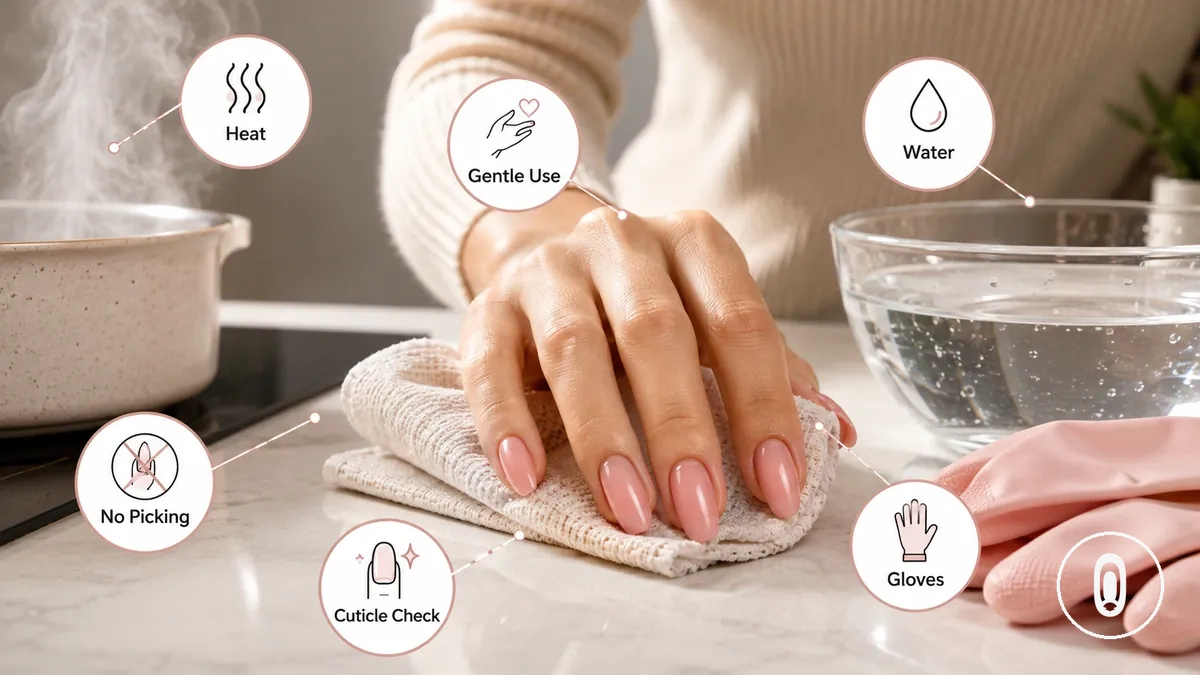
Heat exposure, long water contact, pressure, picking, harsh chemicals, and early cuticle irritation or edge irritation can increase stress on new gel nail extensions, although the effect varies with application quality, fit, and daily use. First-day aftercare helps organise these avoidable stressors rather than guaranteeing a specific wear outcome. The following checklist highlights practical habits for early wear:
- Avoid prolonged heat exposure, such as extended steam or very hot water, when practical.
- Limit long water contact and dry your hands gently after washing.
- Reduce unnecessary pressure on the nail tips during everyday tasks.
- Avoid picking at the extensions or testing the edges for lifting.
- Use care around harsh chemicals, and consider protective gloves during household cleaning.
- Check for early cuticle irritation or changes around the free edge that may suggest extra attention is needed.
When carrying out an everyday activity such as washing dishes, wearing gloves, avoiding prolonged soaking, and using gentle hand movements may help reduce avoidable stress on the cured extension bond. These simple adjustments support normal daily use without turning first-day aftercare into a full application process.
Heat, water, and pressure limits after application
Heat, water, and pressure limits after application are early-wear safeguards rather than permanent restrictions for every user. They help reduce avoidable stress on the extension edge and surface during early wear, although the effect varies with the gel system, nail length, activity level, and exposure conditions.
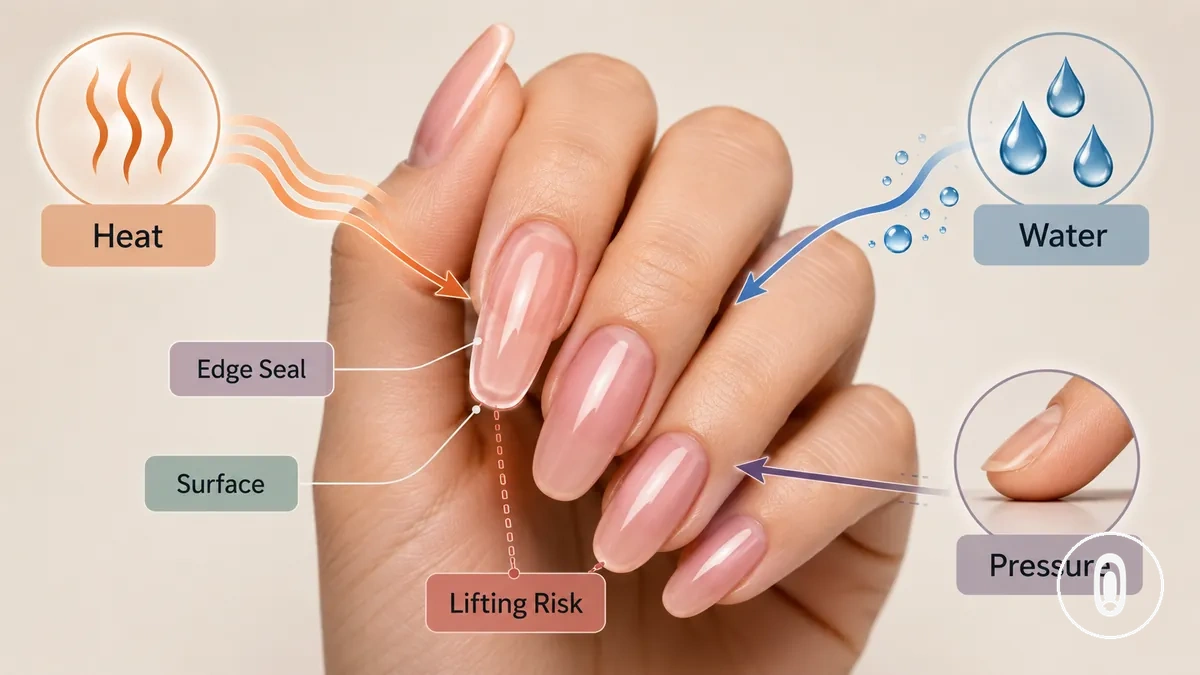
Heat, water, and pressure can affect the extension edge, surface appearance, comfort, or lifting risk when exposure becomes more intense or lasts longer. Heat, water, and pressure limits after application depend on exposure intensity and duration rather than a fixed rule. Consider these exposure-based situations:
- Brief heat exposure: Short periods of warmth may have limited effect, while prolonged heat can place additional stress on the extension surface or edge.
- Water exposure: Normal hand washing is usually part of daily use, but extended soaking or prolonged water contact may increase stress on the edge seal during early wear.
- Pressure: Repeated impact or heavy pressure on the nail tips can increase lifting risk and reduce comfort, particularly with longer nail lengths.
- Combined exposure: Heat, water, and pressure together may place more stress on the extensions than brief exposure to a single factor.
Daily care that keeps gel extensions clean and flexible
Daily care keeps gel extensions clean, moisturised around the cuticle area, and protected from repeated small stresses through simple repeatable habits. These routine checks support everyday comfort and may help maintain flexibility and appearance, but they do not guarantee longer wear or replace correcting poor preparation or severe lifting. Daily care is most effective when treated as consistent maintenance.
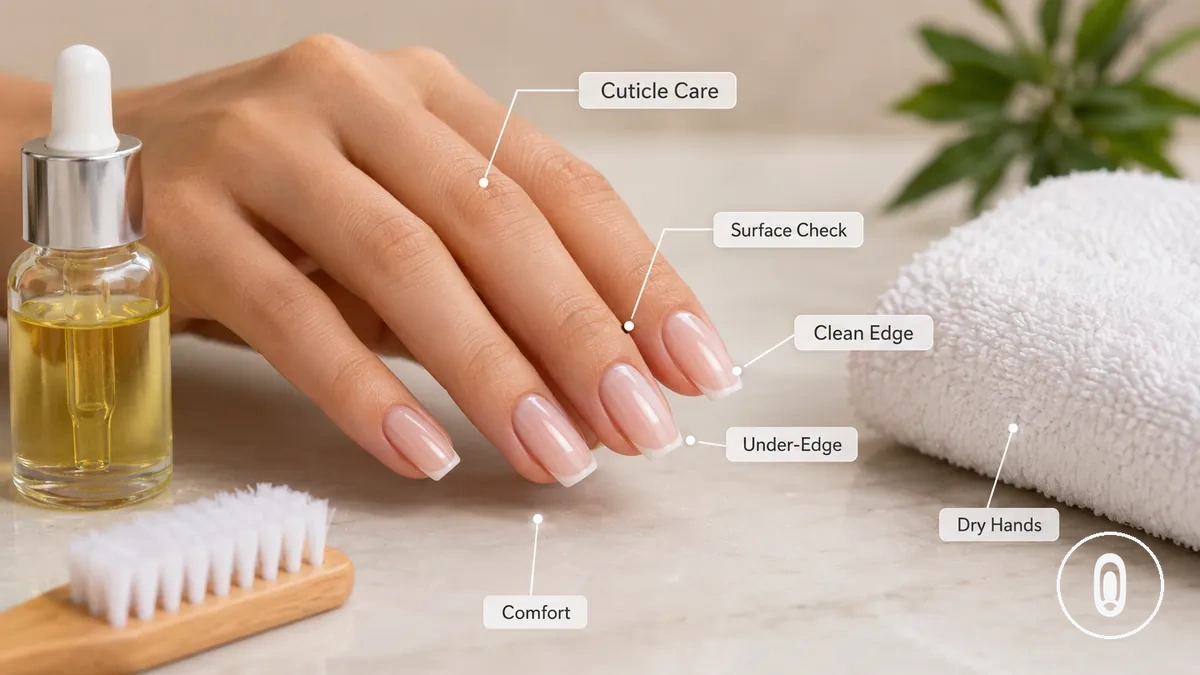
If you wash your hands often, use cleaning products, or wear longer tips, repeated exposure can place additional stress on gel extensions. Regular cleaning, drying, and observation help keep gel extensions clean and flexible through repeatable checks rather than intensive treatment. Use the following checklist as an everyday maintenance guide.
- Keep the cuticle area moisturised to support comfort and flexibility.
- Check underside cleanliness and gently remove visible debris from the under-edge.
- Maintain good drying habits after washing your hands.
- Monitor edge feel for changes that may indicate repeated stress.
- Look for increasing surface dullness during routine checks.
- Notice comfort signals and adjust care when frequent handwashing or cleaning products are part of your routine, including using protective gloves when appropriate.
Repeated water or chemical exposure can increase everyday stress on gel extensions, so routine cleaning, drying, and comfort checks may become more important. Daily care supports ongoing maintenance, but it does not overcome poor preparation or resolve severe lifting.
Daily care is a repeatable habit rather than a guaranteed prevention plan. If you also want to support the nail beneath the extensions, see natural nail protection for guidance that complements ongoing maintenance.
Cuticle oil and moisturising during gel extension wear
Cuticle oil and moisturising support the surrounding nail fold and skin comfort during gel extension wear. They help care for the cuticle area without repairing the gel bond or correcting lifting.
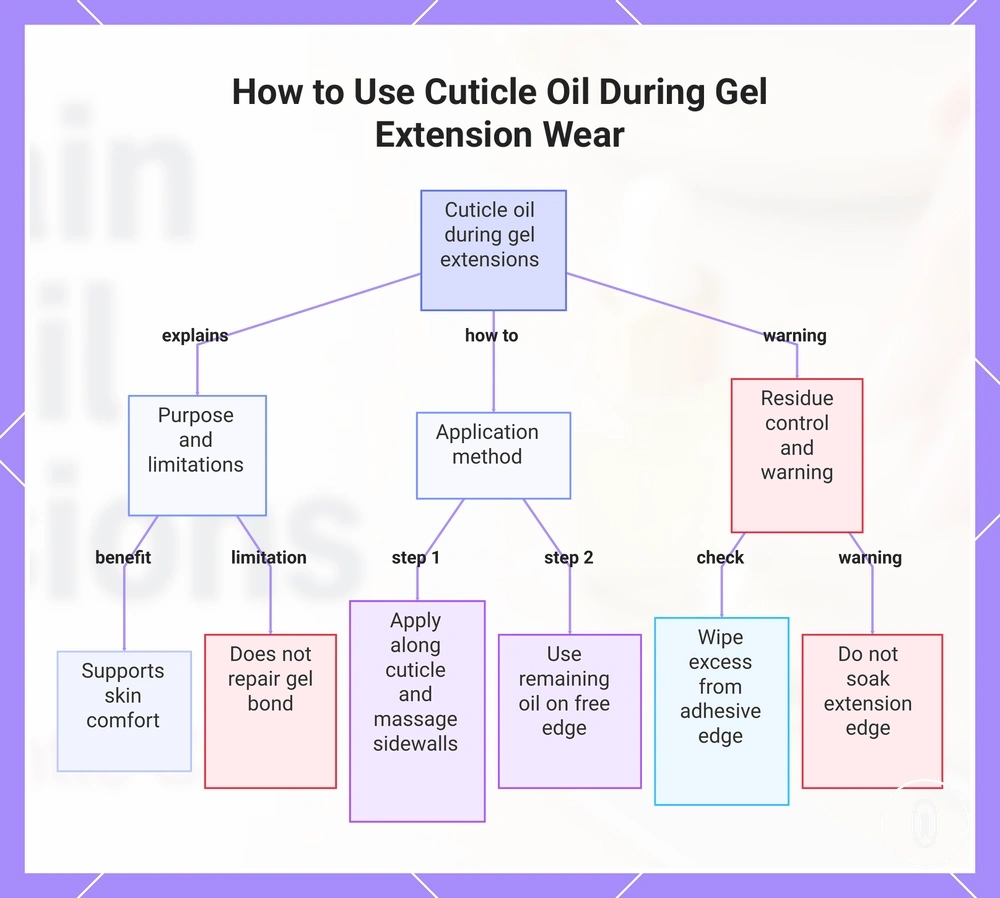
If the surrounding skin becomes dry, apply a small amount of cuticle oil with controlled placement to support comfort while keeping residue away from the adhesive edge. Frequency depends on your routine and the condition of the surrounding skin rather than a fixed schedule. Focus application on these areas:
- Apply a small amount along the cuticle area and nail fold.
- Massage lightly around the sidewalls without allowing oil to collect near the adhesive edge.
- Use any remaining product around the free edge as light surface care rather than soaking the extension edge.
- Maintain residue control by wiping away excess oil if it reaches the adhesive edge or lifted areas.
Moisturising the surrounding skin supports skin comfort, but allowing oil to contaminate the adhesive edge may interfere with clean extension maintenance. Cuticle oil does not repair the gel bond and should not be used to soak the extension edge in an attempt to address lifting.
This chart shows the purpose, application steps, and key warnings for using cuticle oil during gel extension wear, focusing on proper placement and residue control.
Gentle cleaning and drying habits under the nail edge
Gentle cleaning and drying remove buildup around the nail edge without forcing water, tools, or pressure under the extension. This routine helps protect the extension edge while reducing unnecessary stress during regular maintenance.
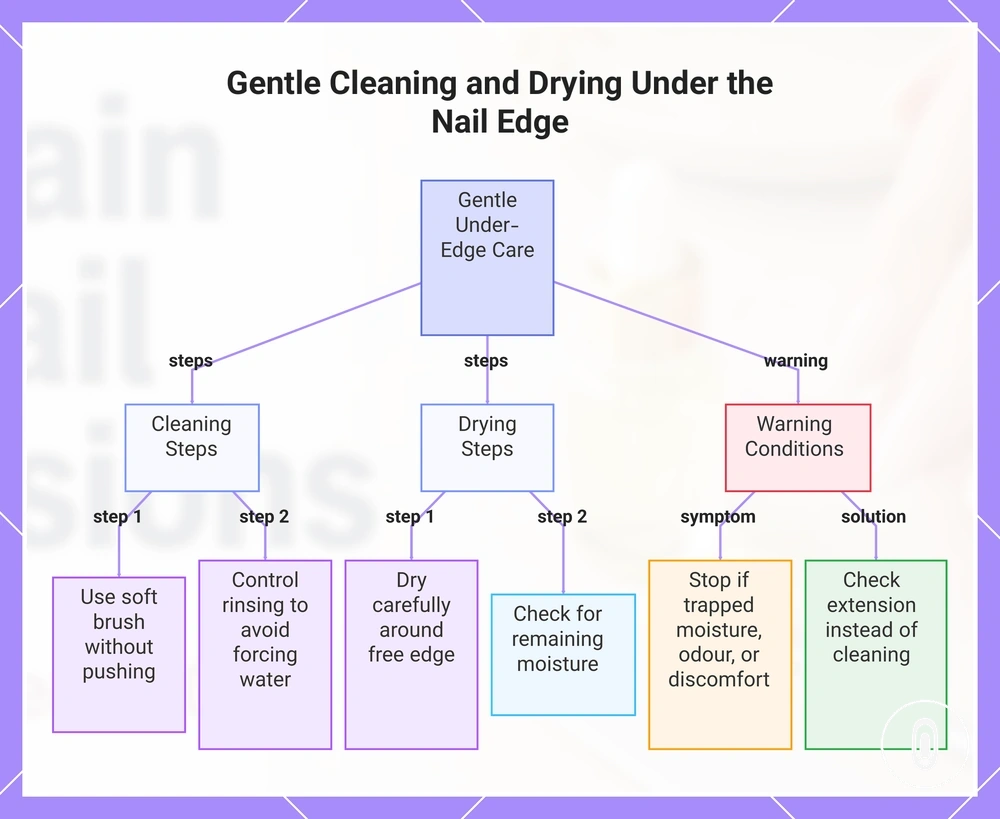
If visible residue collects near the under-edge, use a soft brush with light pressure instead of increasing force. Careful drying around the free edge can help reduce trapped moisture after cleaning. Use this compact checklist to keep under-edge care gentle and consistent:
- Use a soft brush with light pressure around the nail edge without pushing underneath the extension.
- Control rinsing so water is not forced beneath the extension edge.
- Dry carefully around the free edge and check for remaining moisture before leaving the area covered.
- Remove visible residue without hard scraping or aggressive under-nail tools.
- Stop routine cleaning if a lifted area contains trapped moisture or develops persistent odour, soreness, or increasing discomfort, as these conditions may require checking the extension instead of continued cleaning.
This chart shows the key steps and warning signs for gentle cleaning and drying under the nail edge to protect nail extensions.
How to protect gel extensions from lifting and surface damage
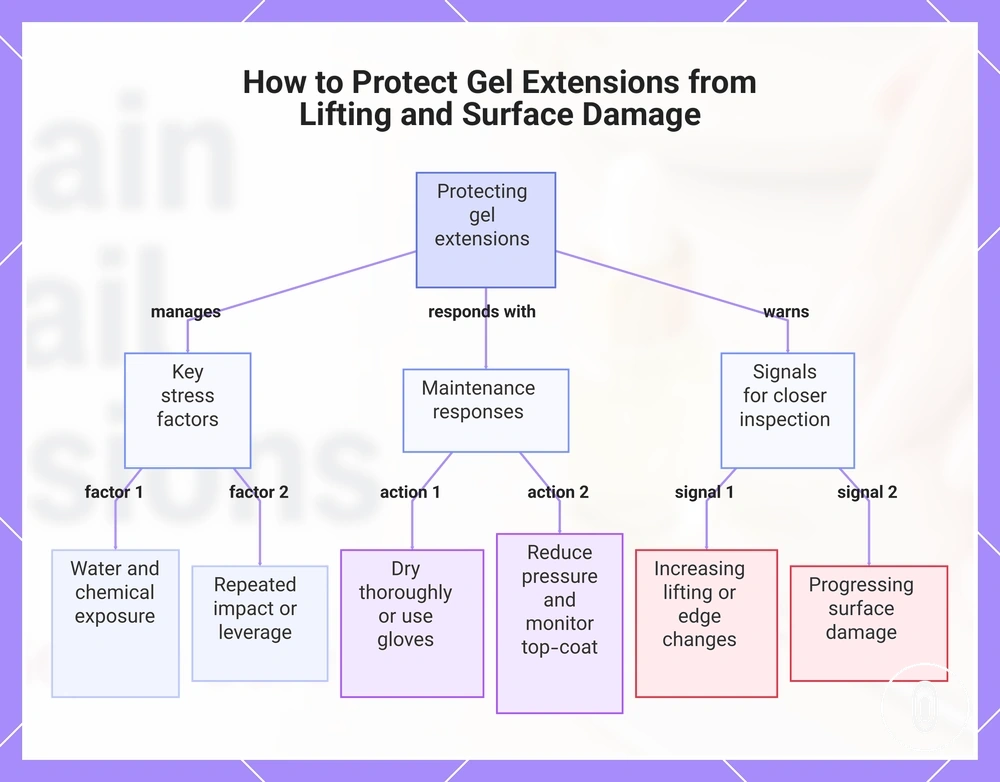
Protecting gel extensions means reducing repeated stress on the bond, surface, and free edge rather than making the set indestructible. Good maintenance may help lower the risk of lifting and surface damage during normal wear, but it cannot correct poor preparation or poor fit. The bond, surface, and free edge are the main areas to protect.
Repeated stress can increase the likelihood of edge lifting or surface wear when exposure continues over time. Water exposure, chemical exposure, impact, leverage, nail length, and top-coat condition each influence extension stress in different ways. Watching for visible edge changes helps distinguish routine maintenance from conditions that deserve closer inspection. The checklist below organises common stress conditions and practical maintenance responses.
- If water exposure is frequent, dry the extensions thoroughly to reduce prolonged moisture around the bond and free edge.
- If chemical exposure is part of daily tasks, consider protective gloves to help reduce unnecessary surface damage.
- If repeated impact or leverage occurs, especially with greater nail length, reduce pressure on the nail tips where practical.
- If the top-coat condition becomes scratched or dull, monitor for increasing surface wear and visible edge changes.
- If early lifting appears around the free edge, avoid adding extra stress until the extension can be checked.
- If wear remains limited to light surface wear without progressing visible edge changes, routine maintenance may continue with regular observation.
If your routine includes typing, cleaning, lifting, or other repetitive hand activities, extension stress depends on how often these forces occur and how much leverage reaches the nail tips. Small adjustments to reduce repeated impact can help support everyday wear.
Protecting gel extensions is a risk-reduction strategy rather than a guarantee against lifting or surface damage. Increasing lifting, visible edge changes, or progressing surface damage are practical signals that the extension deserves closer inspection instead of routine maintenance alone.
This chart shows the key stress factors, maintenance responses, and warning signals for protecting gel extensions from lifting and surface damage.
Water, chemicals, and household chore exposure
Water exposure, chemicals, and household chores can affect gel extension edges and surface finish when exposure lasts longer, happens more often, or protective habits are inconsistent. Paying attention to exposure duration, exposure frequency, drying, and protection habits may help reduce unnecessary dullness or edge swelling. The main factors are exposure duration and exposure frequency.
Exposure patterns are more important than a single brief contact. Brief handwashing is usually different from repeated wet work because frequent or prolonged exposure can place more stress on the extension edge and surface finish. The table below compares common exposure conditions and practical protection habits.
| Exposure | Condition | Possible effect | Protective habit |
|---|---|---|---|
| Prolonged soaking | Extended water exposure | May contribute to edge swelling or changes in edge condition | Dry thoroughly after exposure |
| Detergents | Frequent household chores | May increase surface dullness over time | Consider gloves to reduce repeated contact |
| Cleaning solvents | Repeated exposure during household chores | May affect the surface finish depending on exposure duration and frequency | Limit unnecessary contact and dry the extensions afterward |
| Gloves | Repeated wet work or cleaning products | Can help reduce repeated water exposure and chemical contact | Use when household chores involve frequent exposure |
| Drying | After water exposure | May reduce prolonged moisture around the extension edge | Dry carefully around the free edge after washing |
Pressure, impact, and using nails as tools
Pressure and impact risks increase when gel extensions are used as tools or when nail length creates leverage on the natural nail and extension bond. Everyday force does not necessarily lead to lifting or surface damage, but the outcome depends on factors such as nail length, tip shape, fit, and the amount of leverage applied.
If everyday tasks place repeated force on the nail tips, small adjustments in hand use may help reduce unnecessary stress. For example, use the side of a finger instead of the nail tip to lift a can tab or loosen a label when practical. The examples below show common pressure situations and simple maintenance-focused adjustments.
- Typing: If the nail tips strike the keyboard heavily, lighter fingertip positioning may reduce repeated pressure.
- Opening cans: Avoid using nails as tools; use a fingertip or another suitable object to reduce leverage on the extension bond.
- Picking labels: Repeated prying may increase lifting risk, so use another tool rather than the nail edge when possible.
- Gripping: Firm gripping can place more force on longer extensions, especially when nail length and tip shape increase leverage.
- Accidental knocks: Brief impact does not always cause damage, but checking the free edge and surface after noticeable knocks can help identify early changes.
Top coat and surface refresh during normal wear
A top coat and surface refresh can improve shine and support surface protection when the extension is intact, comfortable, and suitable for cosmetic maintenance. This type of refresh is intended for appearance and surface care, not structural repair.
If the surface becomes dull or develops light scratches, a careful surface refresh may help restore a glossier finish without changing the extension structure. Clean preparation and checking the free-edge seal help determine whether a cosmetic refresh is appropriate. Use the following criteria before applying a refresh layer.
- Surface condition: Refresh only when the intact extension shows dullness or light surface scratches rather than lifting or cracks.
- Preparation: Complete residue removal before applying a new top coat so the surface is clean.
- Application: Use a thin application instead of a heavy layer to help keep the surface even.
- Free-edge seal: Check the free-edge seal before refreshing the surface, and do not treat edge separation as a cosmetic issue.
- Compatibility: Consider cure compatibility with the existing product system, as incompatible products or thick layers may create uneven wear.
- Stop signals: If lifting, cracks, pain, or moisture beneath the extension are present, a top coat is not an appropriate repair.
A surface refresh supports cosmetic maintenance only when the extension remains stable and comfortable. It should not hide structural problems, and incompatible products or thick layers may create uneven wear.
Filing, trimming, and reshaping gel extensions at home
Filing and light reshaping can be more controlled than trimming or cutting when gel extensions are intact and comfortable. Gentle reshaping can refine the free edge, while aggressive shortening may increase the risk of cracks, weakening, or an unsealed edge.
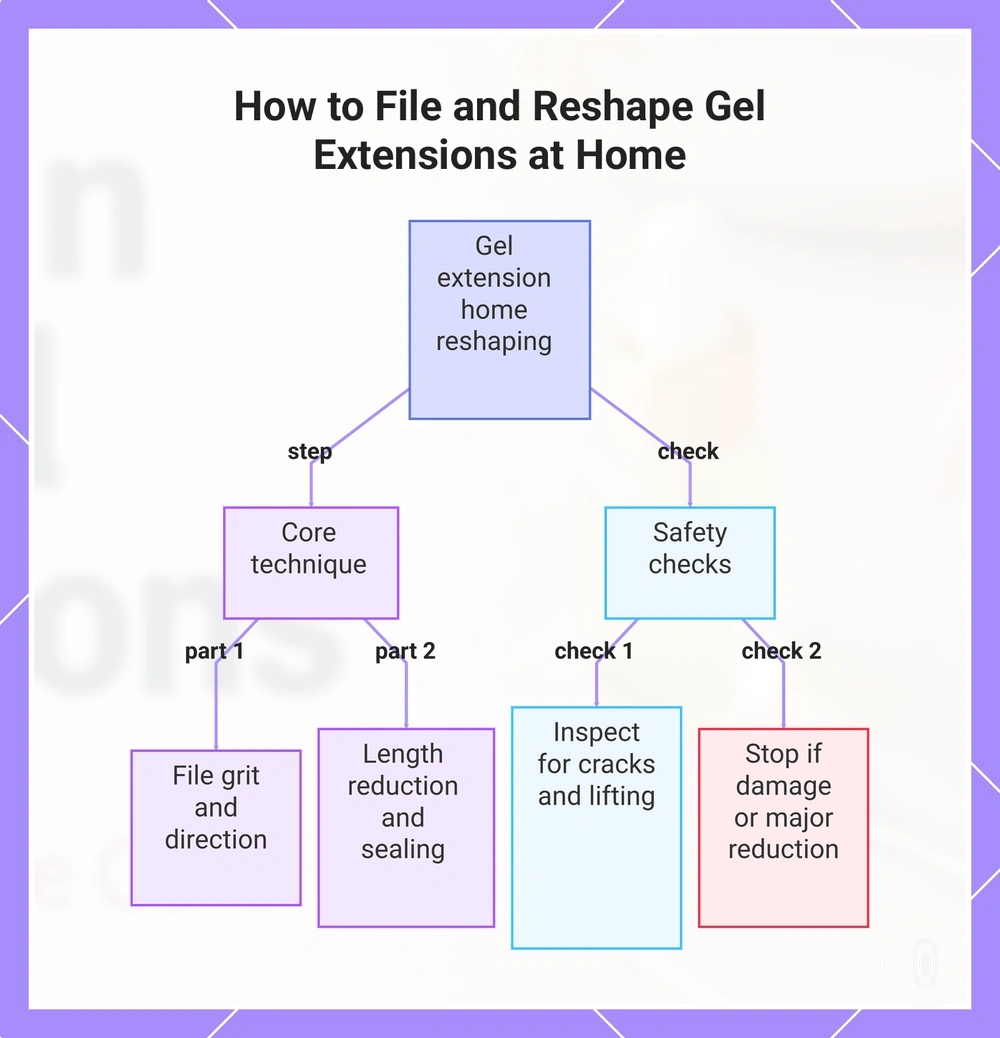
If an extension feels too long or the edge becomes uneven, controlled filing can adjust the shape without turning the process into a redesign. The steps below control file grit, filing direction, pressure, length reduction, edge sealing, and surface buffing during narrow home reshaping.
- Inspect the gel extensions for cracks, lifting, pain, or other visible damage before starting.
- Choose an appropriate file grit suited to light reshaping rather than aggressive shortening.
- File the free edge with light pressure and controlled strokes in a consistent direction, removing only a small amount of length at a time.
- Smooth the edge and use light surface buffing only when needed to refine the finish without removing excessive material.
- If the extension remains intact and the product system is compatible, consider light edge sealing or a surface refresh.
- Stop if cracks, lifting, pain, instability, or unexpected damage appears because continued filing may worsen the compromised area.
Light reshaping is intended for small adjustments rather than major length reduction. If substantial shortening is required or control becomes difficult, stop instead of continuing.
If a gel extension already shows cracks, lifting, pain, or instability, filing and reshaping may no longer be appropriate. A compromised extension should not be treated as a routine trimming task.
This chart shows the safe technique for filing and reshaping gel extensions at home, including essential pre-start checks and warning signs to stop.
When light filing is safer than clipping
Light filing is often preferable when the goal is smoothing roughness or making a small length adjustment without placing sudden stress on the extension. When the gel extension is intact, light filing provides greater pressure control and can produce a smoother edge finish than clipping.
If only a minor adjustment is needed, choose between light filing and clipping based on extension thickness, free-edge condition, tool sharpness, and your level of control. Clipping may be appropriate in certain situations, but crack risk can increase depending on extension condition and how force is applied. The comparison below summarises the main decision criteria.
| Method | Better when |
|---|---|
| Light filing | Suitable for smoothing roughness or a small length adjustment when pressure control and a clean edge finish are the priority. |
| Clipping | May suit careful shortening when extension thickness, tool sharpness, free-edge condition, and user control support a lower crack risk. |
| Defer trimming | If the extension is already compromised by lifting, pain, or visible damage, postpone trimming until the condition can be assessed instead of applying additional force. |
Free-edge care after shortening or reshaping
Free-edge care after shortening or reshaping focuses on smoothing, sealing, and checking comfort at the nail edge. A stable free edge should feel smooth, evenly sealed where appropriate, and comfortable after reshaping.
If roughness, sharp corners, or an uneven edge remain, the free edge may snag more easily during normal wear. Use this mini-checklist to assess post-reshaping edge quality and stability.
- Check the free edge for roughness and complete only the light smoothing needed for an even edge finish.
- Look for sharp corners that may increase snagging, and soften them only when minor reshaping is still appropriate.
- Perform a brief stability check by confirming the edge feels comfortable and remains stable during normal hand movement.
- If appropriate for the existing finish, check that the top-coat seal remains even without assuming it will prevent future wear.
- If visible cracks, noticeable thinning, or persistent snagging appear, treat the edge as compromised and stop further reshaping until its condition can be assessed.
When maintenance is no longer enough
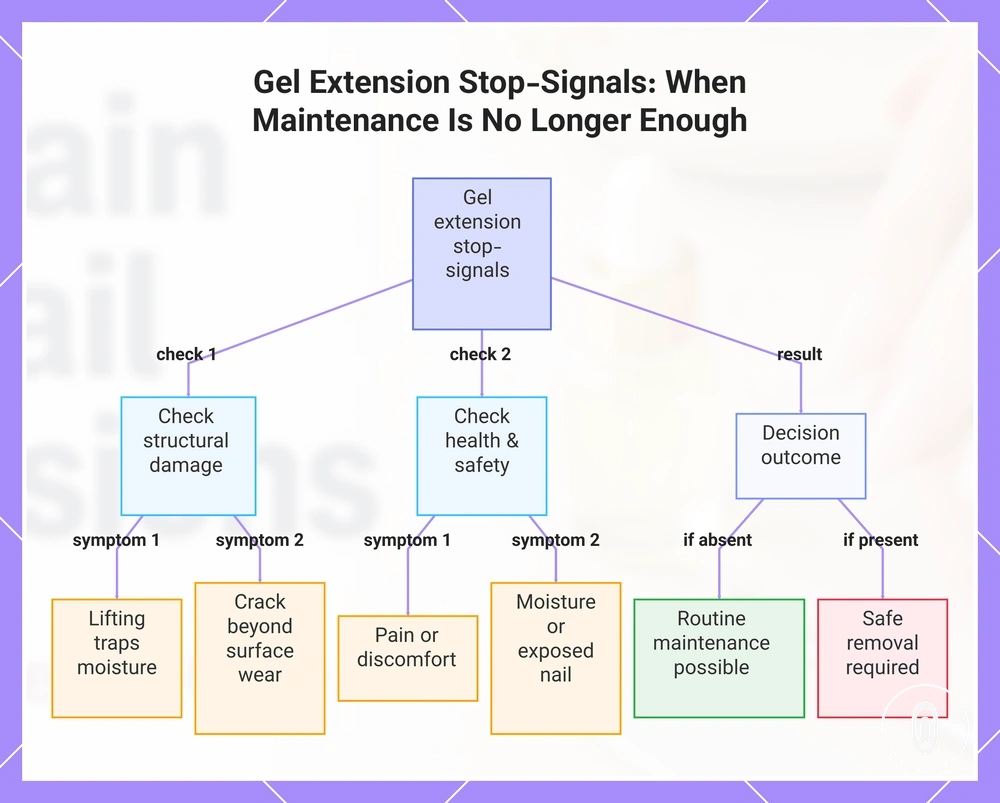
Maintenance is no longer enough when the gel extension is lifted, cracked, painful, trapping moisture, or affecting the natural nail area. These conditions are stop-signals that can make continued wear inappropriate.
Normal surface wear may remain manageable, but a compromised extension needs a different decision. Separate routine wear from unsafe continuation by checking the symptoms rather than appearance alone. Consider the lifting location, crack depth, moisture signs, discomfort, natural nail exposure, and time worn. The checklist below organises these decision variables.
- If the extension is lifted, check whether the lifting location allows moisture or debris to collect beneath the edge.
- If the extension is cracked, consider whether the crack depth extends beyond light surface wear.
- If the extension is trapping moisture or remains damp beneath a lifted area, do not seal over it.
- If the extension becomes painful or causes increasing discomfort, stop treating it as normal wear.
- If the natural nail area is exposed, treat this as a stop-signal rather than a routine maintenance issue.
- If repeated snagging continues despite light edge care, reassess whether the extension remains stable.
- Consider time worn together with the other symptoms rather than using it as the only removal trigger.
Light cosmetic wear without lifting, pain, exposed natural nail, or trapped moisture may still be suitable for routine maintenance. A compromised extension with progressing symptoms falls on the unsafe-continuation side of the decision.
If an extension becomes painful, traps moisture, or exposes the natural nail area, more oil, top coat, or filing is not enough. These conditions may call for safe removal rather than continued maintenance.
Maintenance is no longer enough when the stop-signals indicate a compromised extension rather than manageable wear. In that situation, follow guidance for removing extensions safely.
This chart helps identify when a gel extension is compromised by checking structural damage and health risks, leading to a clear decision between routine maintenance and safe removal.
Light lifting, cracks, and moisture risk during wear
Light lifting, cracks, and moisture risk should be assessed before continuing maintenance. Focus on the location, severity, and comfort of the affected area rather than appearance alone.
A small rough area at the free edge may not require the same response as separation near the nail bed or sidewall. Check the lifted edge, sidewall gaps, free-edge splits, moisture appearance, odour, tenderness, and repeated catching to judge whether maintenance remains appropriate. Use the diagnostic checklist below to identify these local symptoms.
- Check the apparent size and location of the lifted edge without pressing it or forcing adhesive underneath.
- Look for sidewall gaps that may allow debris or moisture to collect around the separation.
- Inspect free-edge splits and note whether repeated catching appears to be increasing the crack or separation.
- Watch for cloudy moisture beneath the extension and avoid sealing over the affected area.
- Treat persistent odour as a caution sign that deserves closer assessment.
- Stop routine maintenance if tenderness or increasing discomfort develops around the affected area.
- Reassess the extension if repeated catching continues, because ongoing movement may indicate reduced stability.
A rough free edge may feel uneven while remaining attached, whereas a lifted area near the nail bed shows separation closer to the natural nail. If you need more guidance on recognising this distinction, see lifting during wear.
When safe removal becomes the better next step
Safe removal becomes the better next step when keeping the extension creates more risk than benefit. The decision should protect nail comfort and extension integrity when continued wear offers less benefit than risk.
If a gel extension is compromised, continued maintenance may no longer be appropriate. Use the following removal triggers to identify when the safety boundary has been reached.
- Pain: Ongoing or increasing pain is a stop signal because continued wear may place more stress on the affected area.
- Deep cracks: A crack that extends beyond light surface wear may weaken extension integrity and change the decision from maintenance to removal.
- Spreading lift: A lifted area that continues to expand may allow more movement or debris beneath the extension.
- Trapped moisture: Moisture beneath a lifted or separated area should not be sealed over or left under continued wear.
- Natural nail exposure: Visible natural nail exposure may indicate that the extension is no longer stable enough to keep wearing.
- Repeated snagging: An extension that keeps catching after light edge care may be too compromised for routine maintenance.
Maintenance tools and products for at-home gel extensions
Maintenance tools and products should support gentle care, surface upkeep, and condition checks rather than replace correct application or safe removal. Choose care items that match the extension condition and use them for maintenance, not structural repair.
Select maintenance tools by purpose and safe-use boundary instead of collecting unnecessary products. Compatibility, gentle handling, and extension condition matter more than the number of items in a maintenance kit. Avoid products or methods that encourage sealing over lifting, trapped moisture, or visible damage. The table below organises each option by purpose, safe use, and when not to use it.
| Tool or product type | Maintenance purpose | Use when | Avoid when |
|---|---|---|---|
| Cuticle oil | Support comfort around the surrounding skin | When the skin feels dry and the extension remains intact | When oil could reach a lifted or damaged edge |
| Nail repair oil | Support comfort around the nail and surrounding skin | When it is compatible with routine care | As a substitute for addressing a compromised extension |
| Gentle nail brush | Support cleanliness around the under-edge | For light cleaning followed by careful drying | When scrubbing could place pressure on a damaged extension |
| File buffer set | Support edge care, smoothing, and pressure control | For minor surface or free-edge adjustments | For deep cracks, lifting, or major reshaping |
| Top coat | Refresh the surface finish | When compatibility is confirmed and the extension is intact | To cover lifting, trapped moisture, or structural damage |
| Maintenance kit | Keep routine maintenance supplies together | When it contains gentle, compatible care tools | If it encourages aggressive use or covering visible damage |
Maintenance tools are most useful when each item has a clear purpose and remains within its safe-use boundary. Grouping cuticle oil and nail repair oil under comfort, a gentle nail brush under cleanliness, a file buffer set under edge care, and top coat under surface finish keeps product selection focused.
If the extension remains intact, choose gentle supplies that match the maintenance task rather than applying every available product. Prioritise compatibility, non-aggressive use, and products intended for routine upkeep while avoiding anything that encourages sealing over visible damage.
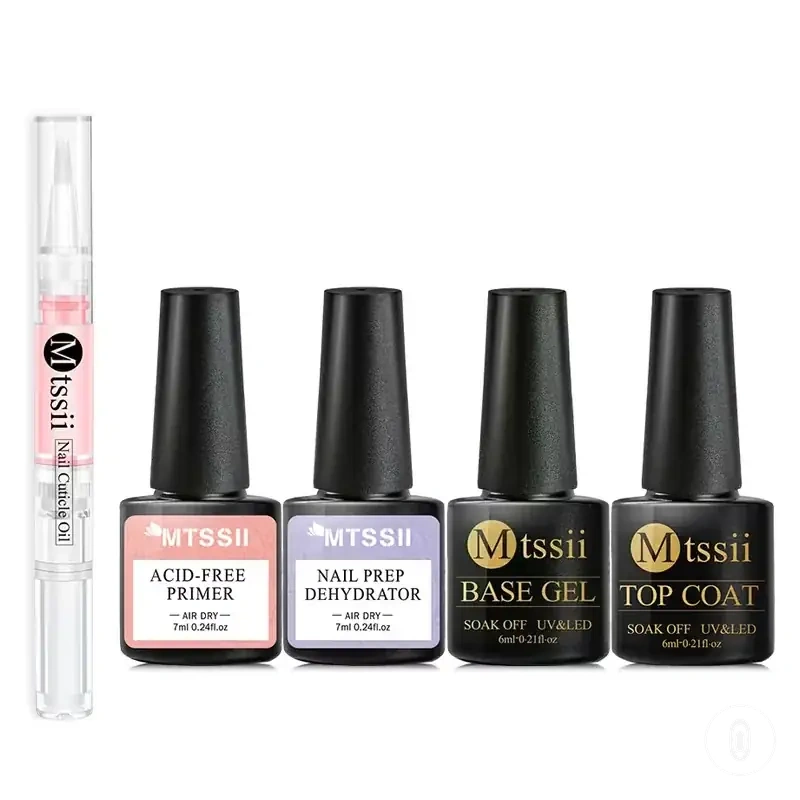
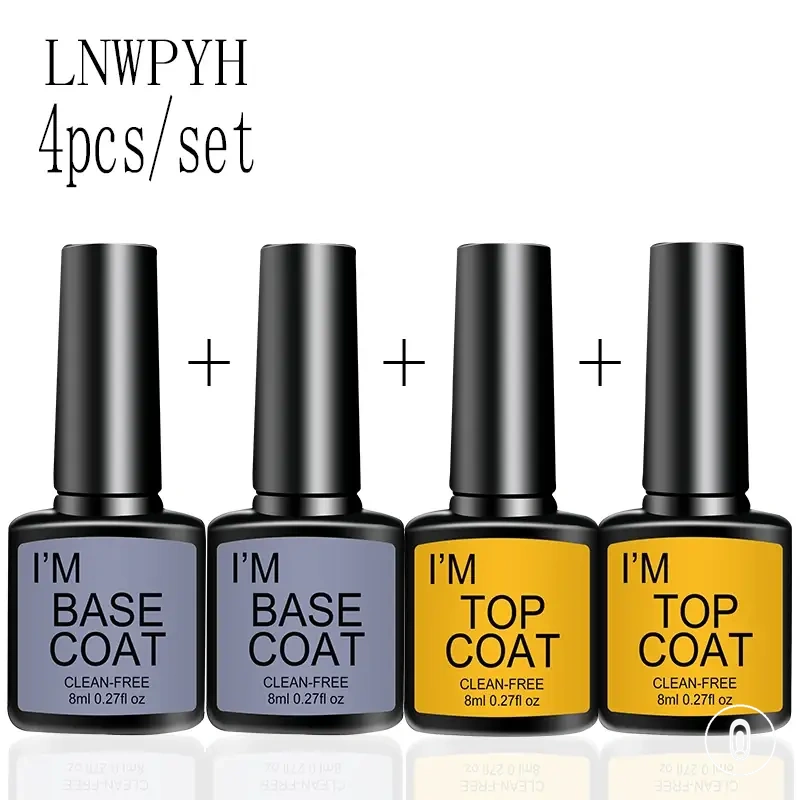
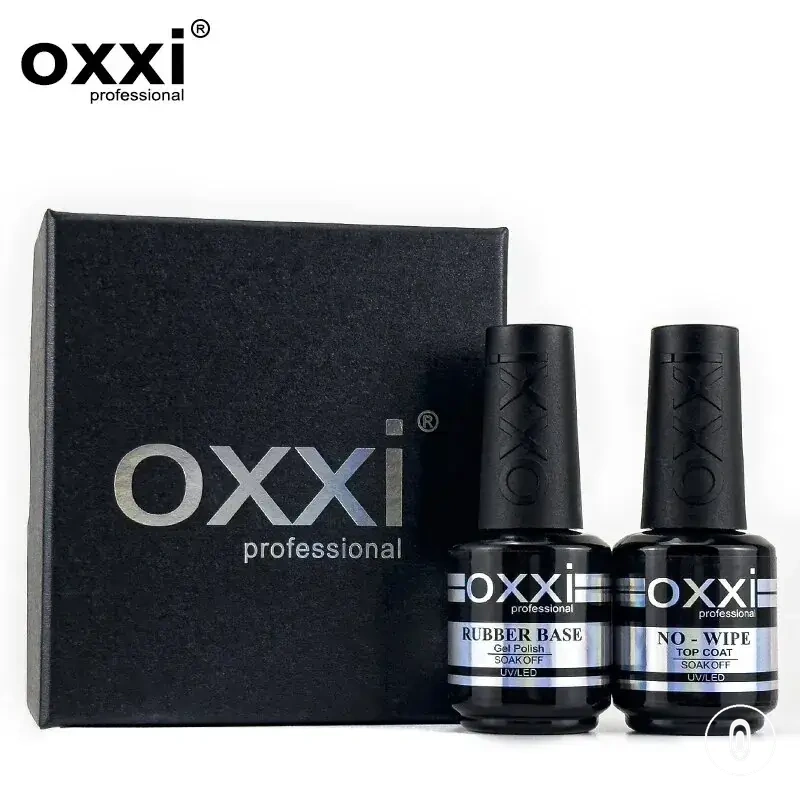
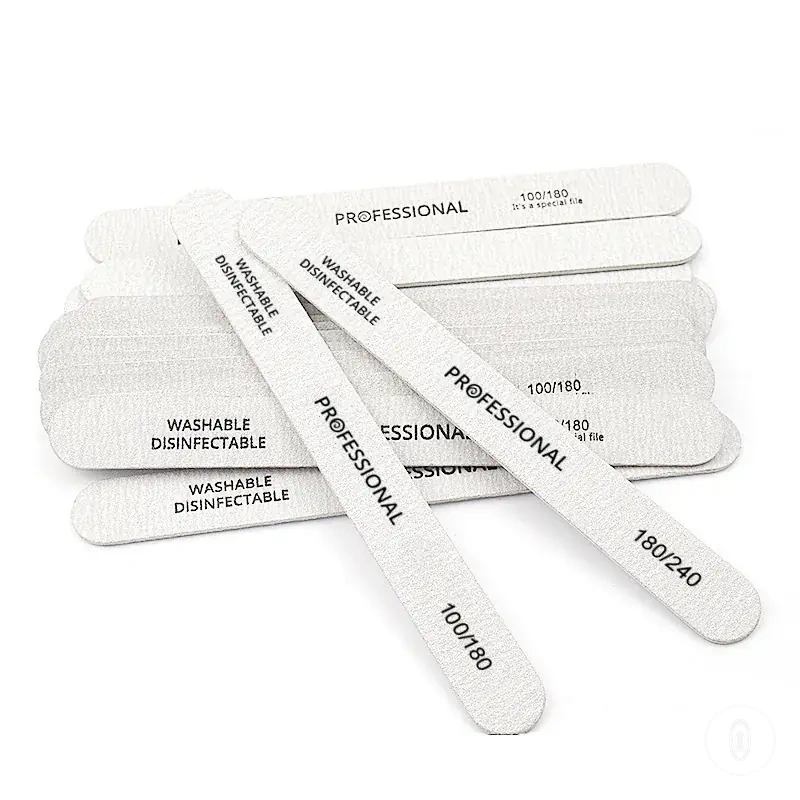
Here are product examples that may make comparison easier. Before buying, always review the compatibility criteria, essential features, and product details.