Nail Preparation for Gel Nail Kits
Nail preparation is the process of preparing the natural nail surface so gel products from gel nail kits can adhere under their intended curing conditions. Its primary purpose is to create a clean, dry, and stable bonding surface that supports consistent gel manicure performance, although wear time remains conditional on product formulation, application technique, curing, and the condition of the natural nail. According to the Milady Standard Nail Technology curriculum, proper preparation of the natural nail is a foundational requirement before enhancement or gel product application because surface contaminants reduce effective adhesion.
Nail preparation is the process of preparing the natural nail surface so gel products from gel nail kits can adhere under their intended curing conditions.
Nail preparation influences gel manicure results because adhesion depends on the condition of the natural nail before the first gel layer is applied rather than on the gel product alone. Professional systems from manufacturers such as OPI specify that preparation includes removing visible surface contaminants, reducing residual oils, and ensuring the nail surface is ready before base gel application, while avoiding unnecessary alteration of the natural nail. For example, if two identical gel manicures use the same lamp, products, and curing schedule but only one is applied to a properly prepared nail surface, the prepared nail provides the intended adhesion conditions specified by the manufacturer, whereas the second application may experience reduced bonding because residual oil or moisture remains on the nail surface. This overview establishes the preparation scope before the following sections examine individual preparation methods, influencing factors, and common preparation problems in greater detail.
Table of Contents
Why Nail Preparation Affects Gel Manicure Results
Nail preparation is the process of preparing the natural nail surface before applying products from gel nail kits so gel products can achieve their intended bond with the nail plate. It establishes the condition of the nail surface by improving cleanliness, reducing surface contaminants, and preparing the nail for gel adhesion rather than relying on the gel product alone. According to Milady Standard Nail Technology, proper natural nail preparation is a prerequisite for successful enhancement services because oils, moisture, and non-living tissue can interfere with product adhesion.
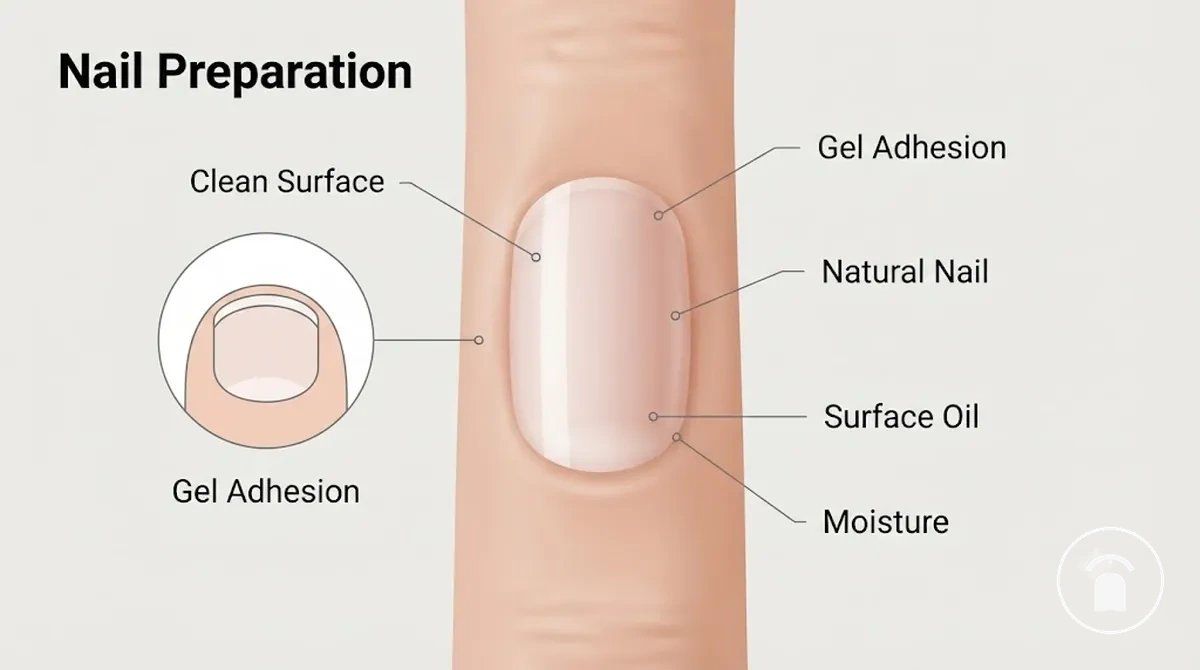
Nail preparation affects gel manicure results because the condition of the nail surface determines how effectively the base gel contacts and anchors to the natural nail. Surface oils, moisture, loose cuticle tissue, and visible debris reduce direct contact between the gel coating and the nail plate, while a clean and properly prepared surface provides the adhesion conditions intended by professional gel systems. Young Nails explains that preparation should create a clean, contaminant-free nail surface without excessive abrasion, because both contamination and unnecessary over-filing can reduce adhesion quality.
This relationship explains why nail preparation is treated as the foundation of consistent gel polish performance rather than an optional step.
For example, two nails cured with the same LED lamp for the same manufacturer-recommended curing time can produce different adhesion outcomes if only one nail has been properly prepared. According to Mylee Professional, residual natural oils and surface contamination are common causes of premature gel lifting, demonstrating that preparation quality influences adhesion before product formulation or curing performance becomes the limiting factor. This relationship explains why nail preparation is treated as the foundation of consistent gel polish performance rather than an optional step.
Gel Nail Preparation Steps Before Applying Polish
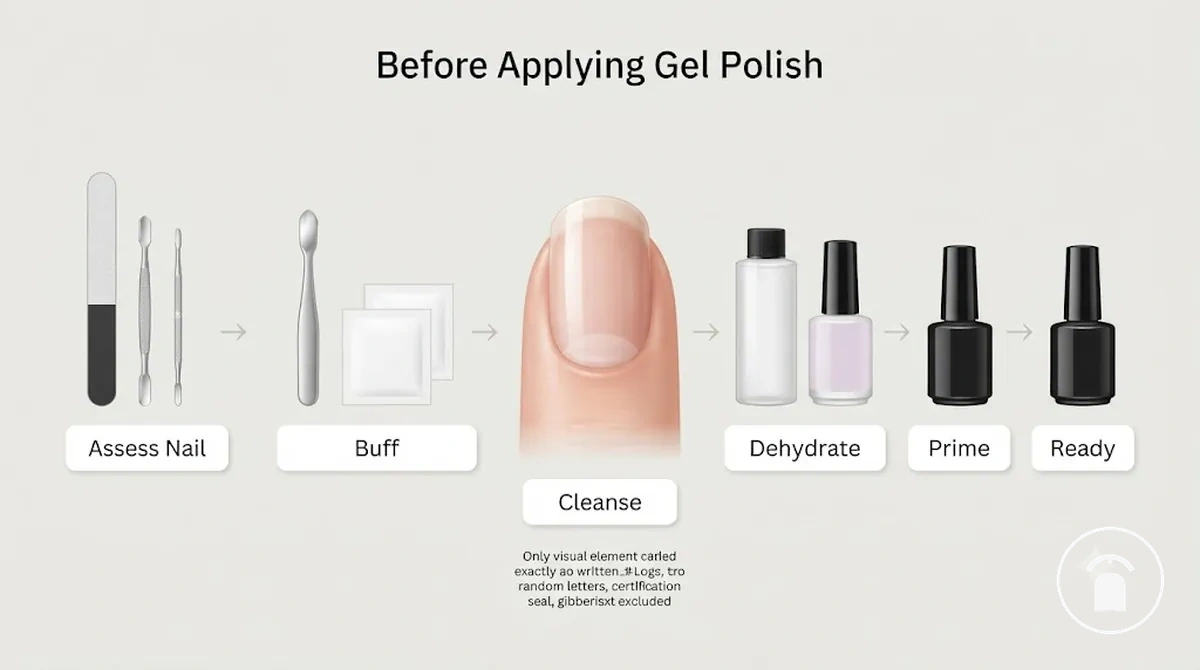
Gel nail preparation is a sequence of prep steps that creates a clean, dry, and suitable nail surface before gel polish is applied. According to Milady Standard Nail Technology and manufacturer guidance from Young Nails, the preparation sequence includes nail assessment, surface preparation, cleansing, dehydration, and primer only when required by the specific gel system or natural nail condition.
-
Assess the natural nail. Examine each nail for damage, lifting, excessive moisture, or remaining product before beginning preparation. If signs of infection or injury are present, cosmetic gel application should not continue until the nail is suitable for treatment.
-
Buff the nail surface. Shape the free edge, gently push back the cuticle, and lightly buff the nail only enough to remove surface shine when recommended by the gel manufacturer. Young Nails states that excessive filing can reduce adhesion by unnecessarily removing healthy nail plate material.
-
Cleanse and dehydrate. Remove filing dust, then cleanse the nail with the system's recommended cleanser before applying a dehydrate product where required. This preparation stage removes surface oils and moisture that interfere with gel adhesion and improves the intended bonding conditions.
-
Prime when required. Apply a prime product only if the manufacturer's instructions or the client's nail condition specify its use. Acid-free, acid-based, or primer-free systems are selected according to the product system rather than being universal requirements.
-
Perform a final readiness check. Confirm that the nail surface is clean, dry, and free of visible dust before the first gel layer is applied. For example, if one nail still has visible dust while another is completely clean before application, the prepared nail provides the intended bonding surface described by professional gel systems. After these preparation stages are complete, continue using gel nail kits according to the manufacturer's application instructions.
Cuticle Care and Nail Surface Preparation
Cuticle care and nail surface refinement prepare the natural nail for gel application by removing non-living cuticle tissue from the nail plate, creating an even surface, and reducing contaminants that interfere with gel adhesion. According to Milady Standard Nail Technology and professional guidance from Young Nails, preparation should involve gently pushing back the cuticle, removing loose tissue attached to the nail plate, and refining surface shine only as recommended by the gel system. Aggressive filing or cutting is not a universal requirement because preparation intensity depends on the condition of the natural nail and the manufacturer's application protocol.
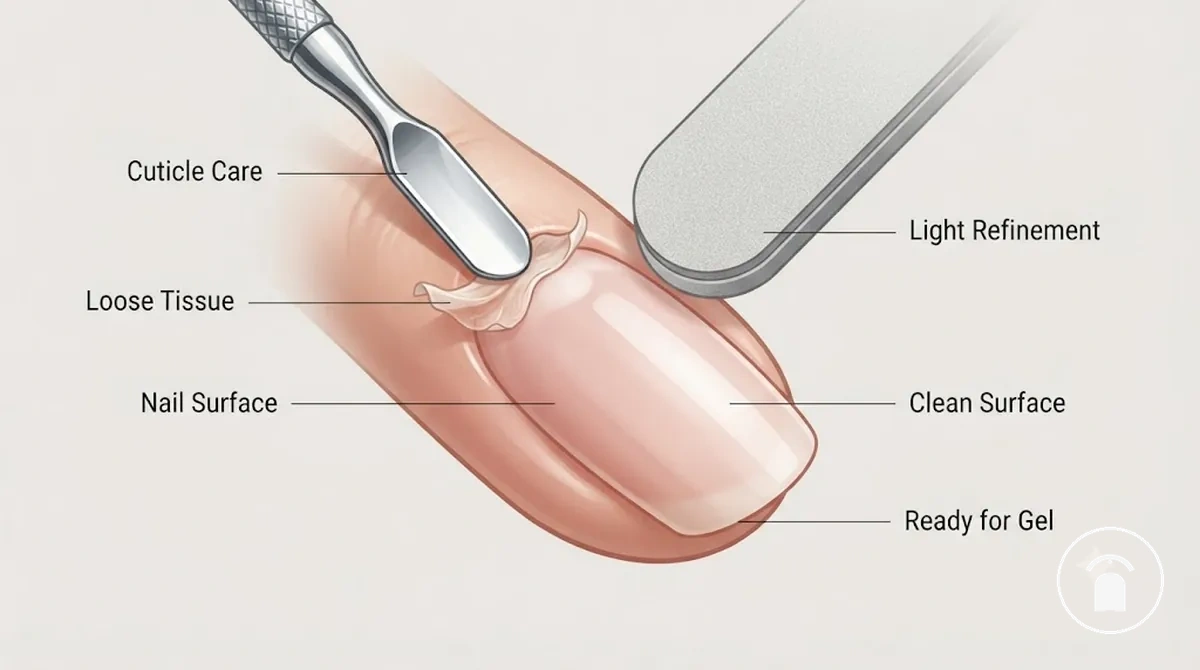
Nail surface refinement focuses on creating a clean, dry, and even bonding surface rather than removing unnecessary nail material. After completing cuticle care, remove filing dust, cleanse the nail surface, and apply a nail dehydrator only if specified by the product system before confirming that no visible debris or loose cuticle remains. For example, if two nails receive the same gel polish application but one still has loose cuticle tissue along the sidewall while the other has a fully cleaned nail surface, the prepared nail provides the intended bonding conditions described by Young Nails and iGel Beauty, helping the base gel contact the nail plate more consistently.
Buffing, Cleansing, Dehydrating, and Priming the Nails
Buffing, cleansing, dehydrating, and priming each perform a different preparation function before gel application. According to Milady Standard Nail Technology and professional manufacturer guidance from Young Nails, buffing lightly refines the nail surface, cleanser removes dust and residue, dehydrator temporarily reduces surface moisture and oils, and primer improves the bonding interface only when required by the gel system or the natural nail condition. These preparation actions support adhesion but do not guarantee identical results across all gel products or nail types.
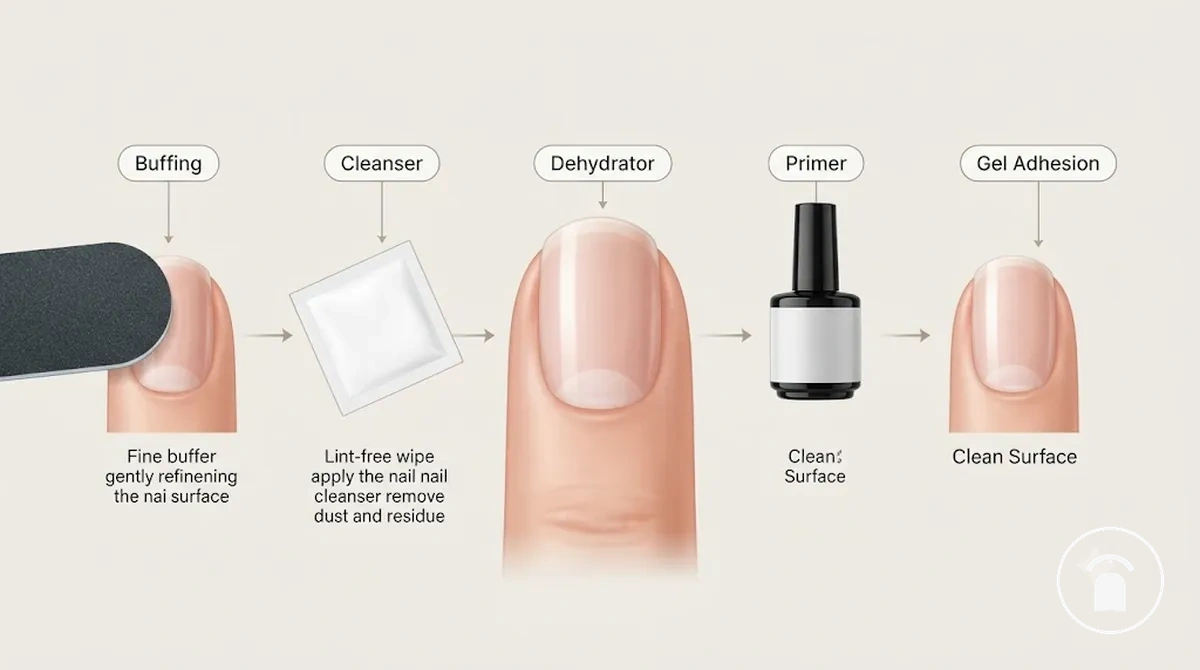
- Buffing: Buffing lightly removes surface shine and creates a more uniform nail surface for gel application. For example, Mylee Professional recommends using a 180-grit buffer during natural nail preparation before gel polish, helping refine the surface without excessive abrasion that could unnecessarily thin the nail plate.
- Cleanser: A nail cleanser removes filing dust, residue, and remaining surface contaminants after buffing so the base gel contacts a clean nail plate. According to Young Nails, cleansing prepares the surface for the next stage but does not replace dehydration or primer when those products are specified by the manufacturer.
- Dehydrator: A dehydrator temporarily removes residual moisture and natural oils from the nail surface immediately before gel application. For example, if one nail is cleansed but still contains surface oil while another is cleansed and dehydrated, the dehydrated nail provides the cleaner bonding conditions described in professional preparation guidance.
- Primer: A primer promotes bonding between the natural nail and the gel system when recommended by the product manufacturer or when the client's nail condition requires additional adhesion support. Acid-free, acid-based, and primer-free gel systems exist, so primer is a conditional preparation step rather than a universal requirement for every gel manicure.
Gel Nail Prep Tools and Products Explained
Gel nail prep tools and preparation products each perform a different function before gel application rather than serving as interchangeable accessories. According to Milady Standard Nail Technology, natural nail preparation combines surface refinement, cuticle care, cleansing, and moisture control to create a nail surface suitable for the selected gel system. Professional preparation therefore uses tools according to their specific preparation role instead of applying every product during every manicure.
Professional preparation therefore uses tools according to their specific preparation role instead of applying every product during every manicure.
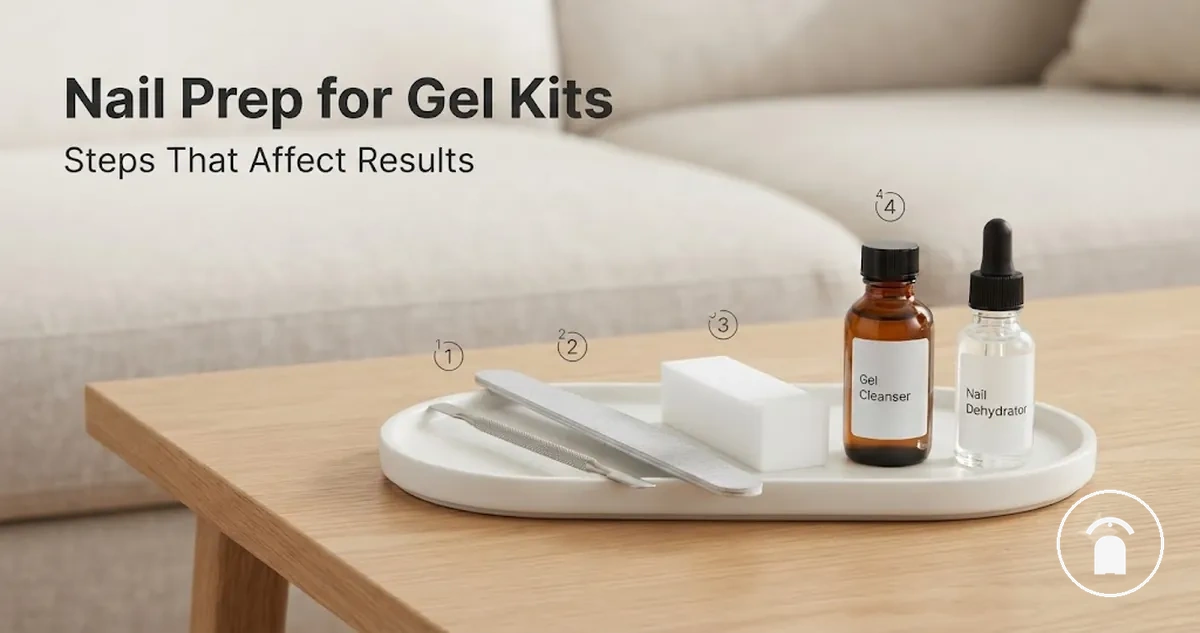
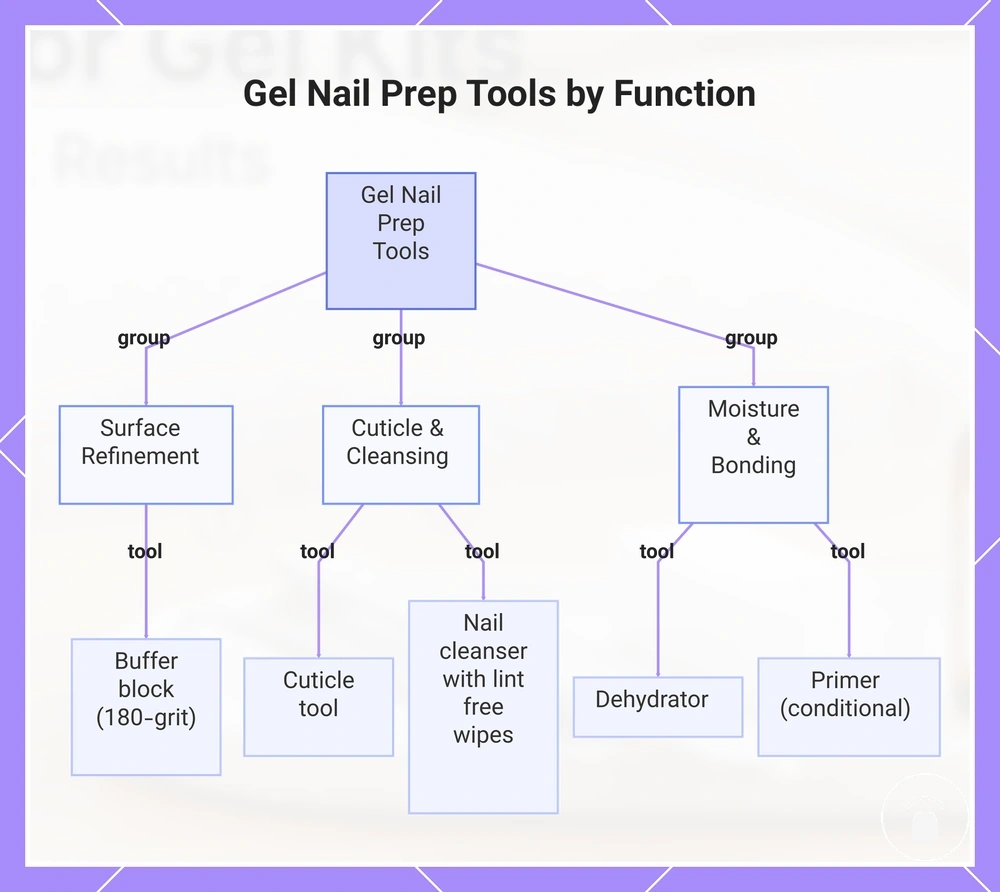
The checklist below groups the most common prep tools by function so each preparation stage can be understood without comparing brands or assuming universal product requirements.
- Buffer block: Refines the natural nail by lightly removing surface shine before gel application. Mylee Professional recommends a 180-grit buffer for natural nail preparation before gel polish, providing gentle surface refinement without unnecessary abrasion.
- Nail cleanser: Removes filing dust, surface residue, and remaining contaminants after buffing so the nail surface is clean before the next preparation stage.
- Lint free wipes: Apply nail cleanser without leaving fibres on the nail plate, helping maintain a clean preparation surface before the base gel is applied.
- Cuticle tool: Gently pushes back the cuticle and removes loose non-living tissue attached to the nail plate, creating a clear bonding area while avoiding unnecessary damage to the natural nail.
- Dehydrator: Temporarily reduces residual surface moisture and natural oils immediately before gel application when the manufacturer includes this step in the preparation system.
- Primer: Improves the bonding interface between the natural nail and gel products when specified by the manufacturer or required for the client's nail condition. Acid-free, acid-based, and primer-free gel systems all exist, so primer is a conditional preparation product rather than a universal requirement.
Select preparation tools according to their intended function instead of replacing one tool with another. For example, using a 180-grit buffer for light surface refinement followed by a nail cleanser applied with lint free wipes prepares the nail differently from buffing alone, because cleansing removes filing dust before dehydration or primer is considered, consistent with professional guidance from Mylee Professional and the Cortiva Institute.
Select preparation tools according to their intended function instead of replacing one tool with another.
This chart groups gel nail preparation tools by their specific function, showing the recommended tool for each preparation stage and highlighting that tools are not interchangeable.
How Dehydrator and Primer Support Gel Adhesion
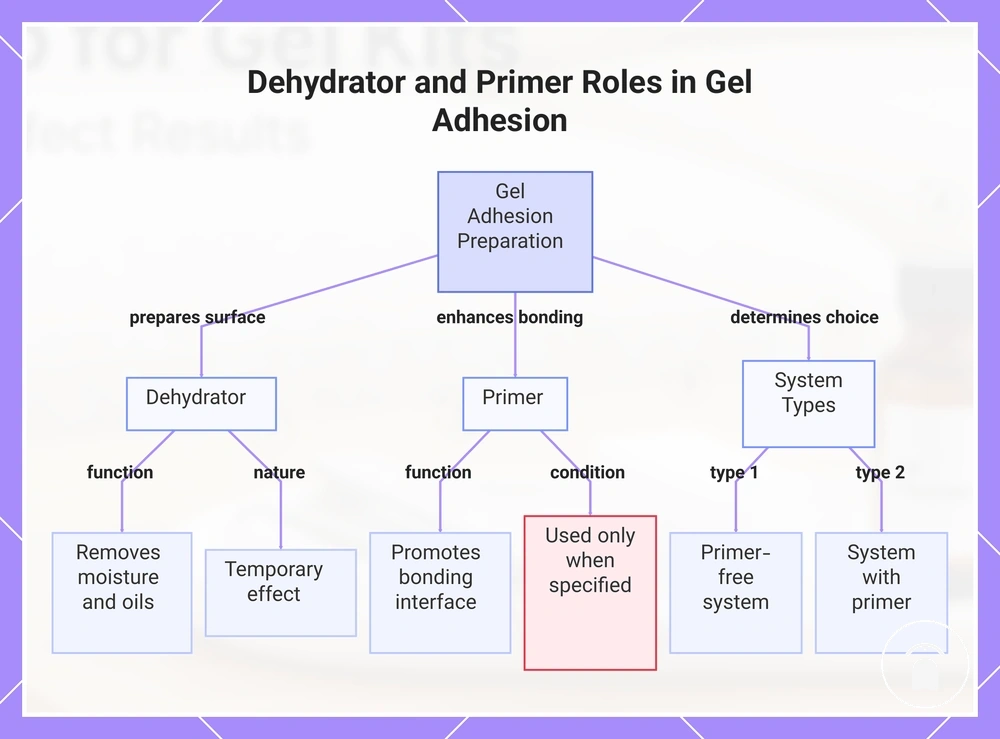
Dehydrator and primer support gel adhesion through different preparation functions. A dehydrator temporarily removes residual surface moisture and natural oils from the nail plate immediately before gel application, while a primer promotes the bonding interface between the natural nail and the gel system only when the manufacturer specifies its use or when the natural nail requires additional adhesion support. According to Milady Standard Nail Technology and Young Nails professional education, these products perform separate preparation roles and should not be used interchangeably.
Dehydrator and primer support gel adhesion through different preparation functions.
The choice between a dehydrator alone or a dehydrator followed by primer depends on the product system and the condition of the natural nail rather than a universal preparation rule. For example, a primer-free gel system requires only cleansing and dehydration before base gel application, whereas a manufacturer that specifies an acid-free or acid-based primer includes it as part of the recommended bonding protocol for that system. This distinction shows that the dehydrator prepares the nail surface by controlling temporary moisture and oils, while the primer enhances the bonding interface only under the conditions defined by the gel manufacturer, avoiding the assumption that either product universally prevents lifting or peeling.
This chart shows the distinct preparation functions of dehydrator and primer for gel adhesion and how the product system determines their usage.
This chart shows the distinct preparation functions of dehydrator and primer for gel adhesion and how the product system determines their usage.
Why Gel Nails Peel After Preparation
Gel nail peeling after preparation is a troubleshooting symptom rather than a diagnosis because reduced adhesion can result from preparation mistakes, application technique, product compatibility, or the condition of the natural nail. According to professional guidance from Young Nails, OPI, and Milady Standard Nail Technology, contamination, residual cuticle tissue, excess surface moisture, and preparation that does not follow the manufacturer's system are recognised conditions that can reduce adhesion, so no single preparation mistake explains every peeling problem.
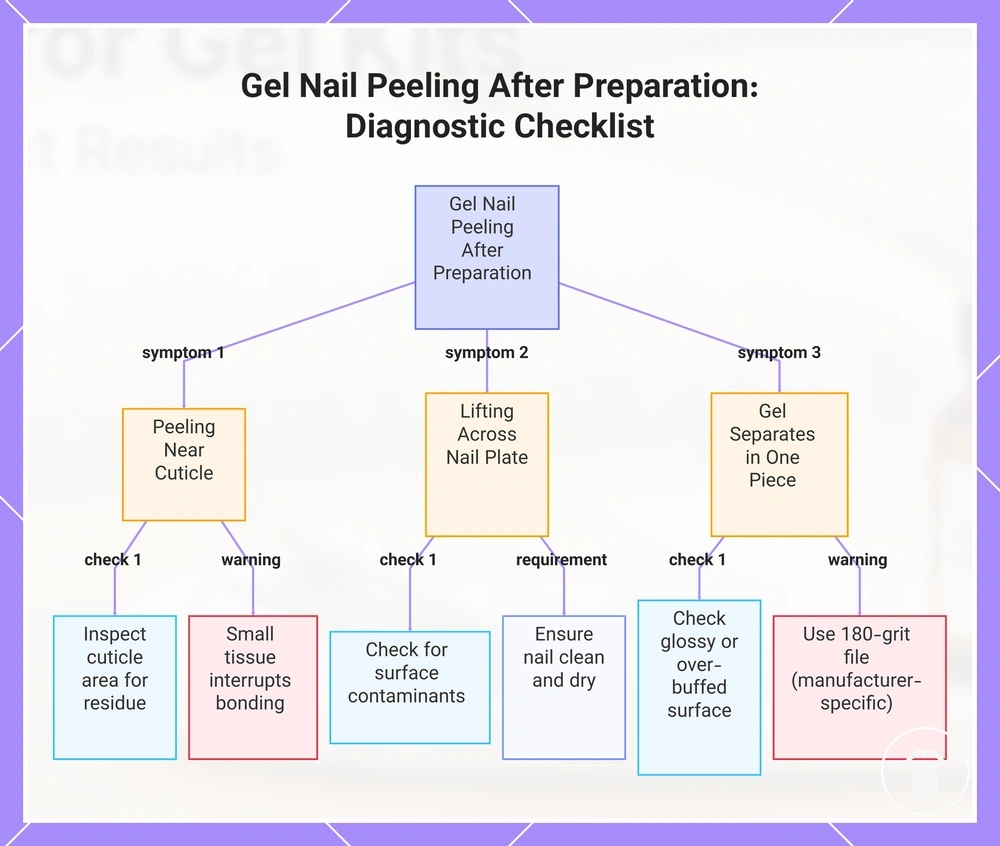
Use the following diagnostic checklist to connect the visible symptom with the most likely preparation-related condition before changing products or techniques:
- Peeling near the cuticle: Check for loose cuticle tissue, skin contact, or remaining residue that prevents full gel-to-nail contact. Even a small amount of attached non-living tissue can interrupt the bonding surface.
- Lifting across the nail plate: Check for residual oil, moisture, filing dust, or lotion residue. According to professional preparation guidance from OPI, the natural nail should be clean and dry before base gel application to achieve the intended adhesion conditions.
- Gel separates in one piece: Check whether the nail surface remained glossy or was over-buffed. For example, Pink Gellac recommends a 180-grit preparation file within its own gel system; this value is manufacturer-specific and should not be applied universally to other brands.
- Peeling shortly after water exposure: Check whether the nail was exposed to water immediately before preparation or soon after application. Pink Gellac recommends avoiding water exposure for at least 1 hour before and after application within its own system because excess moisture can influence preparation conditions.
- Repeated lifting on thin or flexible nails: Check the natural nail condition before increasing abrasion. Preparation should match the nail condition and the manufacturer's protocol rather than relying on more aggressive buffing.
Corrective action should match the verified preparation condition by removing visible contaminants, following the manufacturer's preparation sequence, and confirming that the nail surface is clean and dry before gel application. If preparation checks do not identify the cause, broader peeling and curing problems involving curing, product compatibility, application thickness, or lamp performance should be diagnosed separately because they fall outside nail preparation alone.
This chart shows the main peeling symptoms and the corresponding preparation checks to identify the cause of gel nail peeling after preparation.
This chart shows the main peeling symptoms and the corresponding preparation checks to identify the cause of gel nail peeling after preparation.
Common Nail Preparation Mistakes That Reduce Wear Time
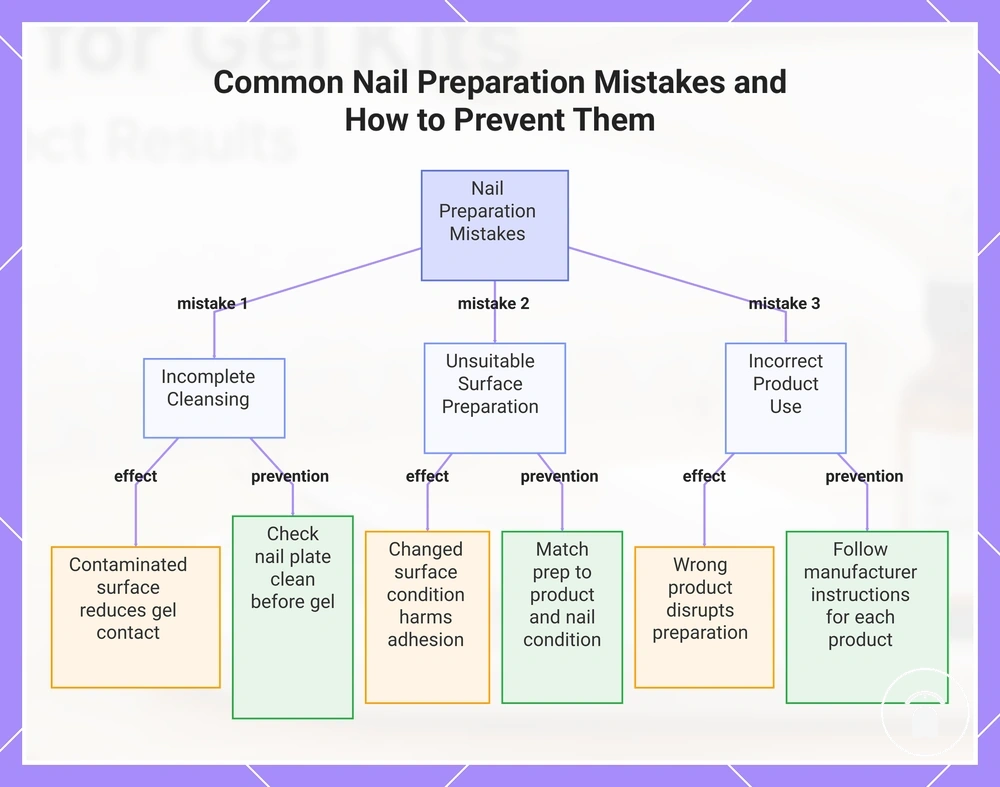
Nail preparation mistakes can reduce gel manicure wear by affecting the nail surface condition required for reliable adhesion. Common mistakes include incomplete cleansing, unsuitable surface preparation, and incorrect use of preparation products. These errors may create conditions where gel products do not contact the natural nail as intended, but the effect depends on the gel system, application method, and natural nail condition.
Common mistakes include incomplete cleansing , unsuitable surface preparation , and incorrect use of preparation products.
The checklist below connects each preparation mistake with its possible effect and a prevention consideration:
- Incomplete cleansing: Remaining dust, oil, or residue can create a contaminated nail surface that may reduce gel contact. Prevention: Check that the nail plate is clean and free of visible residue before applying gel products.
- Unsuitable surface preparation: Preparing the nail too aggressively or not following the gel system's preparation requirements can change the surface condition needed for adhesion. Prevention: Match surface preparation to the product instructions and the condition of the natural nail rather than using the same approach for every client.
- Incorrect product use: Using a cleanser, dehydrator, or primer outside the intended product system can affect the preparation process. Prevention: Follow the manufacturer's instructions for each preparation product and avoid assuming that every gel system requires identical steps.
- Ignoring natural nail condition: Flexible, damaged, or uneven nails may respond differently to preparation methods. Prevention: Adjust preparation intensity according to the nail condition and avoid unnecessary abrasion.
Reducing preparation mistakes can support better preparation quality, but gel wear also depends on broader application factors such as product compatibility and curing conditions. Readers looking for broader factors that help make results last longer or those requiring gentler methods can explore preparation for weak nails as separate considerations.
This chart shows the three most common nail preparation mistakes, their effects on gel adhesion, and how to prevent each one.
This chart shows the three most common nail preparation mistakes, their effects on gel adhesion, and how to prevent each one.