
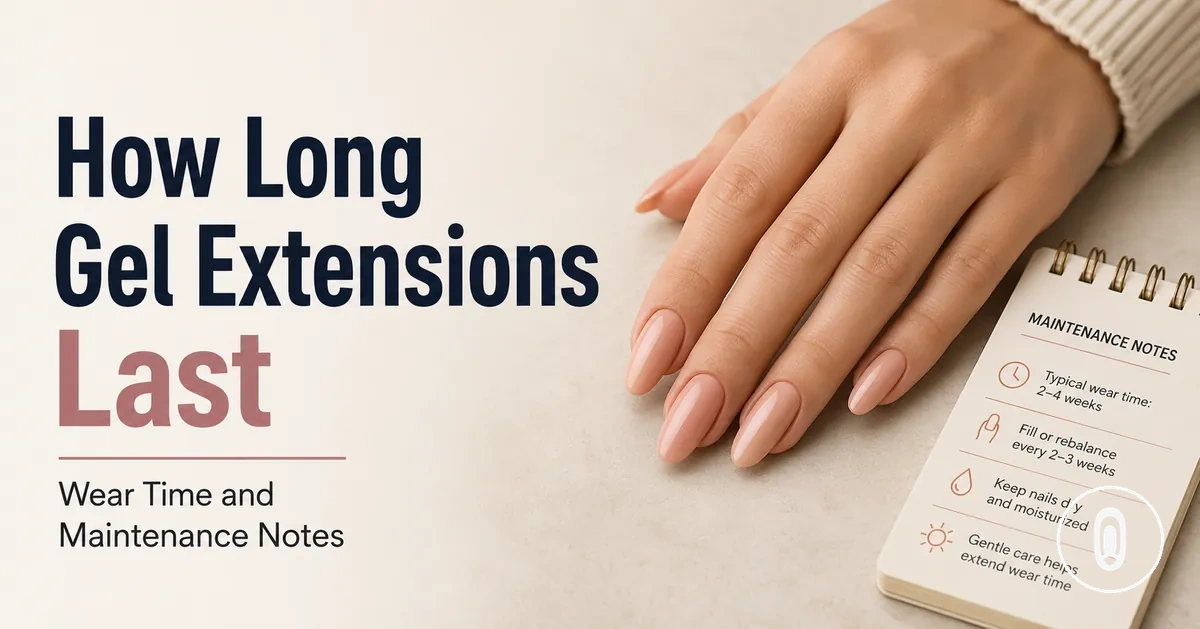
At-Home Gel Nail Extension Wear Time
At-home gel nail extensions can often last about two to four weeks. The actual wear time may be shorter or longer depending on prep, application quality, fit, aftercare, and natural nail growth. Longevity depends on these conditions rather than a single product claim.
Wear time describes more than how long soft gel tips remain attached. It also includes adhesion, appearance, comfort, and safe retention as the natural nail grows. Within at-home gel nail extension kits, fit, glue gel coverage, curing, and aftercare can all influence the outcome. This broader definition prepares the following sections to evaluate wear time through clear criteria rather than a stated duration alone.
Two weeks of wear may be a normal outcome when there is clean grow-out and no early lifting, while earlier separation around the edge or cuticle area may indicate different conditions. The reasons for those differences are explained in later sections without assuming a single cause for every set.
Expected Wear Time for At-Home Gel Nail Extensions
Expected wear time for at-home gel nail extensions is often around two to four weeks, although the result depends on fit, prep, cure quality, aftercare, and natural nail growth. A secure application can support longer retention, while weaker preparation or daily wear may shorten it. These variables have more influence on longevity than a single stated wear period.
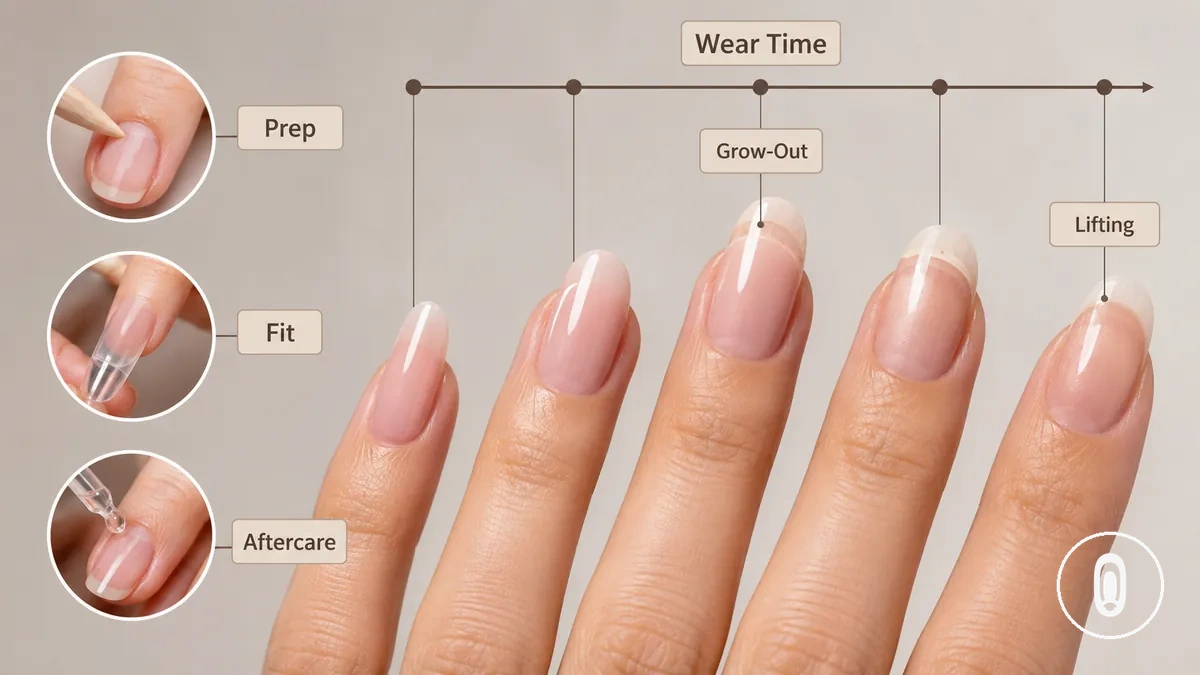
Expected wear time refers to usable retention rather than appearance alone. Soft gel tips may still look smooth even as grow-out becomes more noticeable with natural nail growth. Cosmetic outgrowth does not necessarily mean the extension has failed, but lifting, separation, or discomfort can indicate that the wear period is ending.
Two weeks can be a normal outcome when there is clean grow-out without lifting or discomfort. Around three weeks is often associated with normal wear when prep, fit, curing, and aftercare remain consistent. In some cases, four weeks may be possible with a strong bond and careful maintenance, but early lifting, pain, or separation may indicate a problem even before that point.
The table below summarizes common wear scenarios as a general guide. These ranges describe typical conditions and should not be treated as a guarantee for every at-home gel nail extension application.
| Wear scenario | Typical expectation |
|---|---|
| Short wear | About two weeks with clean grow-out and no early lifting or discomfort. |
| Normal wear | Around three weeks with stable retention, minor edge wear, and continued comfort. |
| Longer wear | Up to four weeks in some cases with strong adhesion, careful prep, good fit, and consistent aftercare. |
Why Wear Time Varies Between Two and Four Weeks
Wear time can vary between two and four weeks because multiple attributes influence how well at-home gel nail extensions remain bonded, comfortable, and intact over time. Adhesion, nail growth, extension length, fit, and daily use interact instead of acting independently. As these conditions change, the outcome may shift from stable retention to greater outgrowth or an increased breakage risk. The main attribute groups are fit, extension length, nail growth, and everyday exposure.
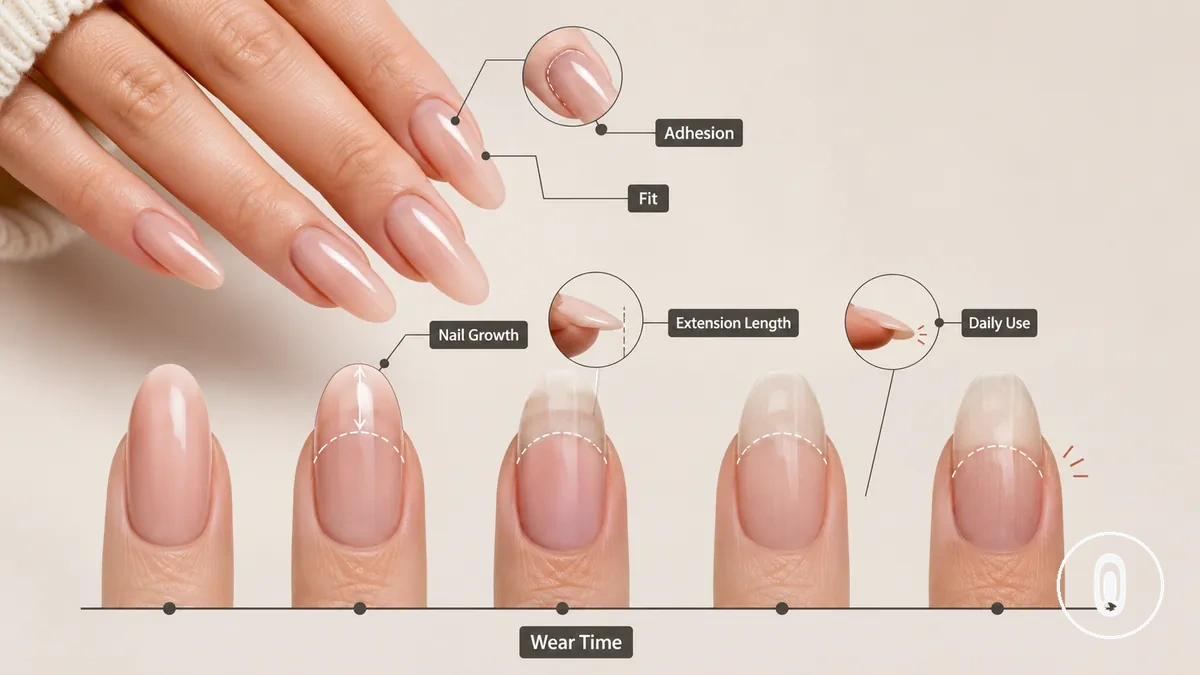
A two-week result may be completely normal when faster nail growth creates visible outgrowth without lifting or discomfort. Around three weeks often reflects balanced adhesion under typical daily use, while four weeks may be possible in some cases when fit, extension length, and ongoing care continue to support retention. These outcomes should be viewed as condition-based ranges rather than exact rules.
The most important variables are adhesion, fit, nail growth, extension length, and daily use. Longer extensions can increase leverage and breakage risk, while frequent water exposure, repeated pressure, or edge stress may reduce retention and comfort. The following H3 sections examine how each factor influences wear time in greater detail.
Wear time changes when the extension system, the natural nail, and everyday conditions change. Use the checklist below to compare the main attributes before judging expected longevity, remembering that no single factor determines the final outcome.
- Fit: A closer fit can support more consistent adhesion.
- Nail growth: Faster nail growth increases visible outgrowth and can affect replacement timing.
- Extension length: Longer extensions may create more leverage and increase breakage risk.
- Daily use: Water exposure, pressure, and edge stress can influence retention over time.
Natural Nail Growth and Daily Hand Use
Natural nail growth is a normal wear-time variable that changes how at-home gel nail extensions appear over time. As the natural nail grows, grow-out creates a visible gap near the base of the extension even when adhesion remains stable. Growth affects visible wear and extension balance without necessarily indicating that the bond has weakened.
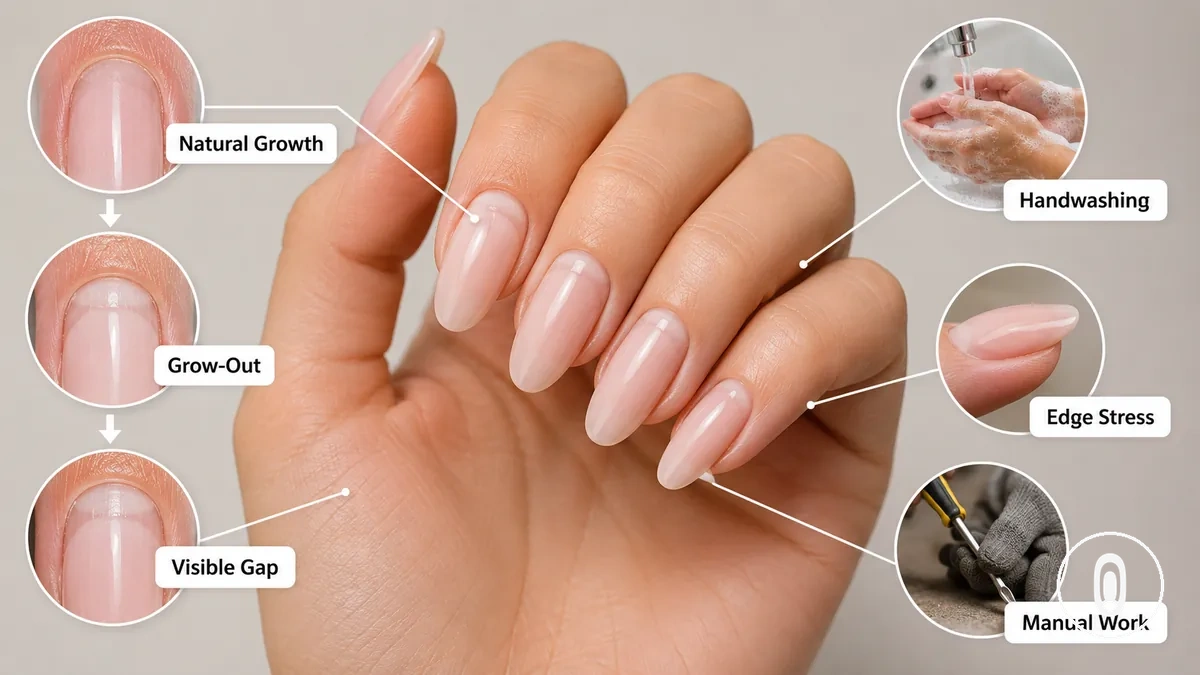
Daily hand use can also influence wear time because different activities place different levels of stress on the extension. Frequent handwashing may increase moisture exposure, while manual work and repeated nail impacts can place more pressure on the free edge. Many everyday activities do not automatically lead to lifting, but repeated edge stress may increase maintenance needs sooner. Common stress patterns include handwashing, manual work, moisture exposure, and accidental nail impacts.
Daily use may shorten wear time when repeated pressure or impacts place extra stress on the extension. Compare the situations below to understand how different use patterns can influence wear, and remember that maintenance needs depend on the overall combination of conditions.
- Frequent handwashing: Increased moisture exposure may contribute to more surface wear over time.
- Manual work: Repeated pressure can increase edge stress on the extension.
- Nail impacts: Sudden knocks may affect extension balance and increase breakage risk.
- Fast natural nail growth: Earlier grow-out creates a visible gap and may bring forward maintenance or replacement timing even when adhesion remains intact.
Soft Gel Tip Fit and Extension Length
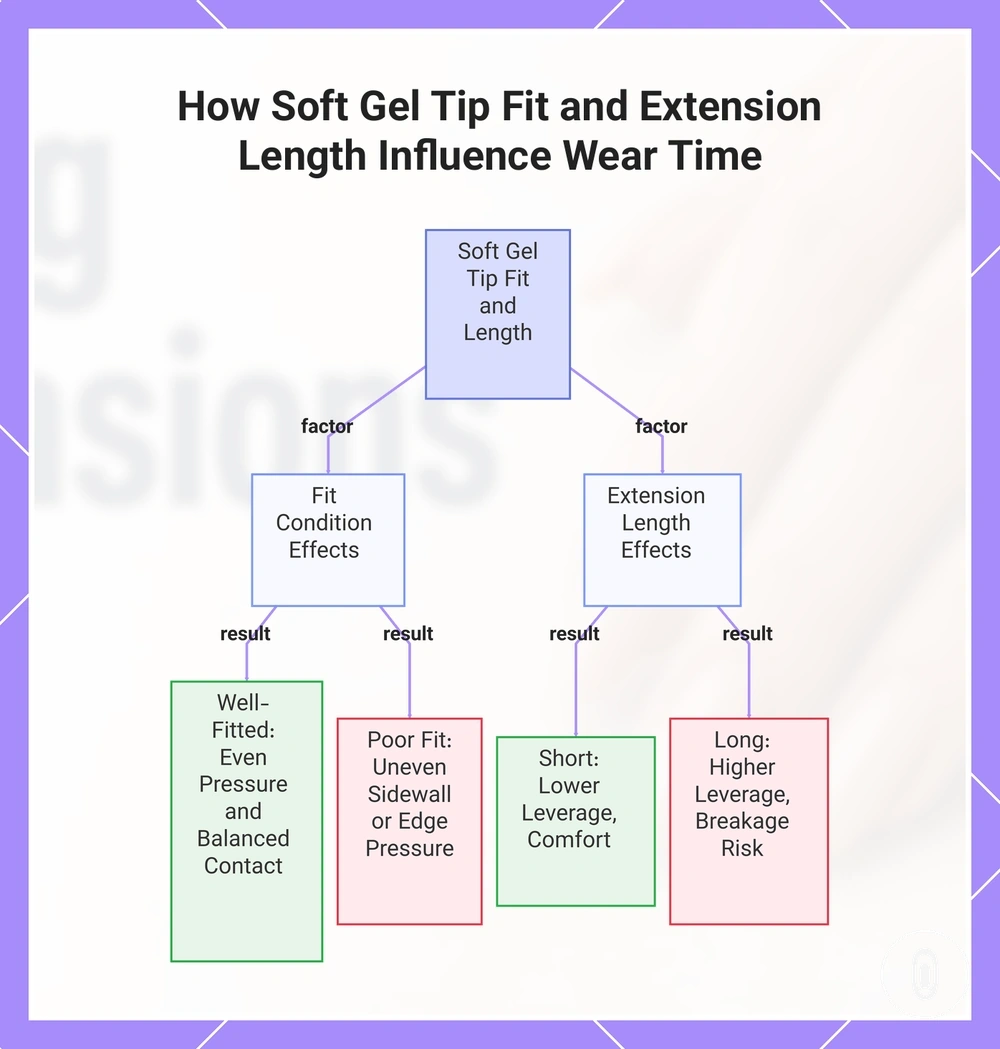
Soft gel tip fit and extension length can influence wear time because they change pressure distribution and sidewall contact. A soft gel tip that follows the natural nail more closely may support more even contact, while extension length changes leverage during use. Fit and length should be assessed together because both affect local pressure on the nail.
Different fit conditions can produce different wear outcomes. An oversized soft gel tip may create uneven sidewall contact, while an undersized tip may increase pressure around the nail edges. A shorter extension length may reduce leverage, whereas a longer extension length can create more leverage when fit or use conditions are less favorable. Poor fit may therefore reduce comfort or increase lifting risk, depending on nail shape and application.
Longer extensions are not automatically less durable. They may create greater leverage when fit or everyday use places additional stress on the nail, while a well-fitted soft gel tip with an appropriate extension length can still provide comfortable wear under suitable conditions.
- Well-fitted tip: More even pressure distribution may support balanced sidewall contact and consistent wear.
- Oversized tip: Extra sidewall contact may increase discomfort or lifting risk.
- Undersized tip: Higher edge pressure may reduce comfort and affect the bond over time.
- Short extension length: Lower leverage may help maintain comfort during normal daily use.
- Long extension length: Greater leverage may increase breakage risk when fit or use conditions are less favorable.
This chart shows how different fit conditions and extension lengths affect pressure distribution, sidewall contact, and wear outcomes.
Prep and Application Factors That Affect Longevity
Prep and application quality can influence gel extension longevity because they affect how well the extension bonds to the natural nail. Small differences in nail preparation or bonding may reduce adhesion even when the kit itself is suitable. A weaker bond can shorten wear time or increase the likelihood of early lifting. This overview identifies the main conditions without replacing a complete application guide.
Prep begins with the condition of the nail plate. Oil, dust, moisture, or cuticle residue may interfere with adhesion, while suitable cuticle removal, dehydration, and primer, when relevant to the system, can support bond quality. These conditions work together, so no single prep factor determines retention on its own.
Application quality also affects longevity. Glue gel amount and coverage, tip placement, the seal, and curing quality can each influence adhesion over time. If wear is shorter than expected, reviewing these conditions may help identify the likely weak point before changing the kit. More detail is available in prep for longer wear.
Small differences during prep and application can change how long the bond remains stable. The table below connects each condition with its possible effect, while the guide to application quality covers the process in greater depth.
| Condition | Possible effect on longevity |
|---|---|
| Clean nail plate | May support more consistent adhesion by limiting oil, dust, and residue. |
| Cuticle removal and dehydration | May reduce surface conditions that can interfere with the bond. |
| Primer when relevant | May support bonding when it is appropriate for the application system. |
| Glue gel amount and tip placement | Uneven coverage or placement may create gaps or air pockets that reduce retention. |
| Seal and curing quality | An incomplete seal or uneven cure may shorten wear over time. |
Clean Nail Plates, Cuticle Prep, and Dehydration
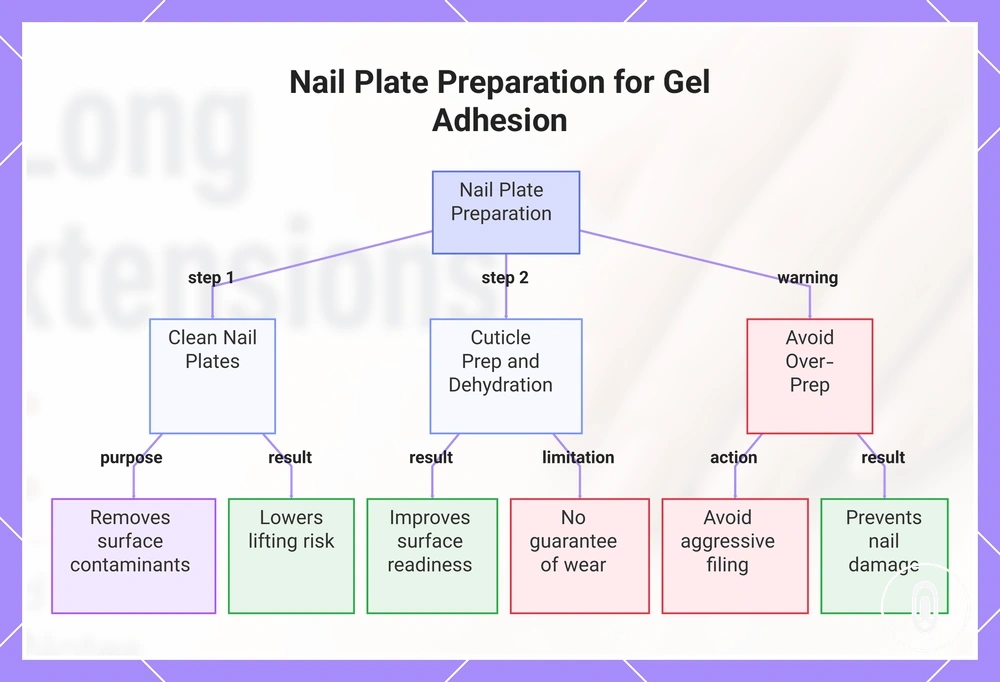
Clean nail plates support adhesion by reducing oil, dust, moisture, and product residue before gel application. A clean nail plate provides a more suitable bond surface because contaminants may interfere with contact between the natural nail and the extension. When residue remains on the nail plate, adhesion may weaken and lifting risk can increase.
Cuticle prep and dehydration help prepare the nail surface by reducing cuticle residue and excess moisture that may affect bond quality. Moisture, oil, or tissue left around the sidewall or nail plate can reduce adhesion, while dehydration and primer, when appropriate for the system, may support a more consistent bond surface. These conditions can improve surface readiness but do not guarantee longer wear or prevent lifting in every case. Avoid aggressive filing, excessive buffing, or thinning the natural nail, as over-prep may damage the nail instead of improving adhesion.
This chart shows the key steps and warnings for preparing nail plates before gel application, including cleaning, cuticle prep, and avoiding over-preparation.
Glue Gel Bond, Free Edge Seal, and Cure Quality
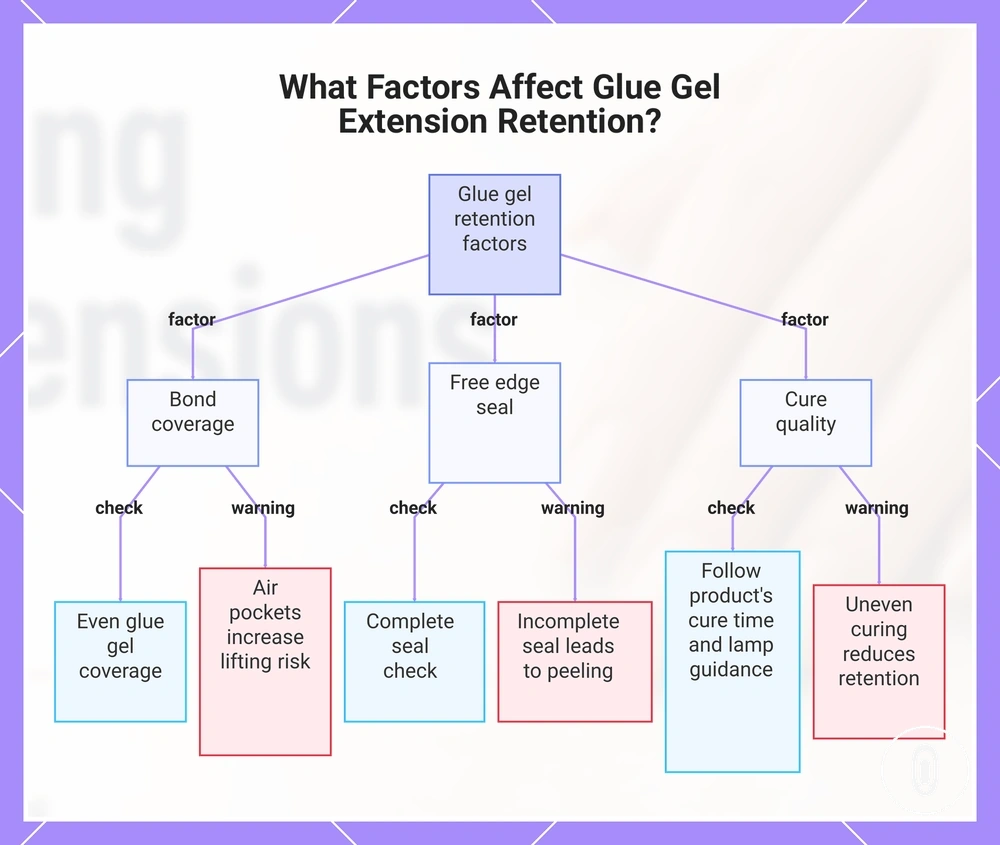
Glue gel bond, free edge seal, and cure quality influence extension retention because they affect bond integrity between the extension and the natural nail. Bond coverage, edge sealing, and curing conditions work together, so changes in any of these local variables may contribute to lifting, peeling, or early loss. The key local factors are bond coverage, free edge seal, cure quality, lamp compatibility, and cure time.
Air pockets, an incomplete free edge seal, or uneven curing may reduce retention because gaps or partially cured gel can weaken the bond. Cure quality also depends on factors such as lamp compatibility, gel thickness, and following the product's recommended cure time rather than assuming one setting is suitable for every system. These conditions should be assessed together because incomplete curing or uneven bond coverage may increase the likelihood of edge wear, peeling, or lifting over time.
Review the checklist below to assess bond and curing conditions without relying on universal or brand-specific instructions.
- Bond coverage: Check for even glue gel coverage, as uncovered areas may reduce retention.
- Air pockets: Look for visible gaps because trapped air may increase the likelihood of lifting.
- Free edge seal: Check that the edge is completely sealed, as an incomplete seal may contribute to peeling or edge wear.
- Cure quality: Follow the product's recommended cure time and lamp compatibility guidance, since uneven curing may affect long-term retention.
This chart shows the key factors affecting glue gel extension retention and the checks to assess bond integrity.
Aftercare That Helps Gel Extensions Last Longer
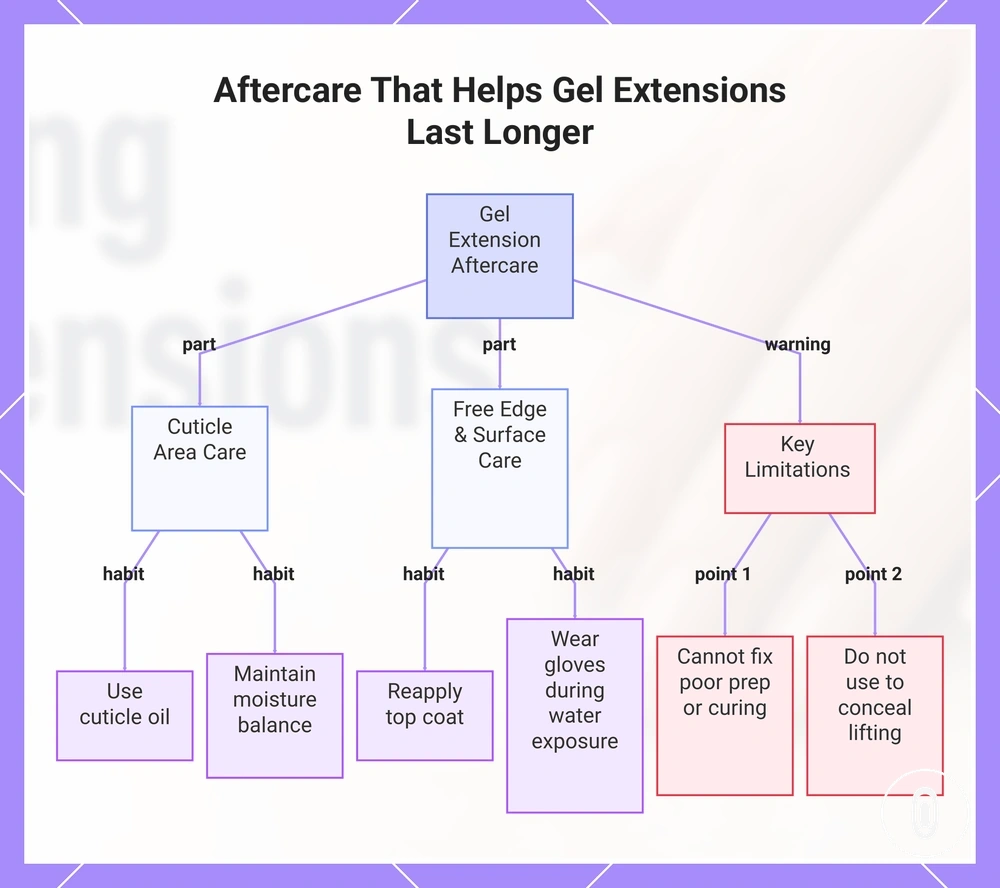
Aftercare helps gel extensions last longer by protecting the bond and surface finish after application, but it cannot override poor prep, incomplete curing, or poorly fitted tips. Daily maintenance may reduce unnecessary stress on the extension while supporting comfort and appearance. The main aftercare areas are the cuticle area, free edge, and extension surface.
During everyday activities such as cleaning, washing dishes, or typing, protective habits may reduce wear on the extension. Cuticle oil can support moisture balance around the surrounding skin, while a top coat, when appropriate for the system, may help maintain the surface finish and reduce visible edge wear. Gloves may limit prolonged water or cleaning-product exposure, and gentle filing can smooth minor edge roughness without major reshaping. These habits can protect a sound application, but cosmetic upkeep should not be used to hide lifting or other bond problems.
Aftercare that helps gel extensions last longer depends on consistent protective habits rather than occasional maintenance. Use the checklist below to support the cuticle area, free edge, and extension surface during everyday wear.
- Cuticle oil: Use it around the cuticle area to support moisture balance and comfort.
- Top coat: Reapply it when appropriate for the system to help protect the surface finish and free edge from visible wear.
- Gloves: Wear them during prolonged water exposure or when using cleaning products to reduce stress on the extension surface.
- Gentle filing: Smooth minor edge wear carefully instead of removing large amounts of product.
- Impact avoidance: Avoid using gel extensions as tools because repeated impacts may increase edge wear or lifting risk.
- Moisture balance: Keep the surrounding nail area conditioned while limiting prolonged moisture exposure that may affect wear.
If lifting has already developed, aftercare should not be used to conceal or correct the problem. Review the guidance on maintaining extensions and assess whether the set needs further maintenance, removal, or replacement.
This chart shows the main aftercare areas for gel extensions and key limitations, emphasizing that aftercare protects the bond but cannot fix poor application or conceal lifting.
Cuticle Oil, Top Coat, and Moisture Balance
Cuticle oil, top coat, and moisture balance support gel extension wear by helping maintain comfort around the cuticle area and reducing unnecessary surface wear. Cuticle oil may improve comfort for the surrounding skin, while moisture balance helps limit excessive dryness or prolonged soaking that can affect the area around the extension. These aftercare measures support a sound application but should not be treated as a repair for lifted extensions.
When the extension surface begins to show visible wear, a top coat, when appropriate for the system, may help maintain surface protection and reduce the appearance of wear that can contribute to chipping risk. Excessive dryness may reduce comfort around the cuticle area, while prolonged soaking can increase visible wear over time. Cuticle oil, top coat, and moisture balance each support a different aspect of ongoing aftercare rather than providing the same benefit. Maintaining the cuticle area and extension surface is a practical way to support everyday wear without relying on repair methods.
Water Exposure, Cleaning Products, and Using Nails as Tools
Repeated water exposure, cleaning products, and mechanical pressure may reduce gel extension wear more than normal hand use because they place additional stress on the bond and free edge. Normal handwashing is usually part of everyday wear, while repeated soaking or using nails as tools can increase the likelihood of dullness, edge wear, or lifting over time. The main local behavior risks are prolonged soaking, repeated contact with cleaning products, and mechanical pressure.
During dishwashing, household cleaning, typing, or opening objects, the way the extension is used can influence wear differently. Repeated soaking and frequent contact with cleaning products may contribute to surface dullness, while using nails as tools or applying pressure with the fingertips can place extra stress on the free edge. Typing is generally routine, but repeated impact on the nail tips may gradually increase edge wear for some users. These behavior patterns are more relevant to long-term wear than ordinary hygiene alone.
Daily exposure changes stress on the bond and free edge, so it helps to identify which habits create repeated pressure rather than avoiding routine hand care. Use the checklist below as a practical reminder, keeping in mind that normal handwashing is not the same as repeated soaking or mechanical stress.
- Prolonged soaking: Affects the bond and free edge and may increase the likelihood of lifting over time.
- Cleaning products: Repeated exposure may contribute to surface dullness, particularly during extended wet work.
- Using nails as tools: Places mechanical pressure on the free edge and may increase edge wear or breakage risk.
- Typing with nail tips: Repeated contact at the free edge may gradually increase nail stress for some users.
- Opening objects with the nails: Concentrates pressure at the free edge and may increase the chance of lifting or edge wear.
Early Lifting Before the Expected Wear Time
Early lifting before the expected wear time usually signals that prep, fit, bond quality, curing, or everyday stress should be checked rather than assuming one universal cause. The lifted area may indicate a retention issue, but the likely reason depends on its location, timing, and severity. Any diagnosis should remain conditional until those factors are considered together.
Location and timing provide useful clues because different lifting patterns may relate to different conditions. Lifting near the cuticle area may be associated with prep residue or bond quality, while sidewall lifting can relate to fit, air pockets, or pressure. Lifting at the free edge may reflect seal quality or repeated stress during use. Comparing the lifted area with when the problem appeared helps guide a safer next decision.
The table below summarises common lifting patterns and possible responses. Minor edge wear differs from active separation, while widespread lifting, discomfort, or pain may require removal or professional advice rather than continued wear.
| Lifted area | Timing | Likely cause | Safe next decision |
|---|---|---|---|
| Cuticle area | Soon after application | Prep residue or bond quality may have affected adhesion. | Review prep and application conditions without assuming a single cause. |
| Sidewall | Early in the wear period | Fit, air pockets, or pressure may have contributed to separation. | Assess fit and bond conditions before applying another set. |
| Free edge | After regular use | Seal quality or repeated stress may have reduced retention. | Evaluate the extent of lifting before deciding on maintenance or replacement. |
| Multiple areas | Before the expected wear time | More than one retention issue may be involved. | Consider safe removal or professional advice if lifting is widespread or uncomfortable. |
Early lifting should not be covered or pressed back into place because that may hide the underlying problem. For more detailed guidance, see lifting before expected wear time.
Lifting Near the Cuticle, Sidewall, or Tip
Lifting location is a useful diagnostic clue, but it is not proof of a single cause. The location should be assessed alongside timing, prep, fit, and everyday stress because multiple factors may contribute to early separation. The three main patterns are cuticle lifting, sidewall lifting, and tip lifting.
Each lifting area can suggest a different condition to check, although the location alone cannot provide an exact diagnosis. Cuticle lifting may relate to residue that affected prep or adhesion, sidewall lifting may be associated with sidewall fit, pressure, or air pockets, and tip lifting may reflect edge stress or an incomplete seal at the free edge. Evaluate the lifting area carefully before deciding on the safest next step.
- Cuticle lifting: Check for cuticle residue; this location may indicate that prep or adhesion was affected.
- Sidewall lifting: Check sidewall fit, pressure, and air pockets; this pattern may suggest uneven contact along the nail edge.
- Tip lifting: Check the free edge for edge stress or an incomplete seal; this location may indicate reduced retention at the tip.
When Two-Week Wear Is Normal and When It Signals a Problem
Two-week wear can be normal when there is normal grow-out with no lifting, but it can signal a problem when separation, discomfort, cracking, or repeated early loss appears. The same timing can represent different outcomes depending on the condition of the extension rather than the number of days alone. The most useful visible signs are a clean visible gap, edge wear, lifting, separation, cracking, and discomfort.
A clean visible gap caused by normal grow-out, with no lifting or discomfort, may indicate that the natural nail has continued to grow. In contrast, lifting, separation, cracking, pain, or repeated early loss may suggest that prep, application, or bond conditions should be reviewed. Looking at the condition of the extension is more useful than judging two-week wear by timing alone. Stable wear may need routine maintenance, while active lifting, pain, or cracking may require removal or further assessment.
The comparison below separates normal two-week wear from problem signs. Use the condition of the extension, not timing alone, to decide whether maintenance or removal is the safer next step.
| Normal two-week wear | Problem signs |
|---|---|
| Normal grow-out with a clean visible gap | Lifting or visible separation |
| Minor edge wear without instability | Cracking or breakage |
| No discomfort during normal use | Discomfort or pain around the extension |
| Wear remains stable | Repeated early loss that may indicate a prep, application, or bond issue |
Wear Time and At-Home Kit Value
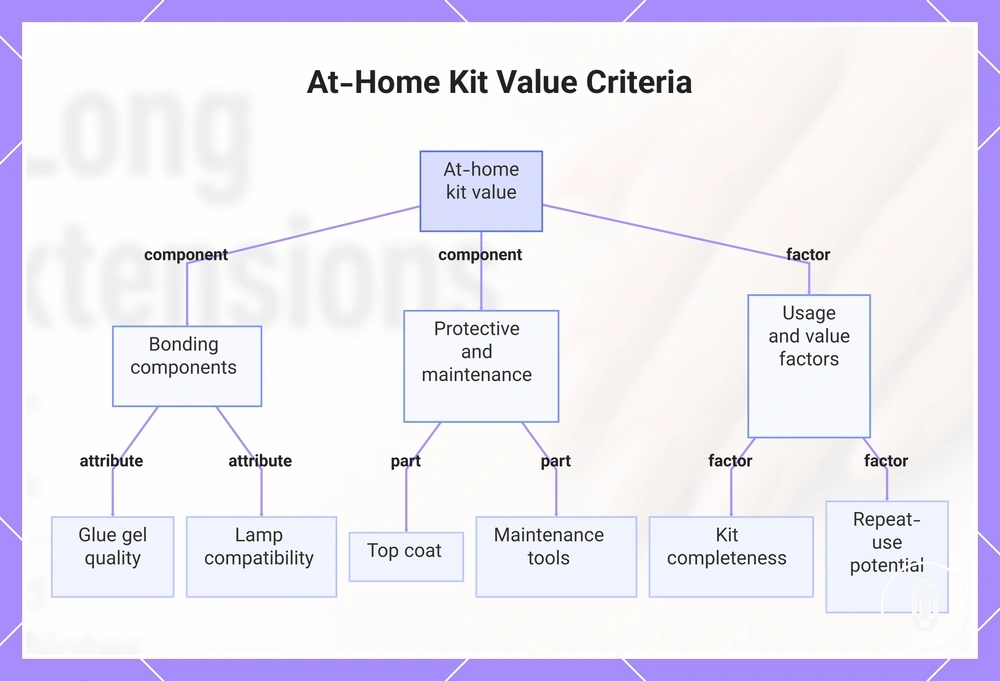
Wear time is one signal of at-home kit value, but it should be assessed alongside the tools and components that support consistent results. A kit that supports more reliable retention may provide better long-term value even when its initial cost is higher. Useful cost-value criteria include glue gel quality, lamp compatibility, top coat, maintenance tools, repeat-use potential, and overall kit completeness.
If you are comparing a lower-cost kit with shorter wear against a kit with stronger maintenance support, the more suitable option depends on how you plan to use it. Shorter wear may still suit occasional use, while repeat applications may benefit from more complete accessories and maintenance items. The decision impact comes from balancing durable wear, repeat-use potential, and ongoing maintenance rather than assuming that higher or lower cost automatically represents better value. Cost alone does not determine overall kit value.
At-home kit value depends on how consistently each component supports durable wear across repeat applications. Compare glue gel quality, lamp compatibility, top coat, and maintenance tools by the role each plays in retention and long-term use. The checklist below connects each component with its longevity role and decision impact. For a broader comparison of wear time and value, consider how each feature influences repeat-use potential.
- Glue gel quality: May support bond longevity, making it relevant when comparing repeat-use value.
- Lamp compatibility: Can influence curing consistency, so compatibility is an important decision signal for retention.
- Top coat: May help protect the extension surface and reduce visible wear when suitable for the system.
- Maintenance tools: Can support aftercare between applications and may improve long-term usability.
- Kit completeness: May reduce the need for separate supporting items, depending on what is already included.
- Repeat-use potential: Indicates how well the kit may support consistent applications over time.
Choosing an at-home kit is more useful when wear time, maintenance support, and repeat-use potential are evaluated together rather than focusing on cost alone. A kit that better matches your application habits and maintenance needs may offer stronger long-term value even when wear time varies. Use these decision signals to compare overall kit value without relying on product rankings or unsupported price claims.
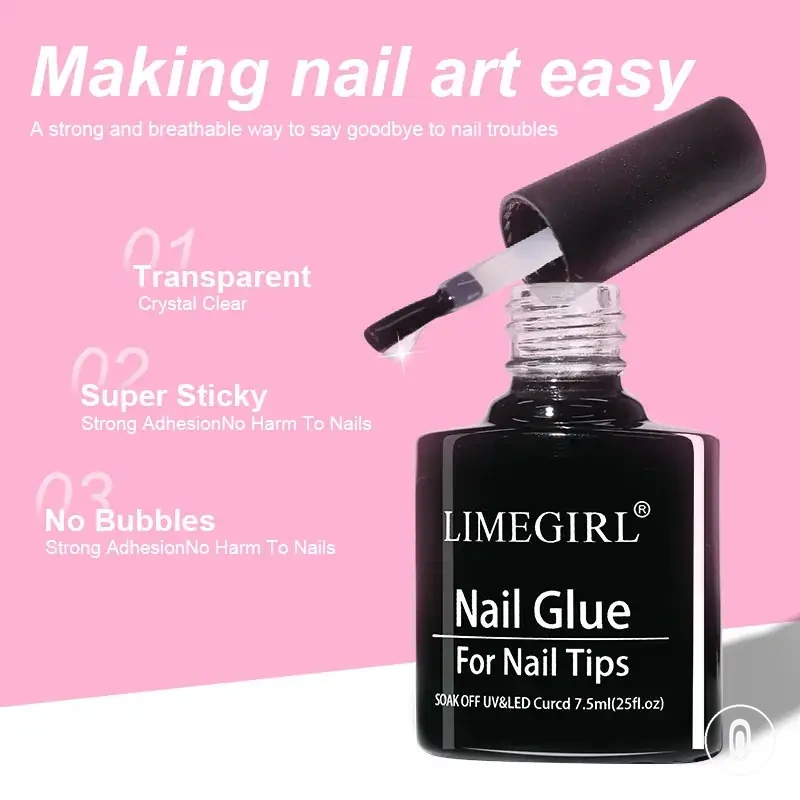
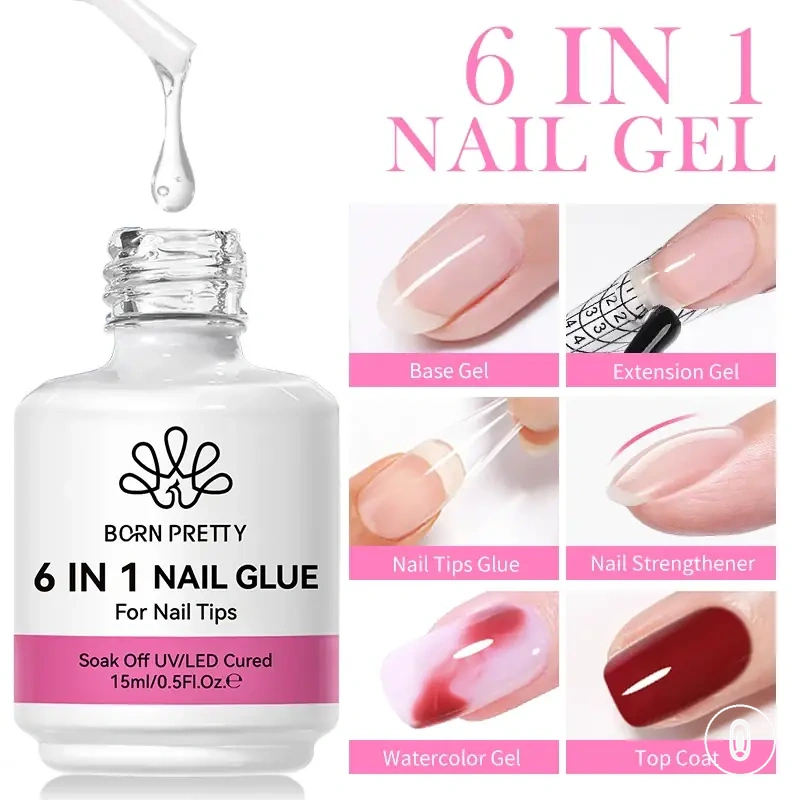
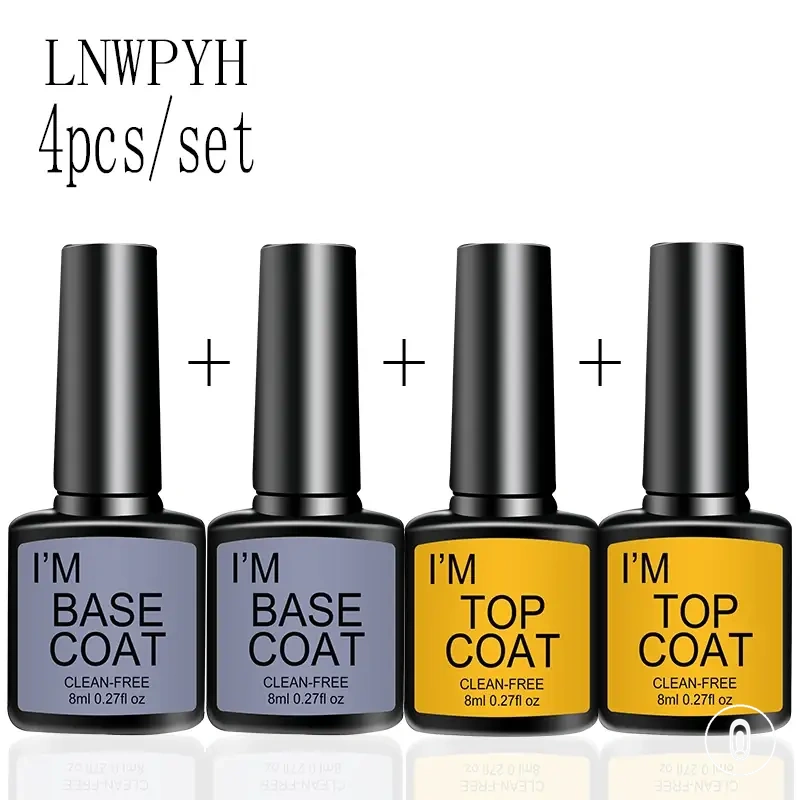
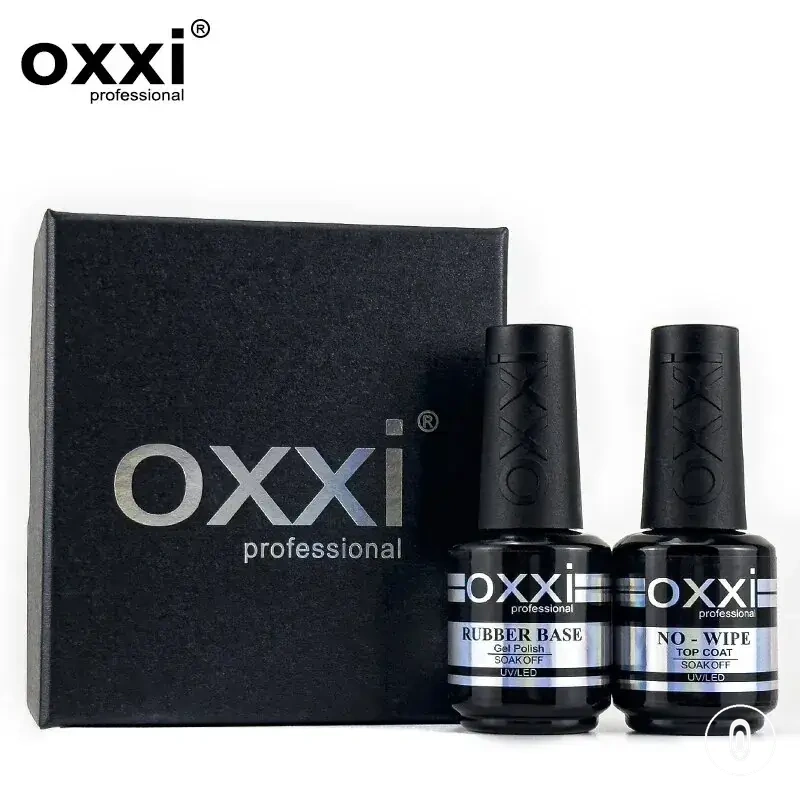
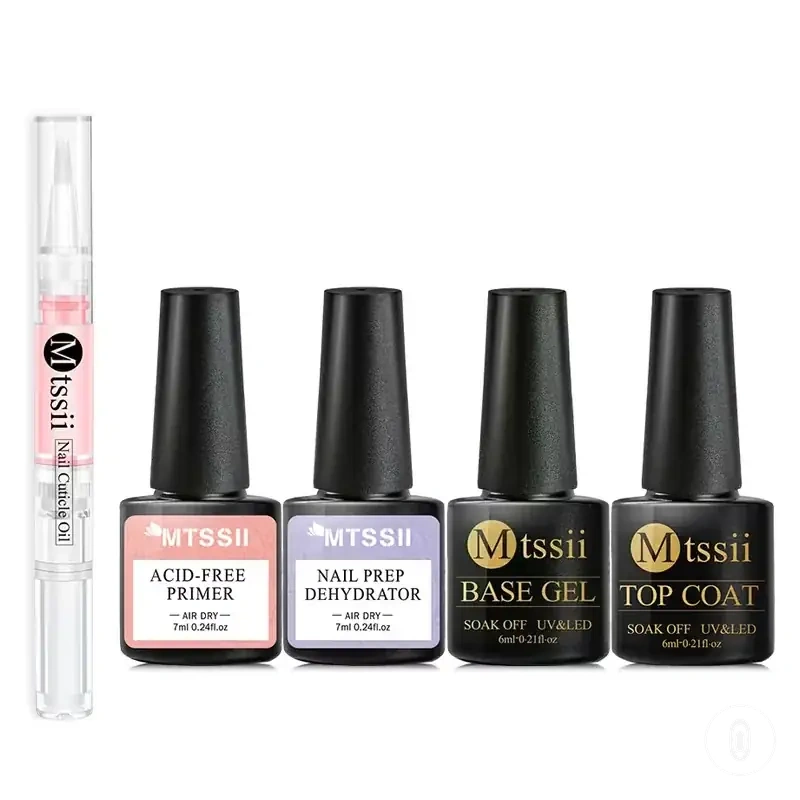
The products below are useful examples for comparing available options. Before buying, check that the compatibility criteria, key features, and product details match your needs.
This chart shows the main criteria for assessing at-home kit value, including component quality, protective features, and usage factors.
When Gel Extensions Should Be Filled, Removed, or Replaced
Whether gel extensions should be filled, removed, replaced, or maintained depends on visible grow-out, lifting, comfort, and the condition of the natural nail. A stable extension with balanced visible grow-out may be suitable for maintenance, while lifting, discomfort, edge damage, or natural nail exposure may indicate that a different next step is more appropriate. The main maintenance decisions are to maintain, fill, remove, or replace the extension.
Visible grow-out without lifting or discomfort may support continued maintenance when the extension remains balanced and secure. A fill may be appropriate in some situations if the existing structure is stable, while replacement may be considered when loss of balance or edge damage affects the extension. Safe removal is generally preferable to extending wear when lifting, discomfort, or natural nail exposure is present. Appearance should not take priority over comfort or nail condition.
The table below separates common conditions from the most appropriate maintenance decision. Use the condition of the extension rather than appearance alone to decide the next step, and choose safe removal instead of extending wear when lifting or discomfort is present.
| Condition | Recommended next step | Decision signal |
|---|---|---|
| Visible grow-out with no lifting | Maintain or fill | Extension remains balanced and comfortable. |
| Loss of balance | Fill or replace | Structure no longer feels stable during normal wear. |
| Edge damage | Replace or assess removal | Damage affects stability or continued wear. |
| Lifting or discomfort | Remove | Prioritise safety instead of extending wear. |
| Natural nail exposure | Remove or replace | Protect the natural nail before further wear. |
Repeated short wear may indicate that prep or application conditions should be reviewed before another set is applied. Reviewing the likely cause before replacement can help guide the next maintenance decision without assuming that a new set alone will improve wear time.