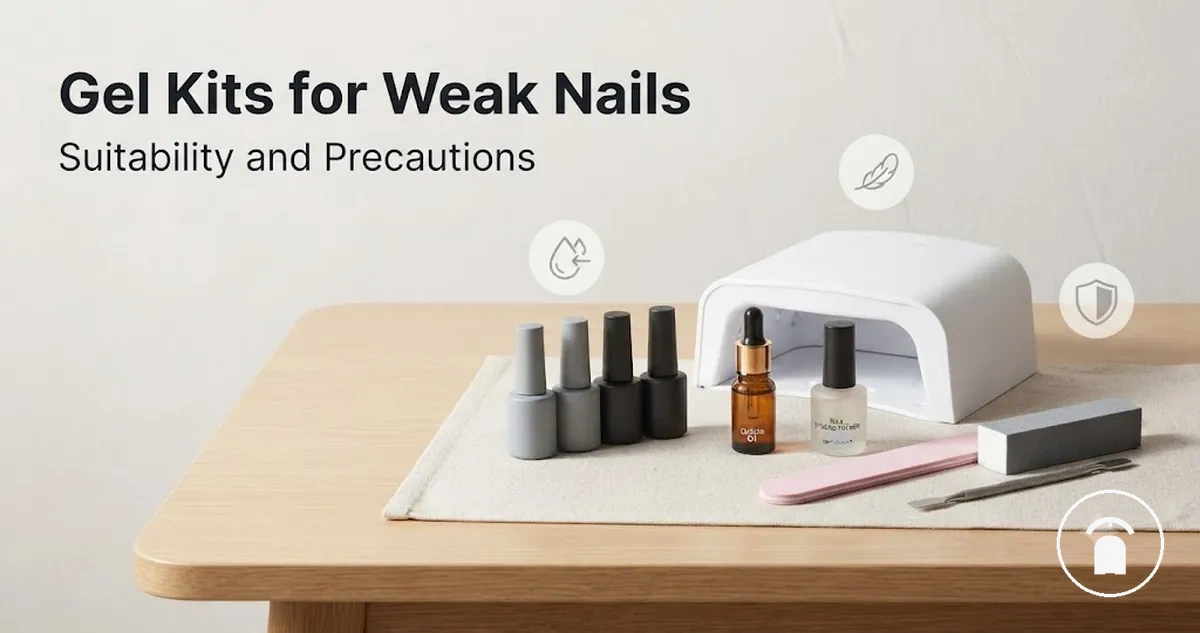
Gel Nail Kits for Weak Nails: Suitability and Precautions
Gel nail kits for weak nails are conditionally suitable, not universally suitable, because the relevant value is the condition of the natural nail before application. Weak nails or thin nails that are already splitting, peeling, painful, inflamed, discoloured, or separating from the nail bed require assessment rather than cosmetic coverage. The American Academy of Dermatology states that gel manicures can contribute to brittleness, peeling, and cracking, so gel polish should not be treated as a method of repairing or strengthening the nail. This page therefore evaluates suitability and precautions rather than promising improvement in nail condition.
This page therefore evaluates suitability and precautions rather than promising improvement in nail condition.
Suitability depends on three defined factor groups: the existing nail condition, the characteristics of the gel nail kit, and the application-and-removal cycle. A gel manicure may be considered only when the natural nails are intact and free from signs that require professional assessment; the American Academy of Dermatology advises against using artificial nails to cover nail problems because doing so can worsen them. Kit suitability also requires the gel polish and curing lamp to be used as a matched system under the manufacturer’s instructions, while removal must avoid peeling or forceful scraping that removes surface layers from fragile nails. The U.S. Food and Drug Administration classifies cosmetic nail products as cosmetics rather than treatments for medical nail problems, which sets a clear boundary between cosmetic coating and nail repair.
This framework keeps the article focused on informed selection without presenting gel nail kits as treatments for weak or thin nails.
The evaluation that follows considers nail condition first, then gel kit features, application and curing choices, removal practices, and aftercare. No universal numerical threshold defines when weak nails are suitable for gel polish because the reviewed dermatology and regulatory guidance does not provide a validated thickness, strength, or flexibility measurement for home users. The practical decision is therefore criteria-based: intact natural nails may remain candidates for cautious cosmetic use, whereas painful, damaged, inflamed, infected-looking, or persistently changing nails fall outside routine gel-kit suitability. This framework keeps the article focused on informed selection without presenting gel nail kits as treatments for weak or thin nails.
Table of Contents
Whether Gel Nail Kits Suit Weak and Thin Nails
Gel nail kits may suit weak or thin nails only when the natural nails are intact, painless, and free from persistent changes in colour, shape, texture, or attachment to the nail bed. Suitability is conditional because gel polish provides a cosmetic coating rather than treatment for the cause of brittle or fragile nails. The American Academy of Dermatology states that gel manicures can contribute to nail brittleness, peeling, and cracking, and it advises people with brittle nails against using artificial nails.
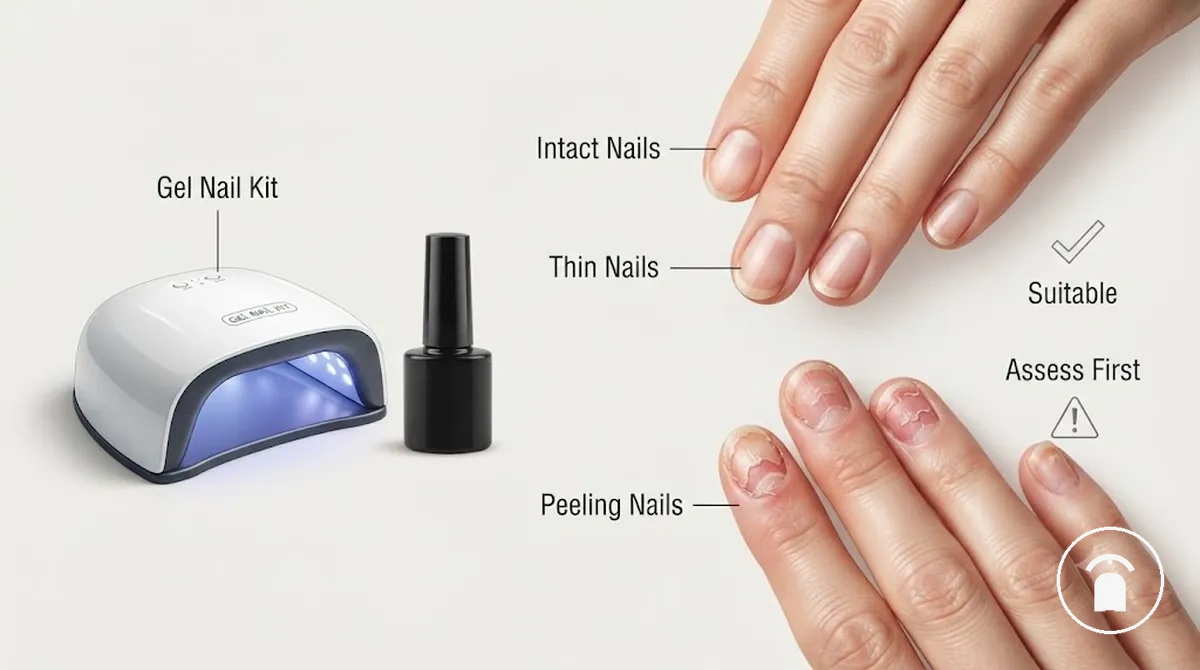
The following checklist separates nail conditions that may permit cautious cosmetic use from conditions that make a home application unsuitable:
- Intact weak nails: Natural nails that bend or split at the free edge but show no pain, swelling, separation, or persistent colour change remain possible candidates when the gel polish, curing lamp, application method, and removal method follow the product instructions.
- Thin or peeling nails: Gel nail kits have limited suitability when surface layers are already lifting because buffing, filing, scraping, or peeling off the coating can remove additional nail material. The American Academy of Dermatology advises against picking gel polish off and recommends allowing soak-off gel to loosen during removal.
- Painful or visibly altered nails: Nails with pain, swelling, inflammation, separation from the nail bed, or persistent changes in colour, shape, or texture are unsuitable for routine cosmetic coverage until assessed. The American Academy of Dermatology identifies these changes as reasons to consult a board-certified dermatologist.
Gel nail kits therefore have conditional suitability for weak nails and thin nails: intact natural nails may remain candidates for carefully controlled cosmetic use, while damaged, painful, inflamed, detached, or persistently changing nails fall outside normal home application. The U.S. Food and Drug Administration regulates ordinary nail-care products as cosmetics and notes that nail products can cause infections or allergic reactions, so irritation is a reason to stop using the product rather than conceal the reaction with another coating. Apply the broader home-use safety criteria before proceeding, and treat unresolved nail changes as a health-assessment issue rather than a gel-kit compatibility problem.
How Weak Nails Change Gel Nail Wear and Protection Factors
Nail condition determines how gel wear and protection should be interpreted because weak nails differ in flexibility, brittleness, thickness, and sensitivity. A gel coating can provide a temporary surface layer that reduces everyday abrasion on the natural nail, but it does not strengthen the nail plate or treat the cause of nail weakness. The American Academy of Dermatology reports that repeated gel manicures can contribute to brittleness, peeling, and cracking, so protection should be understood as cosmetic surface coverage rather than structural improvement.
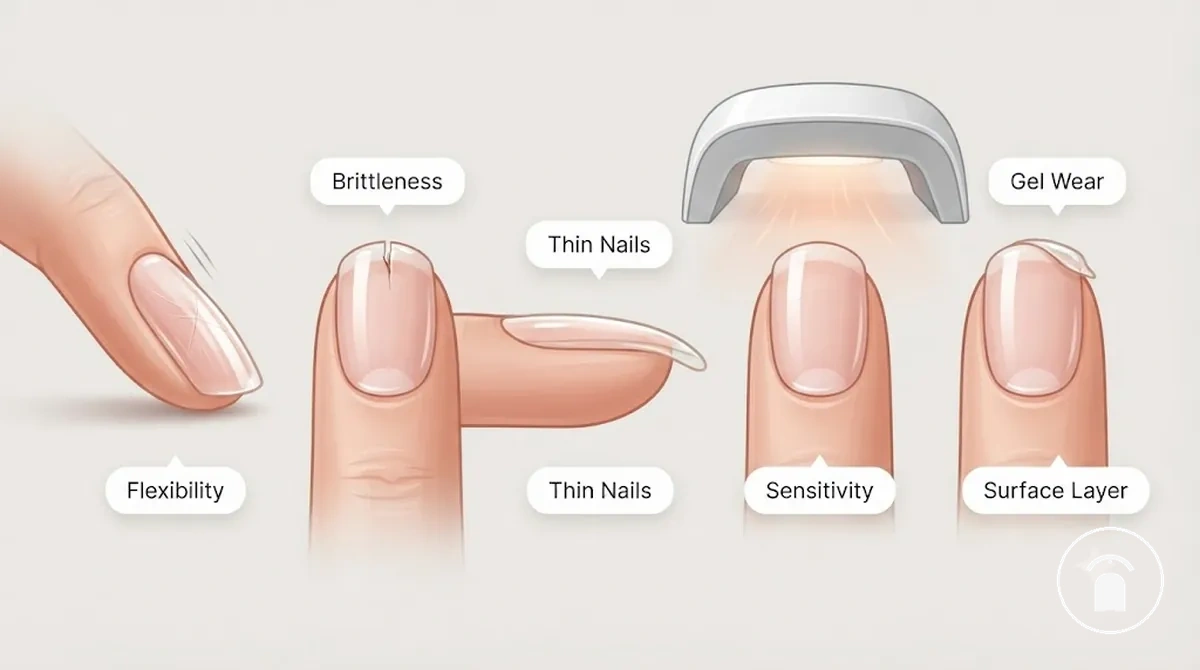
The main nail condition attributes change how gel wear should be interpreted:
- Flexibility: Flexible natural nails bend more during daily activities, increasing stress between the nail plate and the cured gel coating, which can contribute to edge lifting or coating cracks.
- Brittleness: Brittle nails are more prone to splitting at the free edge, so gel wear depends on gentle application and removal rather than the coating preventing breakage.
- Thickness: Thin nails provide less structural support for cured gel, making excessive filing or peeling during removal more likely to remove additional nail layers.
- Sensitivity: Sensitive nails may experience a temporary heat sensation during LED or UV curing because gel polymerisation releases heat. The intensity depends on the gel formulation, curing lamp output, and coating thickness rather than nail weakness alone.
These attributes influence gel wear and cosmetic surface protection without indicating stronger natural nails after removal. For example, two people using the same gel polish under identical curing conditions can experience different wear if one has thin, flexible nails while the other has thicker, less flexible nails, leading to earlier lifting in the first case. Current dermatology guidance does not define a validated numerical threshold for nail flexibility, brittleness, thickness, or sensitivity that predicts gel wear, so these characteristics are evaluated through observable nail condition instead of a measurable home-use value.
Gel Nail Kit Features for More Suitable Use on Weak Nails
Gel nail kit features influence suitability for weak nails by supporting correct adhesion, curing, and removal rather than by strengthening the natural nail. The primary suitability criteria are a compatible base gel, a curing lamp designed for the gel system, and a removal process intended for soak-off gel products. According to the American Academy of Dermatology, improper gel application and removal can contribute to nail brittleness, peeling, and cracking, so kit features should be evaluated by how they support proper cosmetic use instead of promising healthier nails.
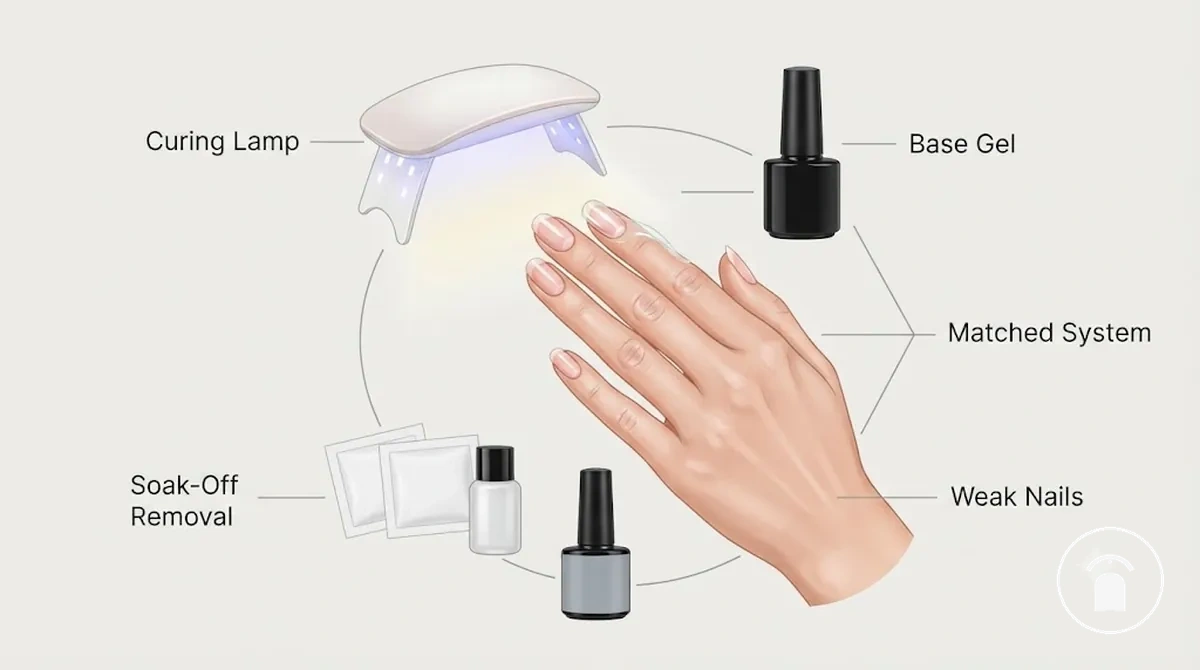
Gel nail kit features work as a complete system rather than as independent products. Manufacturers specify that a base gel should be used with the compatible gel polish and curing lamp because curing performance is validated for that system rather than for mixed-brand combinations. Most manufacturer instructions specify curing times of approximately 30 to 60 seconds per coat under an LED lamp or about 2 minutes under a UV lamp, although the exact curing time remains product-specific and should follow the manufacturer's instructions.
Gel nail kit features work as a complete system rather than as independent products.
The following checklist organises the main suitability criteria for weak nails:
- Base gel: Designed to improve adhesion between the natural nail and gel coating while remaining compatible with the matching gel system.
- Curing lamp: Should match the gel polish formulation and manufacturer-specified wavelength and curing process to achieve proper polymerisation.
- Flexible coating: Some gel systems are formulated to create a more flexible coating that better follows normal nail movement, but no recognised industry standard provides a universal flexibility rating for comparing brands.
- Removal components: Kits that include soak-off remover, wraps, or removal accessories support controlled removal instead of peeling cured gel from the nail surface, which the American Academy of Dermatology advises against.
No individual gel nail kit feature guarantees suitability because nail condition remains an essential selection criterion. For example, a hypothetical user applying two thin gel coats cured for the manufacturer-specified 60 seconds per LED layer with a matching lamp is more likely to achieve complete curing than someone using an incompatible lamp with the same gel formulation. Current dermatology guidance and manufacturer documentation do not define a validated numerical threshold for coating flexibility or overall kit suitability on weak nails, so suitability criteria remain based on compatible system components, correct curing conditions, and appropriate removal practices.
Base Gels and Flexible Coating Options for Weak Nails
A base gel is the foundation layer that improves adhesion between the natural nail and the gel coating, while a flexible coating is formulated to accommodate normal nail movement after curing. For weak nails, a rubber base gel is generally characterised by greater flexibility than a standard base gel, making it a conditional suitability option for nails that flex during everyday use rather than a universal choice for every nail condition. Current manufacturer documentation and the reviewed evidence describe flexibility as a material property but do not define a recognised industry-wide numerical flexibility rating for comparing base gel types. :contentReference[oaicite:0]{index=0}
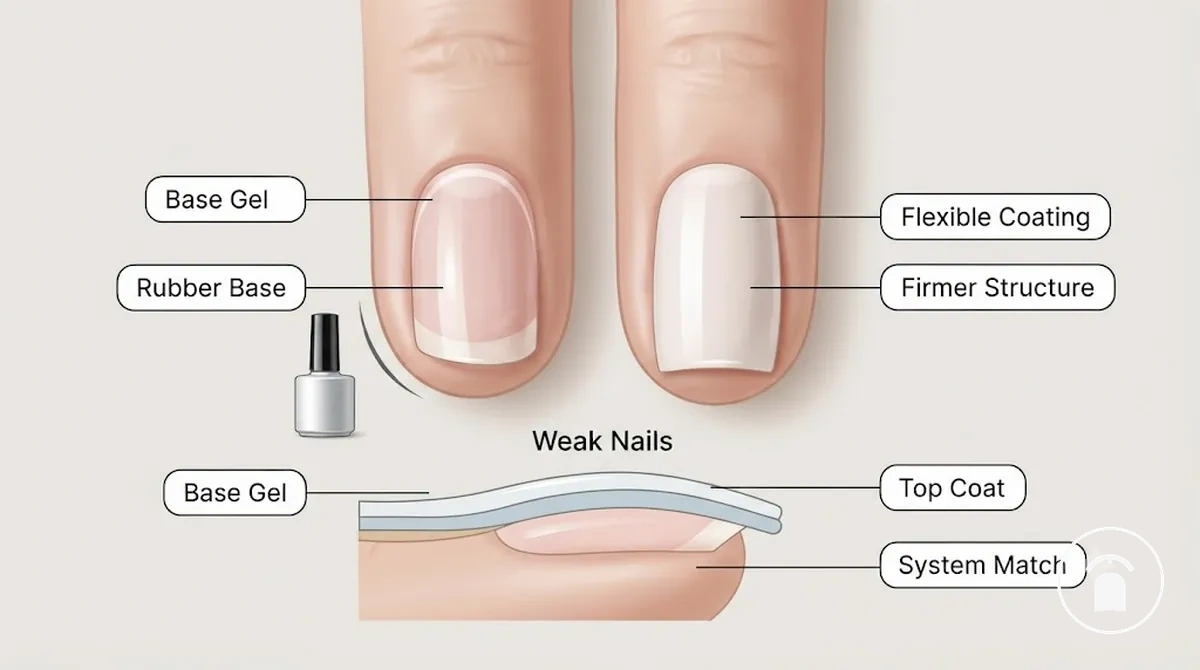
Base gel types differ mainly in coating structure and flexibility. Rubber base gel is formulated to create a more flexible coating layer that can move with a naturally flexible nail, whereas harder builder-style gel bases generally produce a firmer structure intended for different application goals within the manufacturer's system. For example, a hypothetical nail that flexes about 1 mm during normal fingertip pressure may place less stress on a flexible coating than on a rigid coating, reducing the likelihood of edge lifting, although this illustrative value is not an industry specification. The reviewed evidence also indicates that base gel, gel colour, top coat, and curing lamp should be used as a compatible system because manufacturers validate curing performance for matched products rather than mixed formulations. :contentReference[oaicite:1]{index=1}
Curing and Removal Factors That Affect Nail Condition
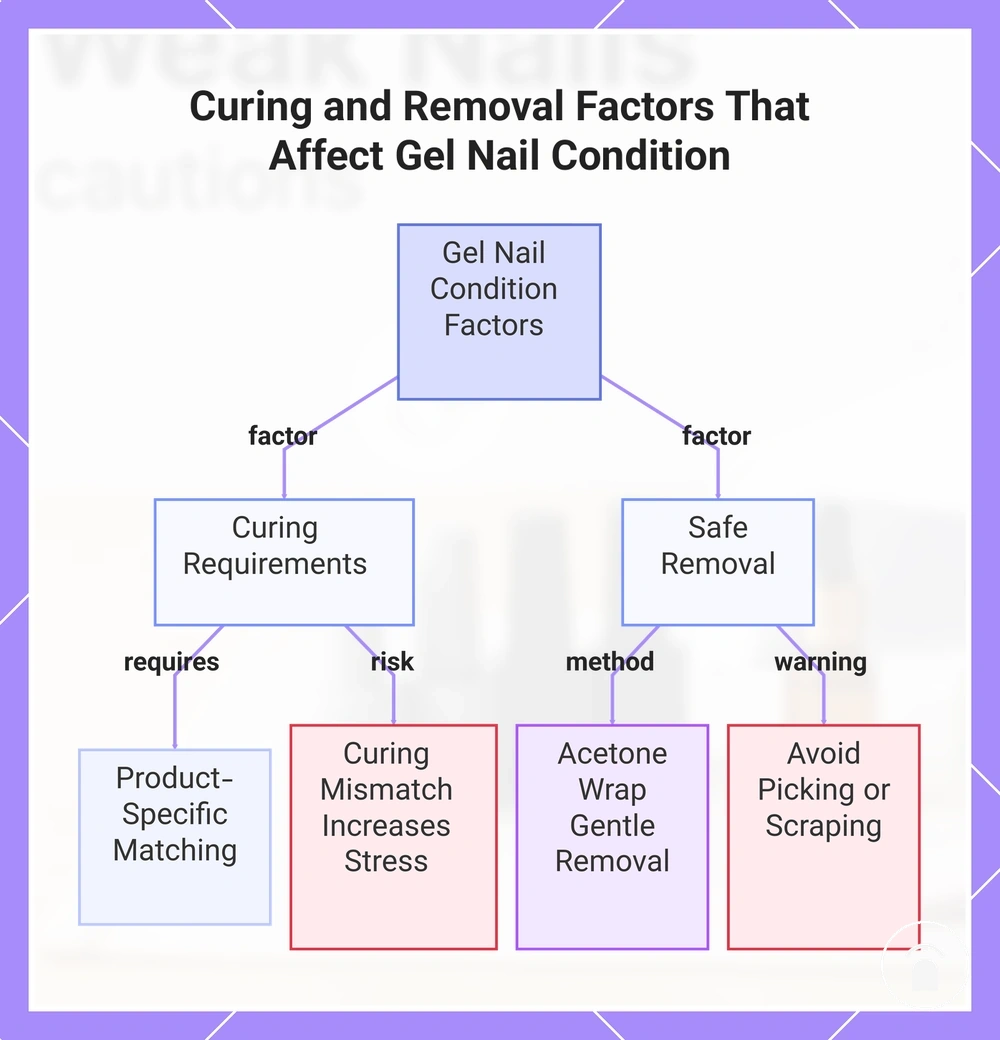
When gel polish is cured with a lamp or timing that does not match the product instructions, or when removal relies on peeling, filing, or forceful scraping, the technique can increase stress on the natural nail and worsen an already fragile nail condition. Curing suitability therefore has a product-specific value: the gel formulation, curing lamp, and exposure time must match the manufacturer’s stated system, because no universal curing duration applies to every gel polish. The American Academy of Dermatology reports that gel manicures can contribute to brittleness, peeling, and cracking, while picking or filing off the coating can significantly damage the nail surface. :contentReference[oaicite:0]{index=0} :contentReference[oaicite:1]{index=1}
Removal affects nail condition through the amount of chemical contact and mechanical force used after the coating has softened.
Removal affects nail condition through the amount of chemical contact and mechanical force used after the coating has softened. The American Academy of Dermatology’s home-removal guidance specifies 100% acetone under plastic wrap for 10 minutes, followed by gentle removal with a warm, wet washcloth; its broader gel-manicure guidance also warns against picking gel polish from the nail. These values describe one dermatologist-guided method rather than a universal instruction for every formulation, so users should follow the product-specific safe removal process and avoid forcing off gel that has not released. :contentReference[oaicite:2]{index=2} :contentReference[oaicite:3]{index=3}
This chart shows the two main factors—curing suitability and removal technique—that affect natural nail condition during gel polish use, including key requirements and warnings.
This chart shows the two main factors—curing suitability and removal technique—that affect natural nail condition during gel polish use, including key requirements and warnings.
Precautions for Using Gel Polish on Weak or Damaged Nails
Precautions for using gel polish on weak nails should reduce avoidable mechanical, chemical, and curing stress rather than promise universal protection. Gel polish is a cosmetic coating, so the relevant value is conditional use: the natural nail should be intact, preparation should remain limited, the lamp should match the gel system, and removal habits should avoid peeling or forceful scraping. The American Academy of Dermatology reports that repeated gel manicures and improper removal can contribute to brittleness, peeling, and cracking. :contentReference[oaicite:0]{index=0}
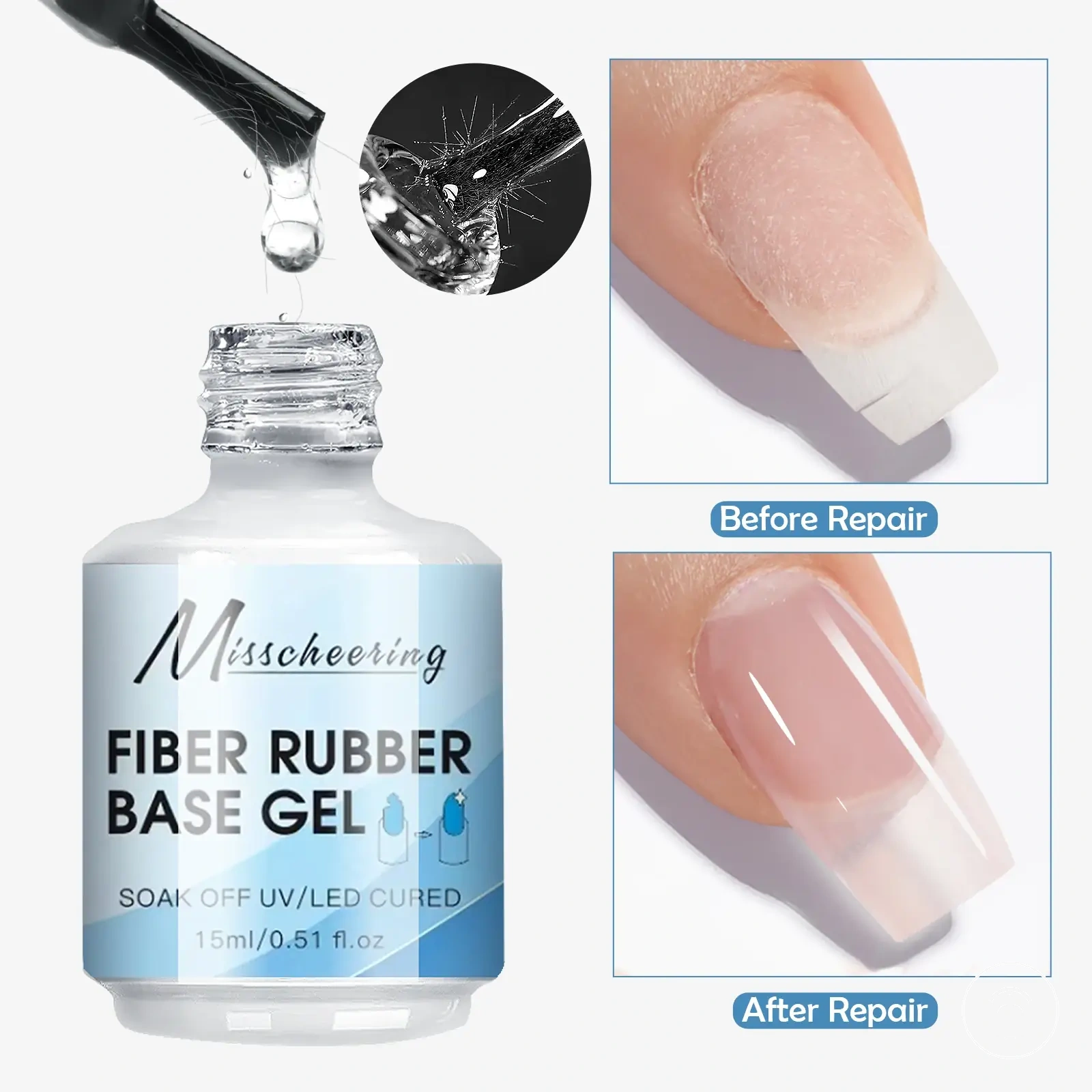
Here are product examples that may make comparison easier.
Here are product examples that may make comparison easier. Before buying, always review the compatibility criteria, essential features, and product details.
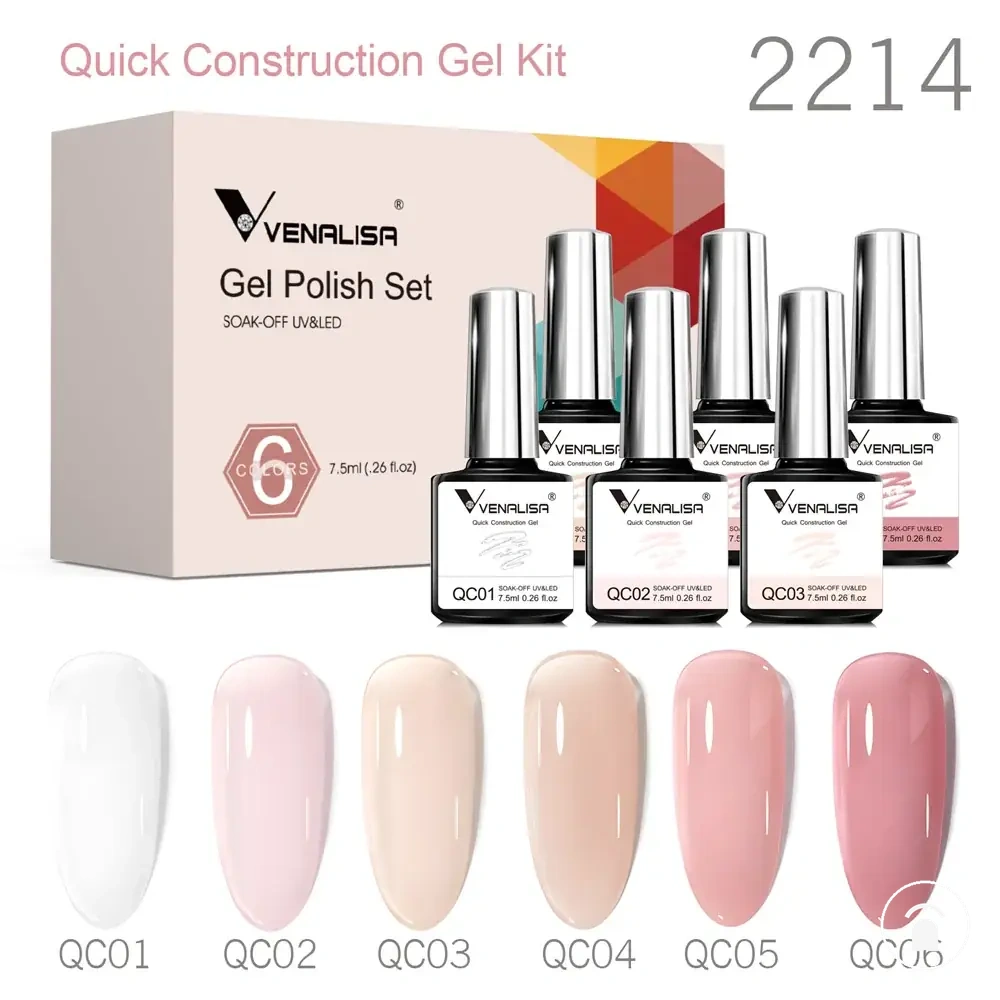
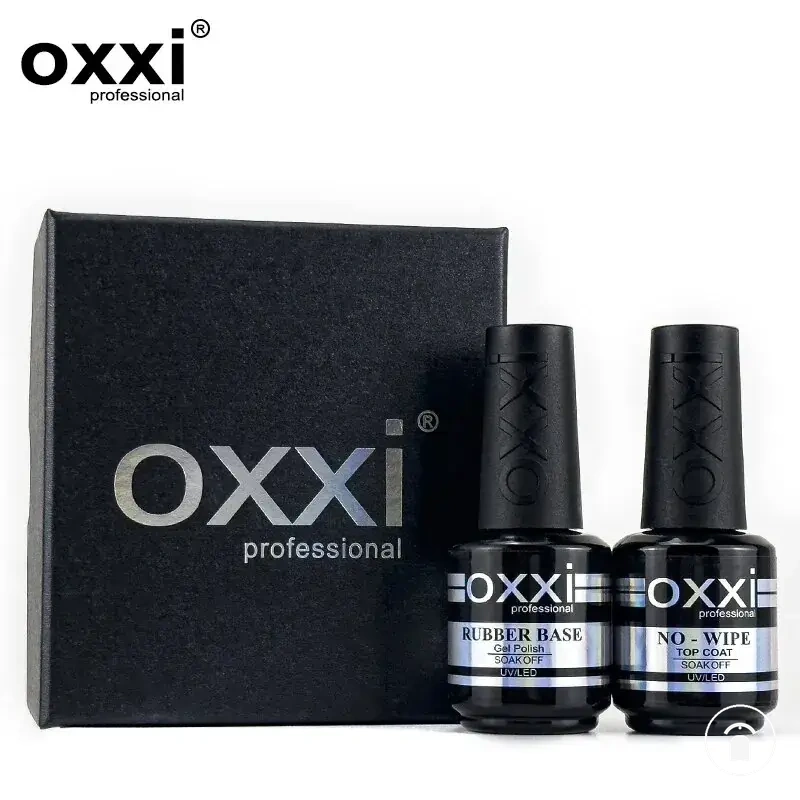
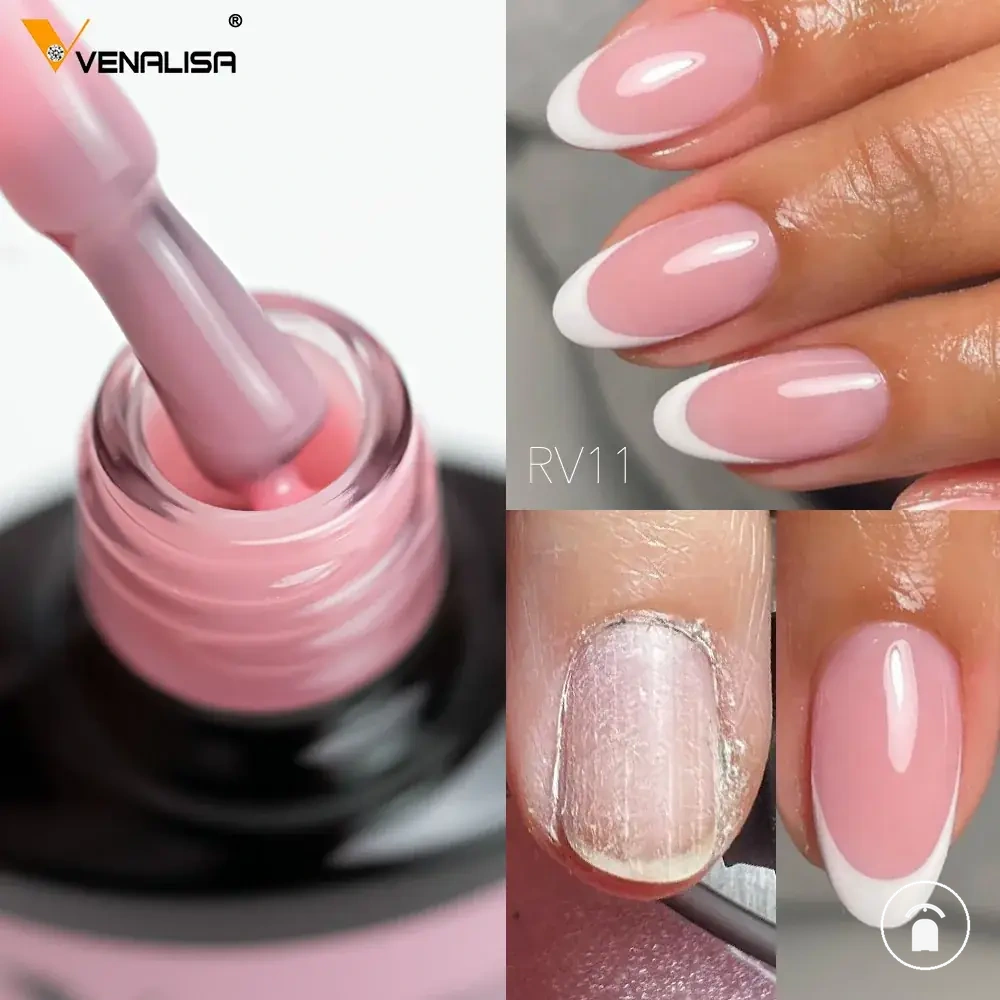
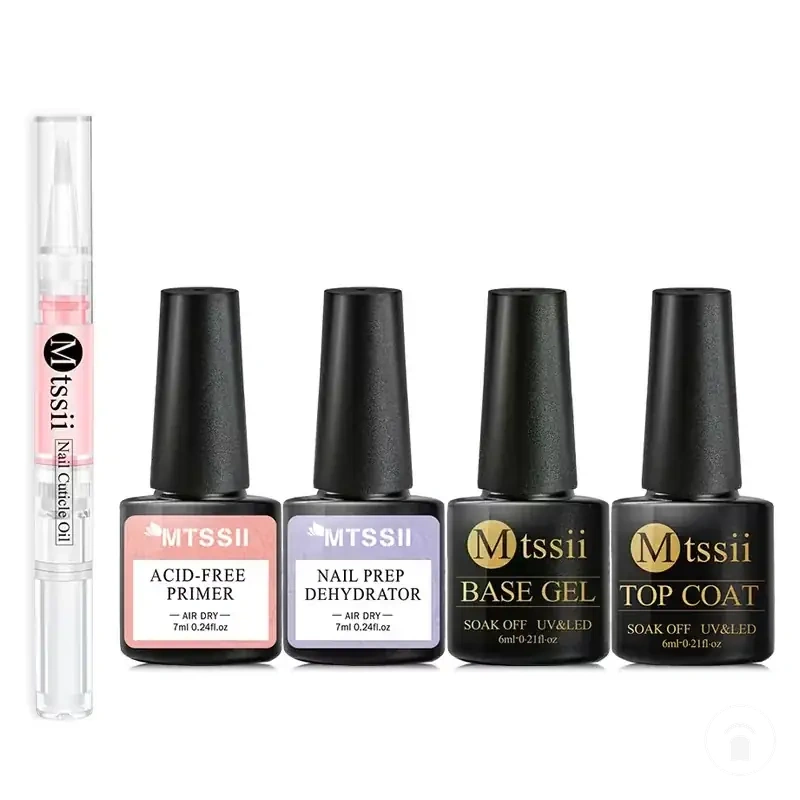
Preparation precautions begin with the current nail condition. Use gentle nail preparation as a selection criterion by performing only the surface preparation specified for the product system and avoiding gel application over painful, inflamed, detached, split, or persistently discoloured nails. Additional filing beyond the stated preparation requirement removes more of the natural nail surface without establishing better suitability. :contentReference[oaicite:1]{index=1}
Preparation precautions begin with the current nail condition.
The following mini-checklist organises the main precautions across preparation, application, curing, removal habits, and situations requiring extra caution:
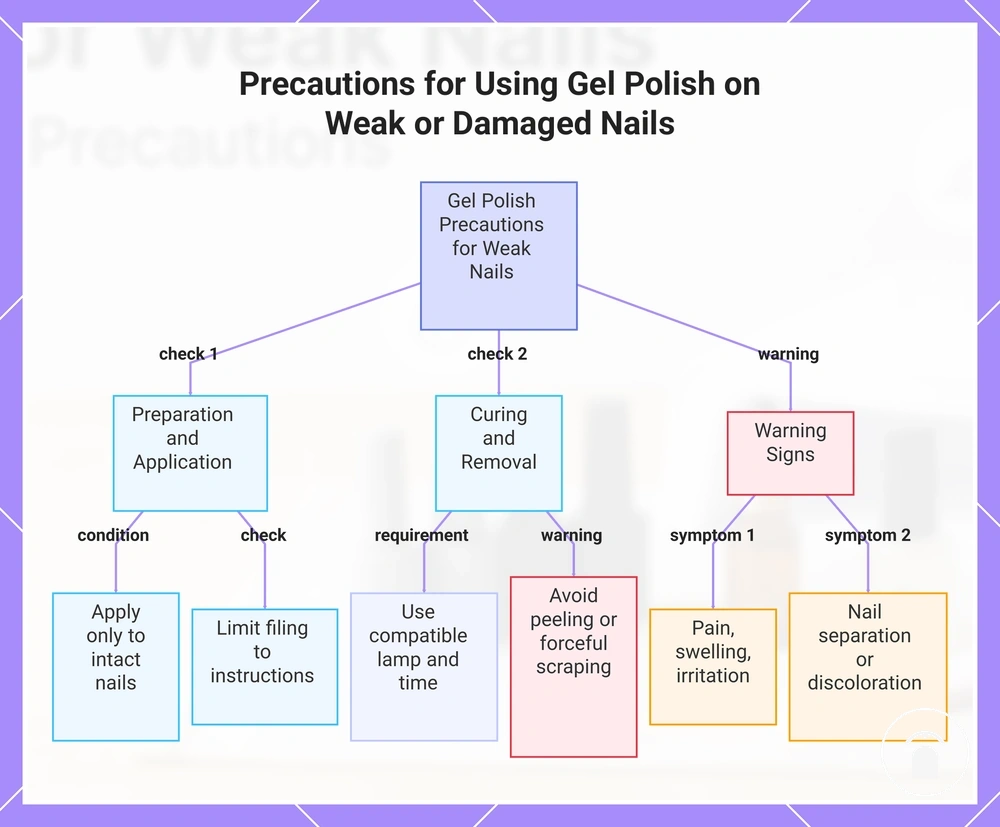
- Preparation: Apply gel polish only to clean, dry, intact nails and limit filing or buffing to the product instructions.
- Application: Keep each coating layer within the manufacturer’s stated application method because excessively thick or uneven layers can alter curing performance.
- Curing compatibility: Use the curing lamp specified as compatible with the gel polish system and follow that product’s stated exposure time; the reviewed evidence does not support one universal curing duration for all formulations and lamps.
- Removal habits: Use the intended soak-off or manufacturer-specified removal method and do not peel, prise, or forcefully scrape cured gel from the natural nail.
- Extra caution: Stop cosmetic use when pain, swelling, persistent irritation, nail separation, or continuing colour or texture changes appear, because those conditions fall outside routine home gel application.
Technique changes the likely outcome of these precautions. For example, applying three coats with a lamp that is not identified as compatible introduces an unverified curing condition, whereas using the specified number of layers, matched lamp, and stated curing schedule keeps the process within the manufacturer-defined system. This comparison is procedural rather than a guarantee of nail protection because the reviewed evidence provides no validated numerical threshold for safe coat thickness, nail weakness, or universal curing exposure. :contentReference[oaicite:2]{index=2}
Technique changes the likely outcome of these precautions.
The final decision should combine nail condition, restrained preparation, application consistency, curing compatibility, removal habits, and continued observation during wear. When any criterion cannot be met, or when the nail is painful, inflamed, detached, or visibly worsening, delaying gel polish is the more cautious option than covering the condition with another coating. :contentReference[oaicite:3]{index=3}
This chart shows the key precautions for safely using gel polish on weak or damaged nails, including preparation and application checks, curing and removal requirements, and warning signs to stop use.
Gel Nail Aftercare for Maintaining Weak Nail Condition
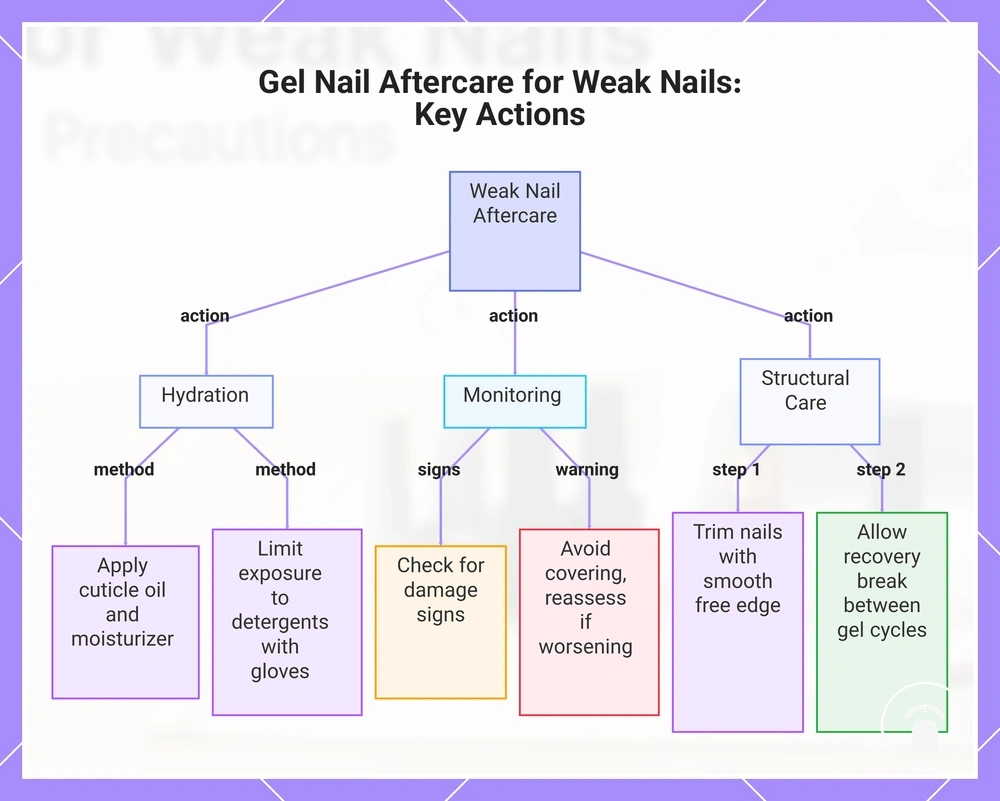
Aftercare helps maintain weak nails after gel use by supporting hydration, reducing unnecessary mechanical stress, and allowing the natural nail to recover between manicure cycles rather than by repairing the nail plate. According to the American Academy of Dermatology, repeated gel manicures and acetone exposure can contribute to dryness and brittleness, so moisturizing the nails and surrounding skin after gel removal is recommended as part of ongoing nail care. :contentReference[oaicite:0]{index=0}
Maintenance decisions should focus on preserving nail condition instead of expecting permanent improvement.
Maintenance decisions should focus on preserving nail condition instead of expecting permanent improvement. Regular application of cuticle oil or a moisturizing hand cream supports hydration of the nail folds and surrounding skin, while limiting repeated exposure to detergents and cleaning chemicals without protective gloves helps reduce additional drying. For example, applying cuticle oil once or twice daily during a recovery period between gel manicures is a commonly recommended nail care practice, although no recognised dermatology guideline specifies a universal frequency that guarantees stronger natural nails. :contentReference[oaicite:1]{index=1}
Before buying, always review the compatibility criteria, essential features, and product details.
Here are product examples that may make comparison easier. Before buying, always review the compatibility criteria, essential features, and product details.
The following checklist organises practical aftercare actions that support maintenance decisions after gel use. For broader wear expectations, see aftercare and longevity.
- Hydration: Apply cuticle oil and moisturiser consistently to reduce dryness affecting the nail plate and surrounding skin.
- Monitoring: Check nails regularly for persistent peeling, splitting, discoloration, pain, or nail separation instead of covering these changes with another gel application.
- Nail care: Keep nails trimmed with a smooth free edge to reduce snagging if weak nails begin to split.
- Recovery period: Allow a break between repeated gel manicure cycles when brittleness or peeling persists so the nail condition can be reassessed before further cosmetic application.
Aftercare supports maintenance by helping maintain hydration and reducing avoidable stress on weak nails, but current dermatology evidence does not establish a validated duration, hydration schedule, or recovery period that guarantees improvement in nail strength. If nail condition continues to deteriorate despite appropriate nail care, reassessment before further gel use is more appropriate than relying on aftercare alone. :contentReference[oaicite:2]{index=2}
This chart shows the main aftercare actions to maintain weak nails after gel use, including hydration, monitoring, and structural care.