Natural nail safety with at-home gel nail extension kits
Natural nail safety with at-home gel nail extension kits depends on the condition of the natural nails rather than on gel extensions alone. Outcomes may vary with the nail plate, safe prep, product sensitivity, wear habits, and removal. Safety is therefore conditional rather than absolute.
A common concern is that gel extensions always harm natural nails. Preventable damage may instead be associated with excessive buffing, peeling, poor removal habits, unnecessary skin contact with uncured gel, or applying extensions to an already compromised nail plate. Adhesive contact, curing, moisture, and existing thinning can also affect how the nail responds. Normal wear effects and preventable damage are not the same.
Natural nail protection begins with criteria-led decisions before, during, and after using at-home gel nail extension kits. Prep restraint, appropriate adhesion choices, awareness of allergy risk, careful wear habits, and a suitable removal method may reduce avoidable stress when they match the nail condition and product system. HEMA-free labels may inform product selection, but they do not remove every sensitivity concern. Recovery needs can also differ when natural nails show peeling, soreness, or weakness.
- Check the nail plate condition before application.
- Use safe prep without unnecessary surface abrasion.
- Limit skin contact and follow product-specific curing directions.
- Support surrounding skin and cuticle care with cuticle oil when appropriate.
- Avoid peeling or forcing gel extensions from the natural nails.
The next sections explain how gel extensions interact with natural nails and how nail condition, preparation, sensitivity, wear, and removal shape safer decisions.
How gel extensions affect natural nails
Gel extensions interact with the natural nail by forming a cured layer that bonds to the nail plate, but they are not automatically harmful or harmless. A clearer understanding of this interaction helps explain why results vary between users of at-home gel nail extension kits. The overall effect depends on surface preparation, wear pressure, and removal.
How gel extensions affect natural nails becomes easier to understand when the contact points are viewed together. The diagram below highlights the gel overlay, adhesive area, cured surface, and common stress points rather than showing application steps.
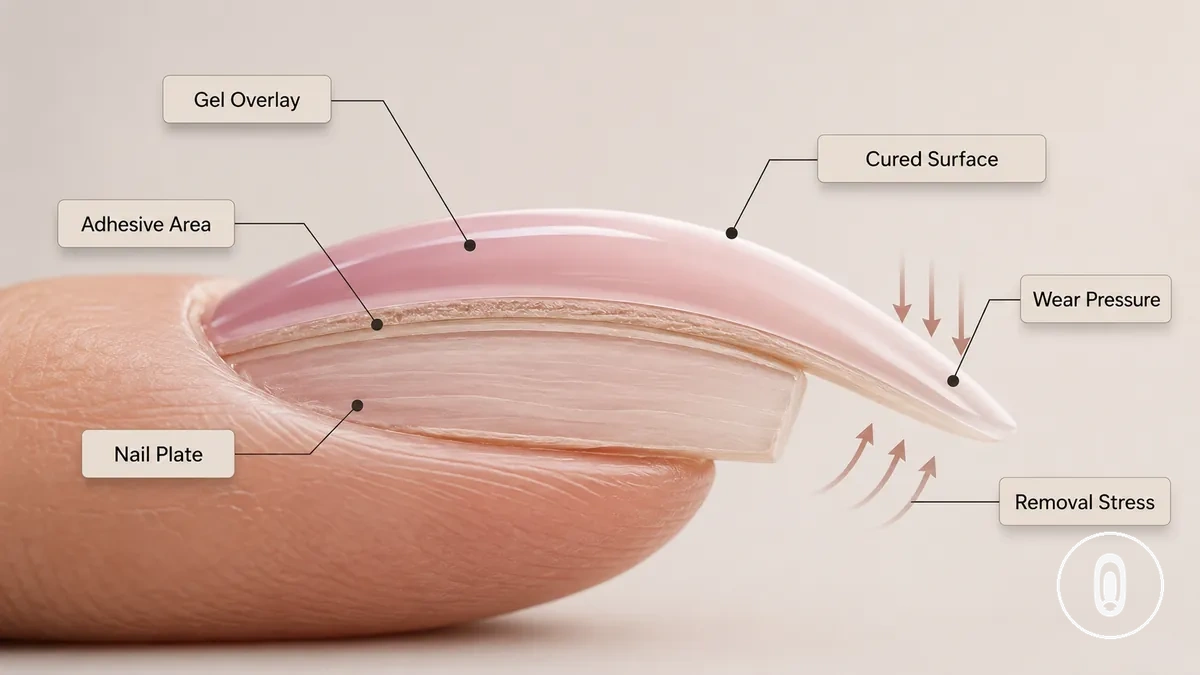
Adhesive gel creates contact with the nail surface, and curing hardens that connection into a stable layer. Surface preparation influences how the gel overlay adheres, while daily wear pressure, lifting, or picking can increase stress on the nail plate. Removal may also place additional resistance on the natural nail, and repeated stress can contribute to thinning or peeling in some situations.
A temporary change in the nail surface after gel nail extensions does not necessarily mean the natural nail has become weak. Persistent thinning, peeling, or ongoing weakness is more consistent with signs that the nail plate has experienced greater stress than normal surface change.
What protects the nail plate and what causes damage
The nail plate is more likely to stay in good condition when protective conditions match its current state, while damage conditions usually develop when repeated stress exceeds what the nail can tolerate. Nail plate thickness, surface filing, adhesion force, pressure, and removal behavior all influence the outcome. Protection and damage are therefore condition-based rather than automatic.
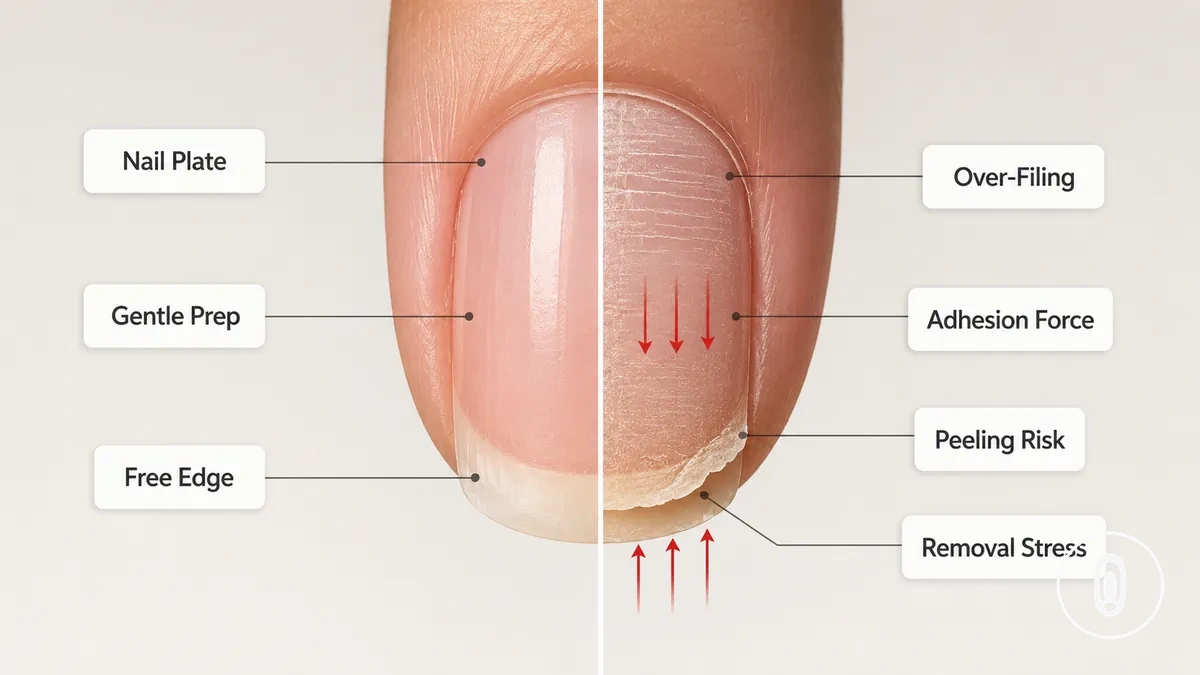
What protects the nail plate and what causes damage becomes easier to compare when each factor is organized by its effect on the natural nail. The table below separates protective conditions from damage conditions using an entity-attribute-value approach so that each factor can be viewed in context rather than in isolation.
| Entity/part | Attribute or action | Value or condition | Effect/risk/decision |
|---|---|---|---|
| Nail plate | Surface filing | Minimal filing or over-filing | Minimal filing may help preserve nail plate thickness, while over-filing can increase thinning risk. |
| Free edge | Pressure | Supported or repeatedly stressed | Balanced pressure may help maintain free-edge strength, while repeated stress can increase breakage risk. |
| Cuticle area | Product exposure | Limited contact or prolonged exposure | Reducing unnecessary exposure may lower the chance of allergic sensitivity or irritation. |
| Gel bond | Adhesion force | Stable bond or peeling | Peeling or forced separation can disturb surface layers and increase damage risk. |
| Removal behavior | Resistance | Gentle release or forced removal | Recovery time may be shorter when unnecessary stress on the nail plate is avoided. |
A healthy nail plate may respond differently from a nail that is already thin, peeling, or weakened. When the natural nail has reduced strength, the same surface filing, adhesion force, or wear pressure may have a greater effect, so protective conditions should be matched to the existing nail condition instead of assuming the same outcome for every nail.
Over-filing, peeling, and forced removal risks
Over-filing, peeling, and forced removal can place unnecessary pressure on the natural nail instead of limiting contact to the gel layer. The illustration below highlights how these actions affect the nail surface and where stopping is the safer response. Their shared risk is disturbance of the nail plate surface.
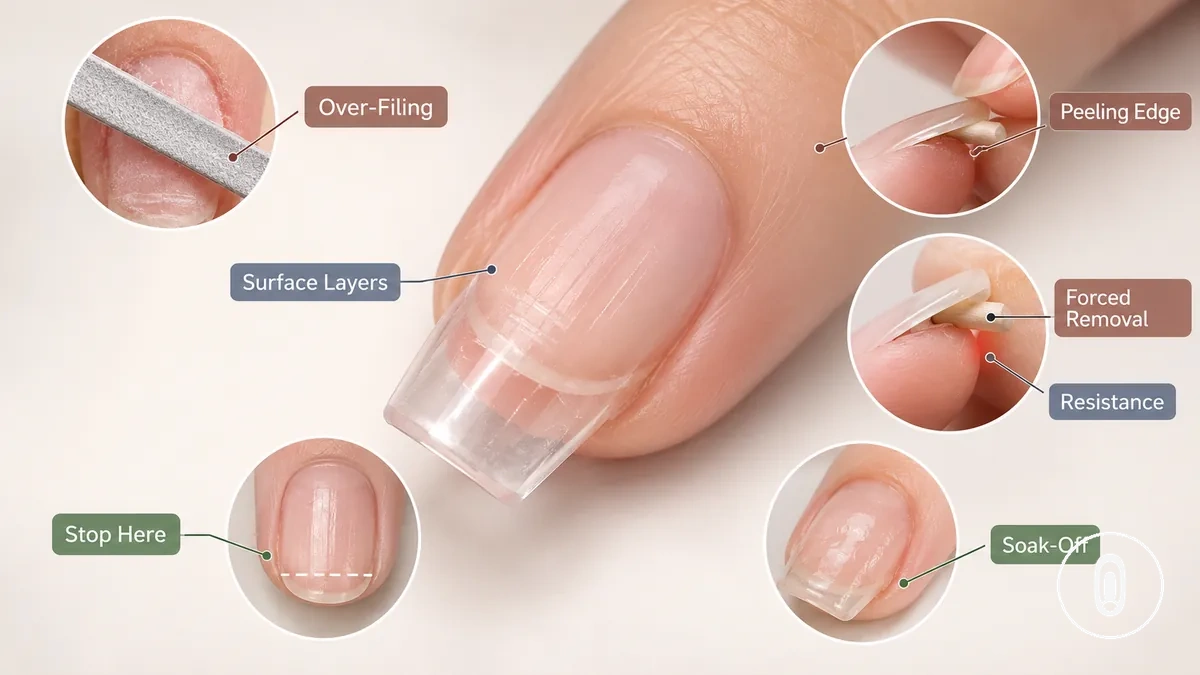
Over-filing may thin the nail plate when repeated pressure reaches its surface layers, while peeling or forced removal can pull against the adhesive bond and increase soreness or surface damage when resistance remains. Peeling is not a safer substitute for removal; when the product system allows it, soak-off after the gel has softened may involve less force than pulling the extension away. The safer behavior is to stop when resistance remains rather than continue with force.
Weak, thin, or peeling nails before application
Application readiness depends on the condition of the natural nail before gel extensions are applied. Weak nails, thin nails, or peeling nails may respond differently to adhesion and everyday pressure, so visible nail condition should guide the decision. Weak nails change the safer decision about whether to continue or postpone application.
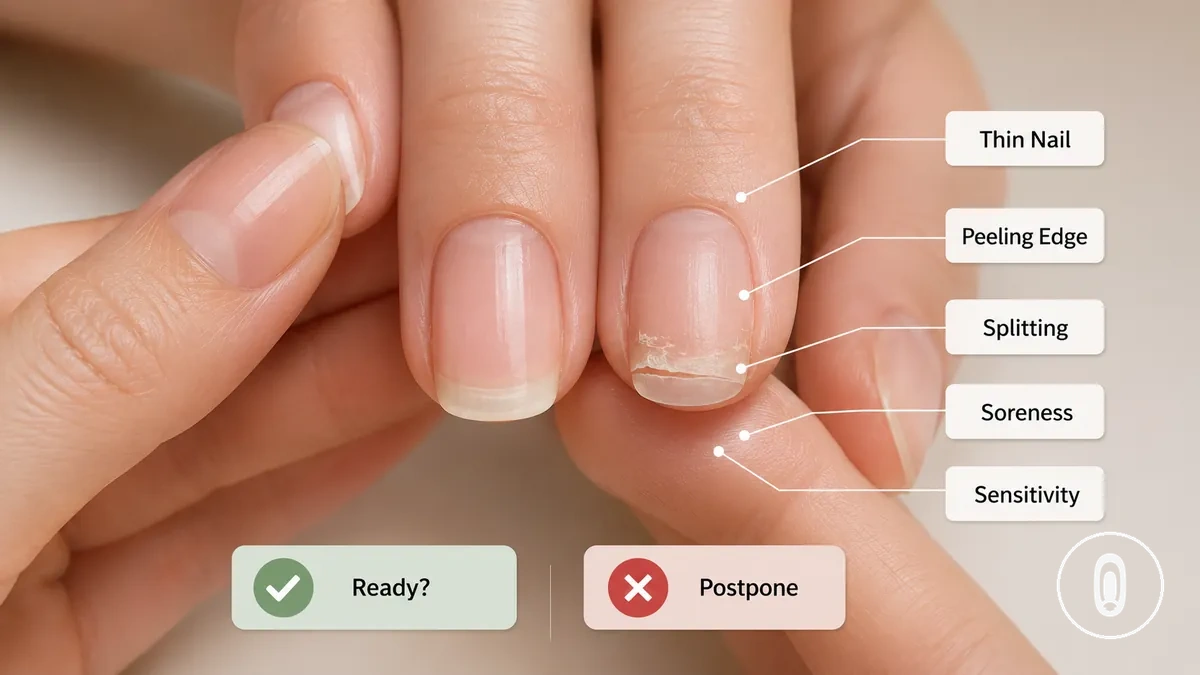
- Thinness or noticeable flexibility may increase the risk of pressure-related breakage.
- Peeling nails, splitting, or recurring lifting can reduce application readiness because the nail plate surface is already compromised.
- Soreness, recent damage, or ongoing sensitivity are signs to pause and reassess before application.
If the nail plate is painful, visibly compromised, or repeatedly lifting, extra caution is appropriate and postponing application may be the safer choice, depending on the nail condition. Brittleness, fragile nails, and sensitivity do not automatically rule out future gel extensions, but readiness depends on the current condition rather than the product alone. When discomfort or repeated changes continue, postponing application and seeking professional advice may be more appropriate than applying extensions immediately.
Gentle nail preparation for safer adhesion
Gentle nail preparation supports safer adhesion by balancing enough preparation for grip with minimal disturbance to the natural nail. Adhesion may depend on nail condition, moisture, product directions, and technique, so more preparation does not automatically improve the outcome. Safer adhesion is defined by balance rather than over-prep.
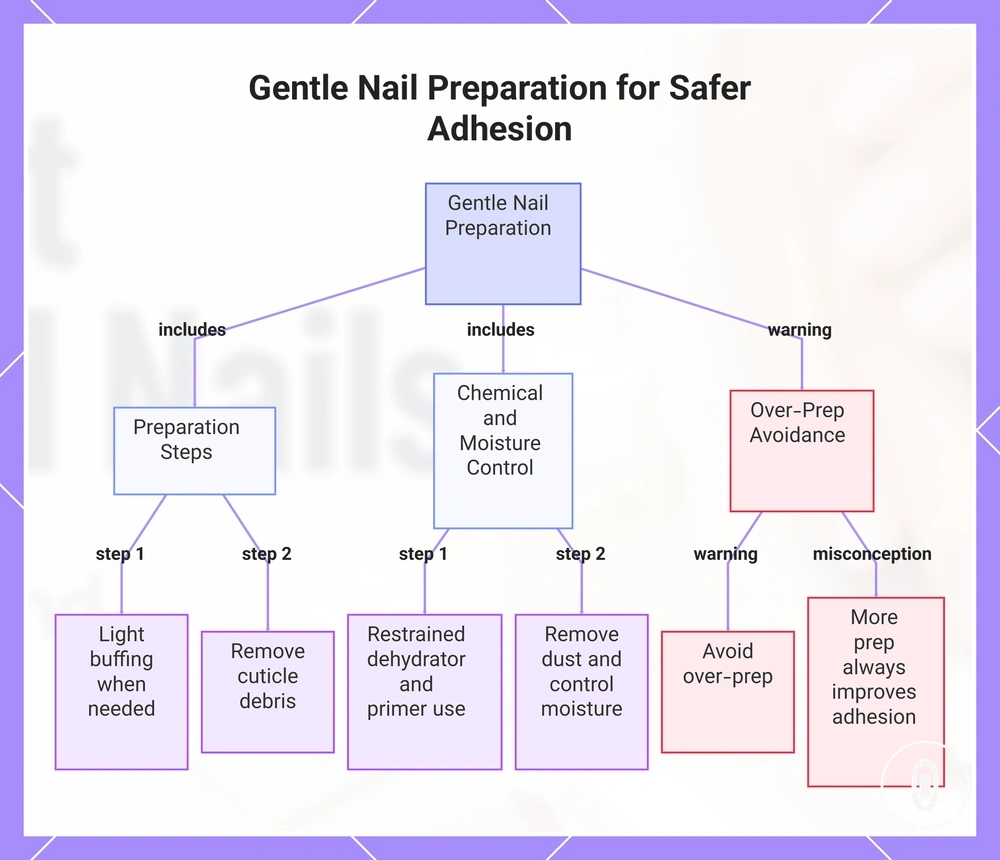
When preparing the natural nail, each step should support adhesion without creating unnecessary nail disturbance. The following guardrails help maintain that balance:
- Use light buffing only when needed to prepare the nail surface while avoiding unnecessary abrasion.
- Remove cuticle debris from the nail plate and sidewall area to help maintain a clean seal and reduce lifting risk.
- Use dehydrator and apply primer with restraint according to product directions, because preparation needs may vary with nail condition and sensitivity.
- Remove dust and maintain moisture control before application, since residue or excess moisture may affect adhesion.
- Avoid over-prep because repeated filing or unnecessary preparation can increase disturbance to the natural nail.
A common misconception is that more preparation always improves adhesion. In practice, enough preparation is usually more appropriate than excessive preparation, while detailed step-by-step techniques belong outside this safety-focused explanation. For more detailed preparation guidance, see safer nail prep.
This chart shows the key guidelines and common misconception for gentle nail preparation to achieve safer adhesion without over-preparation.
Light buffing and cuticle care
Light buffing starts with controlled buffer pressure, while cuticle care focuses on removing cuticle residue that can interfere with adhesion. Surface texture and sidewall cleanliness may help support adhesion when preparation remains restrained, and the goal is a lightly matte nail surface rather than extra abrasion. Light texture, not thinning, is the intended result.
- Use light buffing with gentle buffer pressure instead of repeated abrasion.
- Remove cuticle residue from the nail surface and maintain sidewall cleanliness before application.
- Stop buffing when the nail surface becomes lightly matte rather than continuing to increase abrasion.
- Avoid extra abrasion to chase stronger adhesion because results may still depend on the nail surface, product system, and technique.
Keep cuticle care focused on clearing cuticle residue while protecting the surrounding skin. Do not cut live skin, and stop if buffing causes soreness or the nail surface shows signs of unnecessary abrasion. Practical restraint is more appropriate than aggressive filing during preparation.
Clean, dry nails before gel application
Clean nails and dry nails provide a more suitable surface for gel contact because moisture, oil, dust, and cleanser residue can interfere with adhesion. A dehydrator may be appropriate for some product systems when used with restraint and according to product directions, but it is not required for every nail or product. Clean, dry nail surface conditions support adhesion and may help reduce avoidable lifting.
If you want to confirm that the nail surface is ready before gel contact, check these conditions:
- Remove visible moisture, oil, dust, and cleanser residue from the nail surface.
- Limit water exposure immediately before gel contact when practical, and follow product-specific directions instead of relying on a fixed waiting time.
- Use a dehydrator only when appropriate for the product system and nail condition.
- If lifting continues despite careful cleaning, the cause may also depend on curing, product system, technique, or the condition of the natural nail.
When nails lift quickly despite careful cleaning, increasing dehydrator use or repeating surface cleaning may not resolve the issue. Recurring lifting can depend on multiple factors, so reassessing the overall application process may be more appropriate than focusing only on clean, dry nail preparation.
Safer gel product choices for sensitive nails
Safer gel product choices for sensitive nails depend on ingredients, curing compatibility, skin exposure, and personal sensitivity history rather than a single product claim. Gel products labelled HEMA-free may reduce one decision variable for some users, but no label can remove allergy risk completely. Product choice may reduce exposure risk, but it cannot eliminate sensitivity risk.
Evaluate gel products by considering ingredient information, curing compatibility, and how the product is intended to be used. A HEMA-free label may be helpful for some users, but it should be viewed alongside product directions, lamp compatibility, and patch-test limitation rather than as proof of suitability. Avoiding uncured gel contact with the surrounding skin is an important safety criterion because unnecessary skin exposure may increase allergy risk. Odor or mild irritation during use should also be treated as decision signals instead of being ignored.
| Lower-risk signals | Warning signals |
|---|---|
| Clear ingredient information, HEMA-free claims considered alongside other criteria, curing compatibility, limited skin exposure, and following product directions. | Uncured gel on the skin, redness, burning, persistent irritation, unclear ingredient information, or curing that may not match the product system. |
If irritation such as redness or burning appears, stop using the gel product and avoid further uncured gel contact. Patch testing may provide additional information in some situations, but patch-test limitation means it cannot guarantee that future reactions will not occur. When evaluating your options, review safety questions before buying, and seek professional advice if irritation persists or worsens.
HEMA-free gel products and allergy risk
HEMA-free gel products may be a sensitivity-reduction consideration for some users, but they do not remove allergy risk. An ingredient label is only one factor because individual sensitivity, exposure, and application conditions also affect the outcome. HEMA-free gel products are not allergy-proof.
When interpreting an ingredient label, also consider whether curing follows product directions and whether uncured gel is kept away from skin contact. A HEMA-free label may reduce one source of exposure for some users, but irritation can still occur if sensitivity is present or if uncured gel reaches the skin. Allergy concerns should take priority over appearance or wear-time goals because skin exposure and inadequate curing remain continuing risks.
Gel nail allergy symptoms to watch for
Gel nail allergy symptoms may affect the skin around the nail as well as the nail area, and early recognition can help limit further exposure. Possible signs may appear soon after gel contact or develop later, depending on timing and individual sensitivity. Stop further gel exposure when these symptoms appear.
- Redness, itching, or swelling on the skin around the nail.
- Burning, blistering, or tenderness after gel exposure.
- Nail separation concerns or other changes affecting the nail area.
- Symptoms that appear after application or recur with later exposure.
If redness, itching, burning, swelling, or other symptoms persist, spread, become painful, or return after further exposure, they should not be ignored. This checklist supports symptom recognition rather than diagnosis, and persistent, spreading, painful, severe, or recurring symptoms should prompt professional advice.
Natural nail care while extensions are worn
Natural nail care while extensions are worn focuses on reducing daily stress on the extensions and the natural nails beneath them. Wear outcomes may vary with length pressure, moisture, and daily habits, so consistent care is usually more useful than reacting only after problems appear. Daily habits help reduce risk while extensions remain in place.
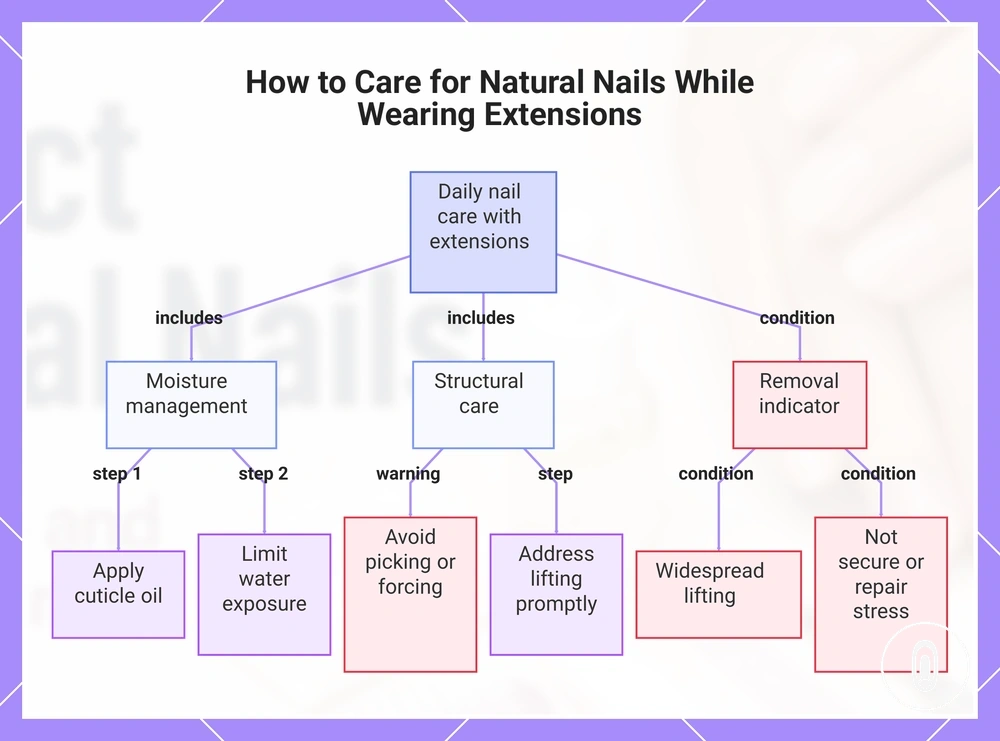
Small wear habits can make everyday risks easier to manage while extensions are worn. Keep these care points in mind:
- Apply cuticle oil as appropriate to help manage dryness and maintain comfort around the nail.
- Avoid picking at extensions or forcing lifted edges, because this can increase stress on the natural nail.
- Address lifting promptly rather than continuing to wear a loose extension.
- Limit prolonged water exposure when practical, and use gloves for cleaning or other wet tasks.
- Keep length pressure suitable for daily activities, as longer extensions may place more stress on the natural nail.
- Follow appropriate maintenance timing instead of waiting until lifting or wear becomes significant.
If lifting becomes widespread, an extension no longer feels secure, or continued repair may place more stress on the natural nail, removal may be more appropriate than further maintenance. For broader care beyond daily wear habits, see extension maintenance.
This chart shows the main daily care practices for natural nails while wearing extensions, including moisture management, structural care, and when removal is necessary.
Cuticle oil after gel extensions
Cuticle oil after gel extensions can help support the surrounding skin by improving hydration, reducing dryness, and increasing comfort around the cuticle area. Regular use may also help flexible-feeling nails, but it does not rebuild structural damage within the nail plate. Cuticle oil supports routine care, but it does not replace safe preparation or safe removal.
Apply cuticle oil to the cuticle area, sidewalls, and surrounding skin as part of a consistent care routine. Routine use may help reduce dryness, improve comfort, and limit hangnails, although results vary with hydration needs and daily wear. Consistent care is generally more important than relying on any single product or expecting structural recovery of the nail plate.
Water exposure, lifting, and picking risks
Water exposure, lifting, and picking can create a chain of risks while gel extensions are worn because edge lifting changes how the extension should be managed. Moisture entry may contribute to edge lifting when seal quality, fit, or wear conditions vary, making lifting a changed-risk condition that calls for extra caution.
- Cause: Water exposure and moisture entry may contribute to edge lifting. Risk: A lifted edge can increase snagging during daily wear. Response: Monitor the area and avoid unnecessary pressure.
- Cause: Edge lifting followed by picking. Risk: Picking can increase stress on the natural nail and gel extensions. Response: Do not pick or peel a lifted extension.
- Cause: Continued snagging, pressure, or discomfort. Risk: The extension may become less secure. Response: Stop wearing the set rather than continuing to wear a loose extension.
If only a minor edge issue is present, careful monitoring is more appropriate than forcing the extension off. When lifting becomes more noticeable or pressure and discomfort increase, stop wearing the set instead of picking or forcing off the gel extensions. Do not force off lifted gel extensions.
Safe removal habits that protect natural nails
Safe removal habits help protect natural nails because the removal method affects how much stress reaches the nail plate. Removing gel extensions should be treated as an important part of natural nail care rather than simply the final stage of wear. The removal method is a major nail plate risk factor.
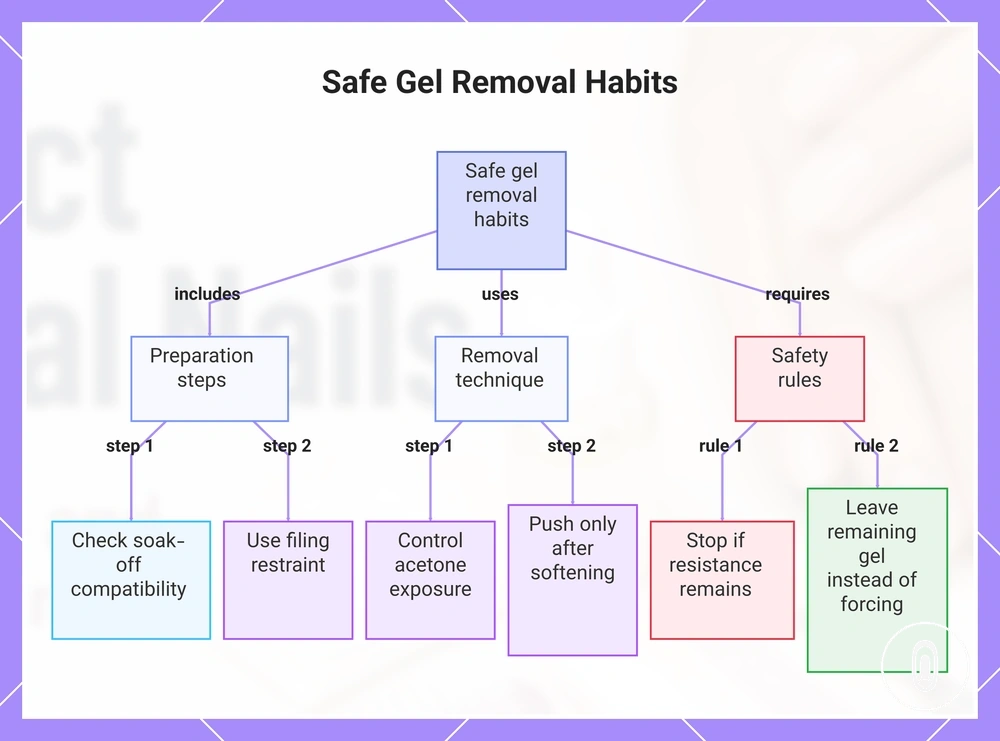
Choose a removal approach based on soak-off compatibility instead of assuming every gel product removes the same way. Use filing restraint to limit unnecessary contact with the nail plate, control acetone exposure with clips or wraps when appropriate for the product system, and use gentle pushing only after the gel has softened if resistance has reduced. If resistance remains, stop rather than applying more force.
Forcing, scraping, or peeling remaining gel can increase stress on natural nails and the nail plate. Leaving a small amount of remaining gel is generally a safer decision than continuing to scrape or force removal when resistance is still present.
Use these safety habits to guide removal decisions instead of focusing on speed or complete product removal in one attempt. For more detailed guidance beyond these high-level safety principles, see safe extension removal.
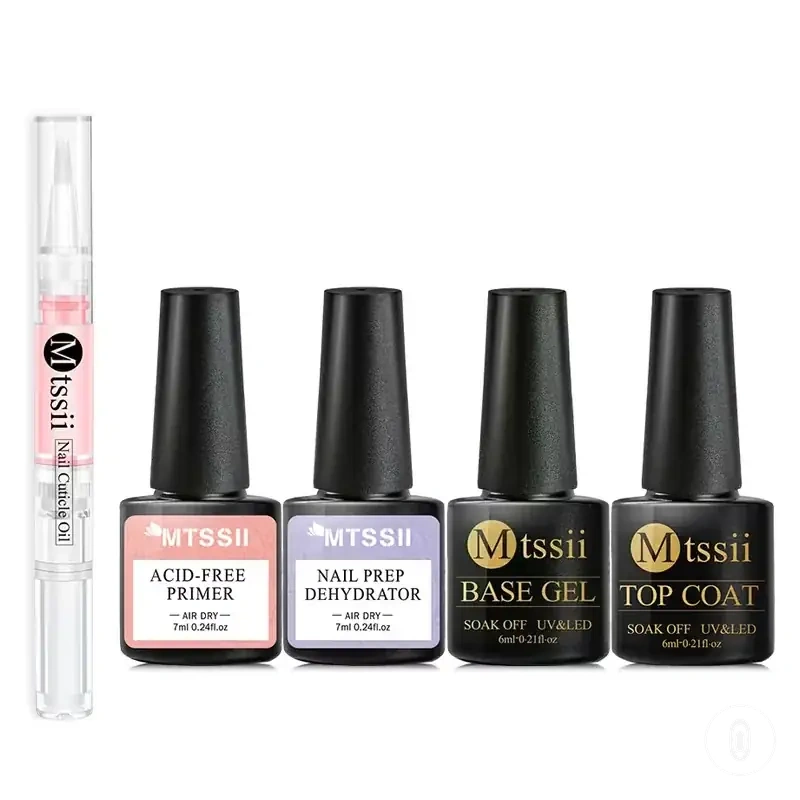
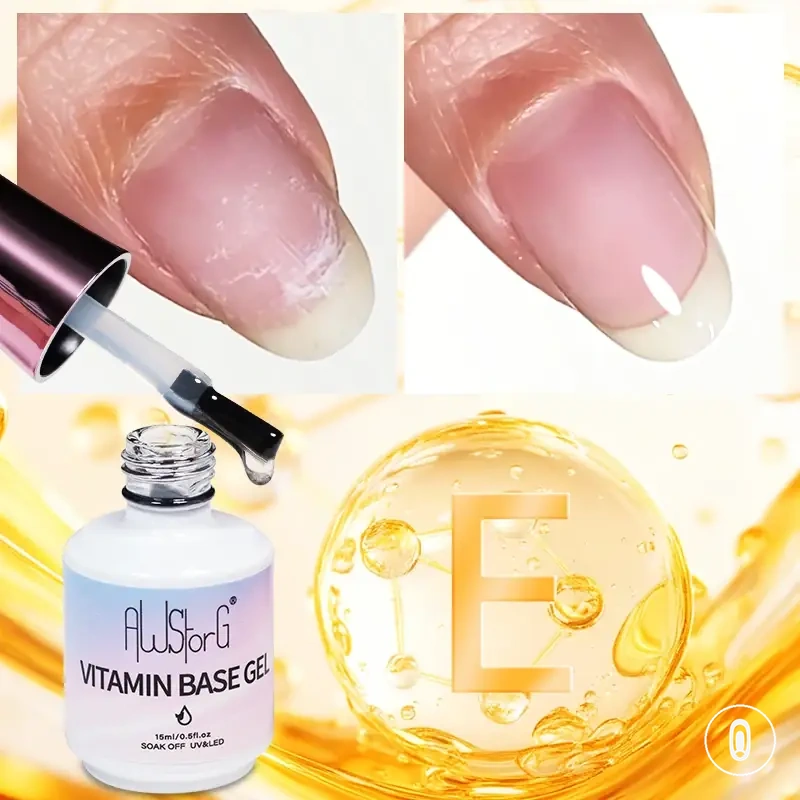
The products below are useful examples for comparing available options. Before buying, check that the compatibility criteria, key features, and product details match your needs.
This flowchart shows the key preparation steps, removal techniques, and safety rules for removing gel extensions without damaging natural nails.
Soak-off removal instead of peeling
Soak-off removal starts with confirming that the product system is soak-off compatible and preparing the surface with light top-layer filing. The goal is to soften the product so it can be released with gentle pressure instead of peeling. Soak-off removal depends on product compatibility.
Use soak-off removal only when the gel is designed for it and responds as expected to acetone contact. If the product is not soak-off compatible, has been poorly cured, or resistance remains after softening, stop rather than increasing force or scraping.
- Confirm that the gel system is suitable for soak-off removal before beginning.
- Use light top-layer filing to help acetone contact the product without unnecessary filing of the nail surface.
- Hold acetone in contact with the gel using clips or wraps until the gel becomes softened, following the product system rather than a fixed timing.
- Use gentle pressure to lift softened gel instead of peeling or scraping.
- Stop if resistance remains rather than forcing the remaining product away from the nail.
Aftercare for weak or damaged nails
Aftercare for weak or damaged nails supports recovery while the nail grows out instead of trying to reverse structural changes immediately. The most appropriate care depends on thinning, peeling, soreness, dryness, or visible damage after gel extension wear. Aftercare supports comfort and growth-out, not instant repair.
Choose aftercare according to the nail's condition:
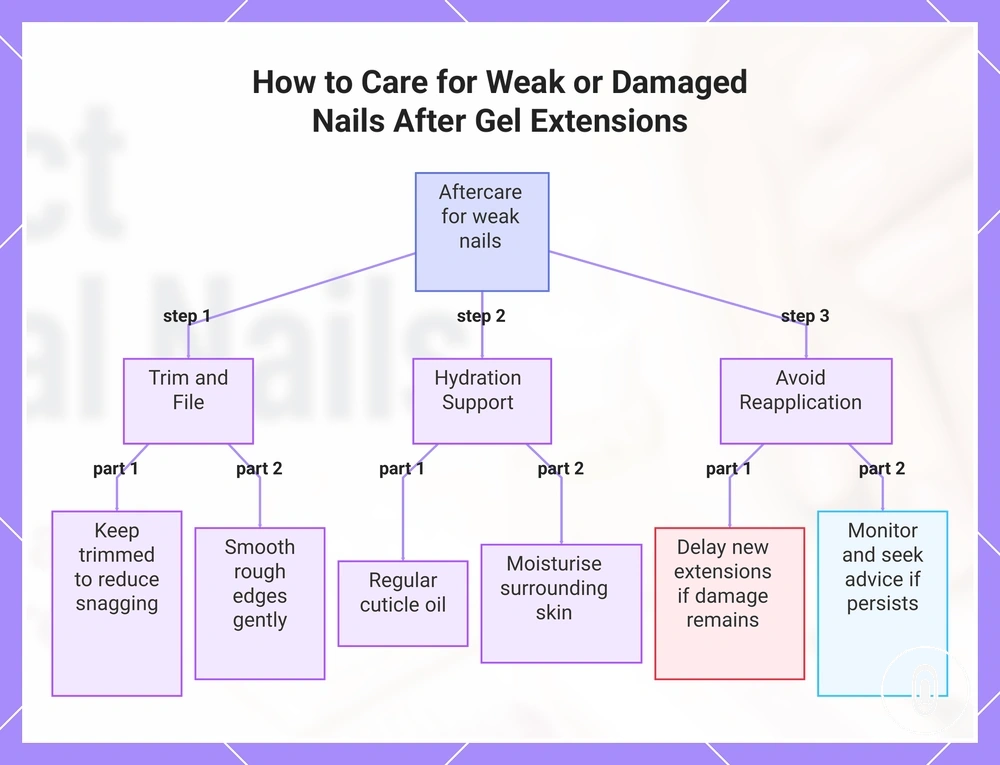
- Keep weak nails trimmed to reduce snagging and improve comfort.
- Support hydration with regular cuticle oil and moisturising when dryness affects the surrounding skin.
- Use gentle filing only to smooth rough edges without increasing thinning.
- Delay new extensions if visible damage, peeling, or soreness remains, and monitor improvement before deciding to reapply.
If weak nails continue to show visible damage after removal, focus on supportive care rather than returning to new extensions too soon. For broader daily wear habits that help reduce future stress, see extension maintenance.
Recovery time may vary with nail growth, the extent of visible damage, and previous wear habits. Monitor gradual improvement and seek professional advice if soreness or visible damage persists rather than expecting aftercare products to rebuild damaged nail structure.
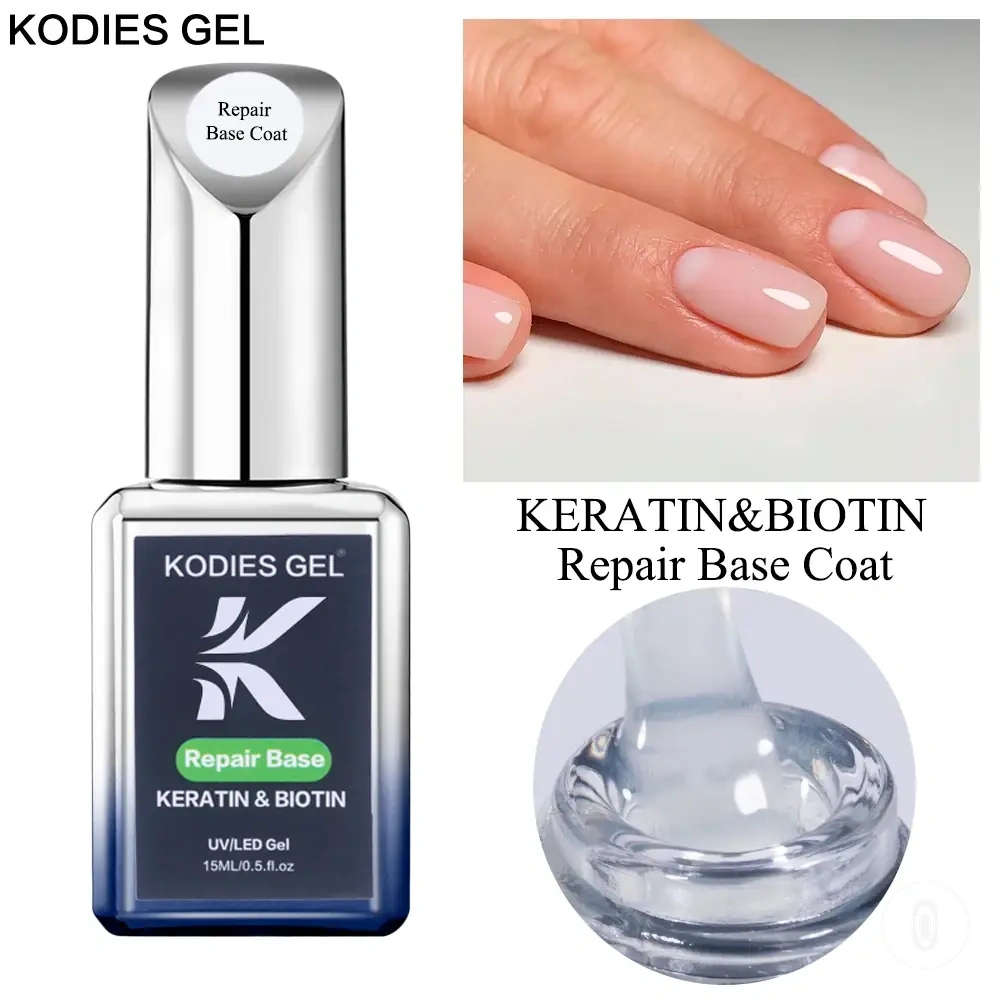
The products below are useful examples for comparing available options. Before buying, check that the compatibility criteria, key features, and product details match your needs.
The chart shows the three main aftercare actions for weak or damaged nails after gel extension removal: mechanical care, hydration, and avoidance of reapplication.
Hydration, trimming, and recovery time
Hydration, trimming, and recovery time help reduce snagging and support comfort while weak nails grow out after gel extension wear. Keep care focused on practical daily habits that protect the nail without adding unnecessary stress, supporting comfort and snag prevention.
- Keep nails at a short length to reduce snagging.
- Trim nails as needed and maintain smooth edges.
- Use daily oil or a moisturizer to help manage dryness.
- Avoid harsh filing that may increase stress on areas with visible damage.
- Allow visible damage to grow out rather than trying to remove it aggressively.
Hydration, trimming, and gentle care support comfort, but recovery time varies with nail growth, damage depth, and repeated gel use. Monitor gradual improvement instead of expecting an exact recovery timeline, and continue avoiding harsh filing while the nail grows out.
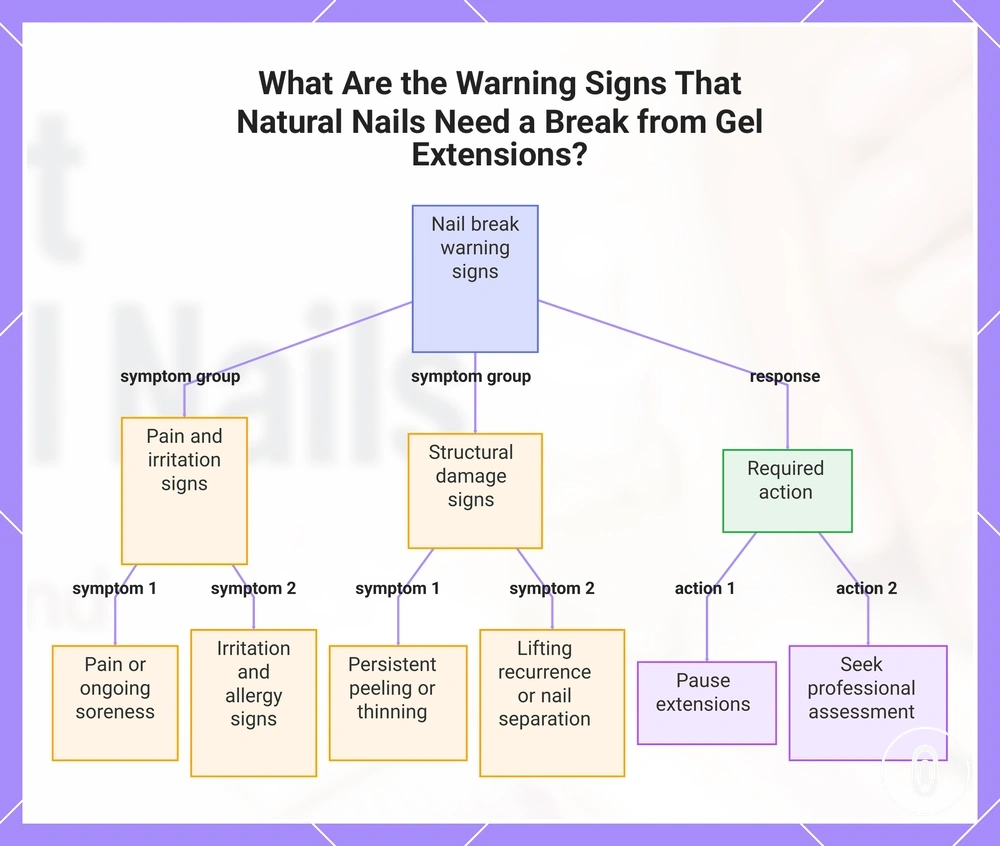
Warning signs that natural nails need a break
Warning signs indicate when natural nails need a break from gel extensions instead of continued wear. Pain, persistent peeling, thinning, lifting recurrence, or repeated irritation change the safer decision because they may signal that the nails need rest. When these warning signs appear, pausing extensions is the safer choice.
The checklist below helps identify when continuing wear is no longer the appropriate option:
- Pain or ongoing soreness: Stop wearing extensions and allow the natural nails to rest.
- Persistent peeling or noticeable thinning: Pause new extensions while visible damage grows out.
- Lifting recurrence: Repeated lifting may indicate that continuing application is not the safest decision, even after changing products or technique.
- Redness, swelling, heat, or repeated allergy-like reactions: Do not continue wearing extensions through these symptoms.
- Nail separation: Avoid further gel application and seek professional assessment.
Do not assume that switching to another gel product is the right next step when warning signs continue or return. The safer boundary is to pause extensions until the nails have recovered or the cause has been assessed, because symptoms may have different explanations. If you are considering future gel use after this pause, review safety questions before buying before making another product decision.
This chart shows the key warning signs that indicate natural nails need a break from gel extensions and the recommended actions to take.